Free PDFs · no sign-up
Every lesson on one page
Each Medservatory lesson ends in a one-page sheet: the key steps, the numbers and the traps. Download any of them, print them, keep them beside your question bank.
- 218 notes
- 17 series
- 0 sign-ups
218 notes
USMLE · drawn around the anatomy
Anatomy one-pagers
One-pager
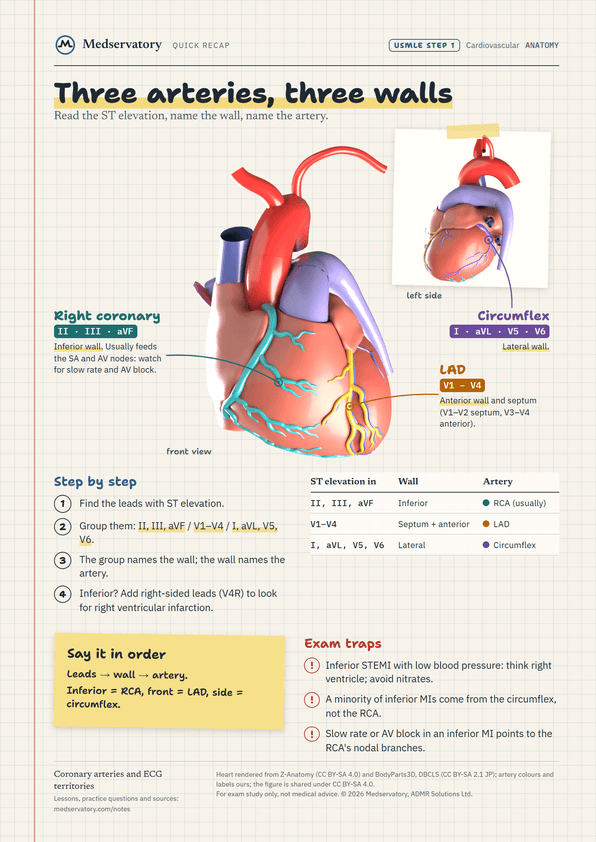
Coronary arteries and ECG territories
USMLE Step 1
Renal & acid–base
EP 01
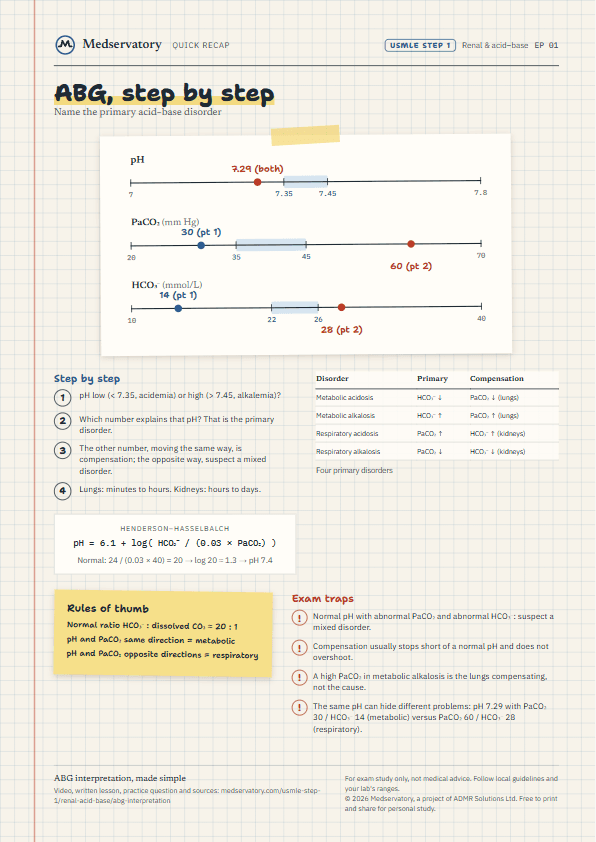
ABG interpretation, made simple
EP 02
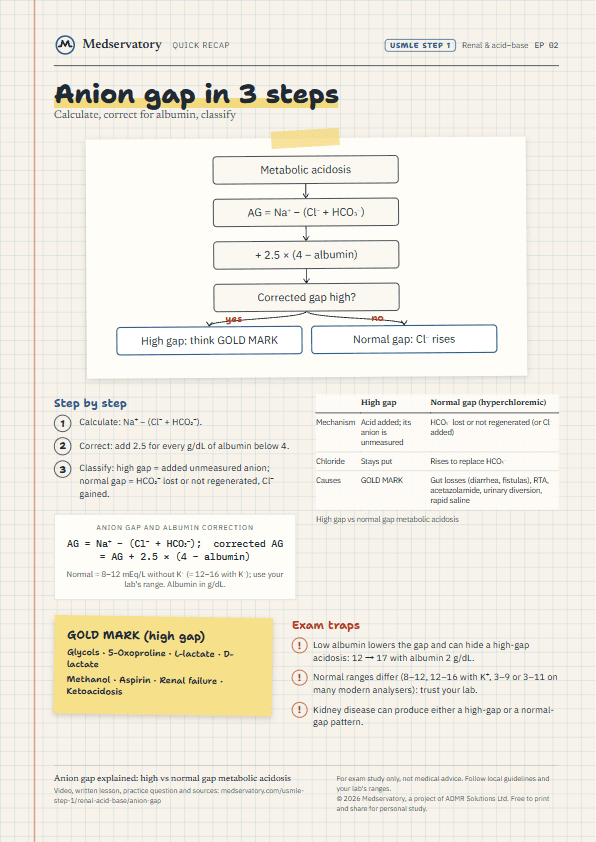
Anion gap explained: high vs normal gap metabolic acidosis
EP 03
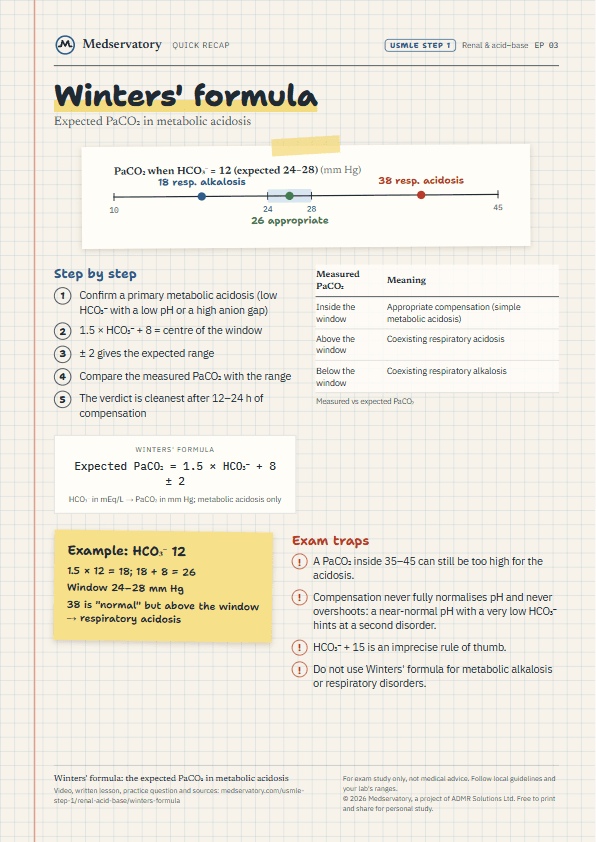
Winters' formula: the expected PaCO₂ in metabolic acidosis
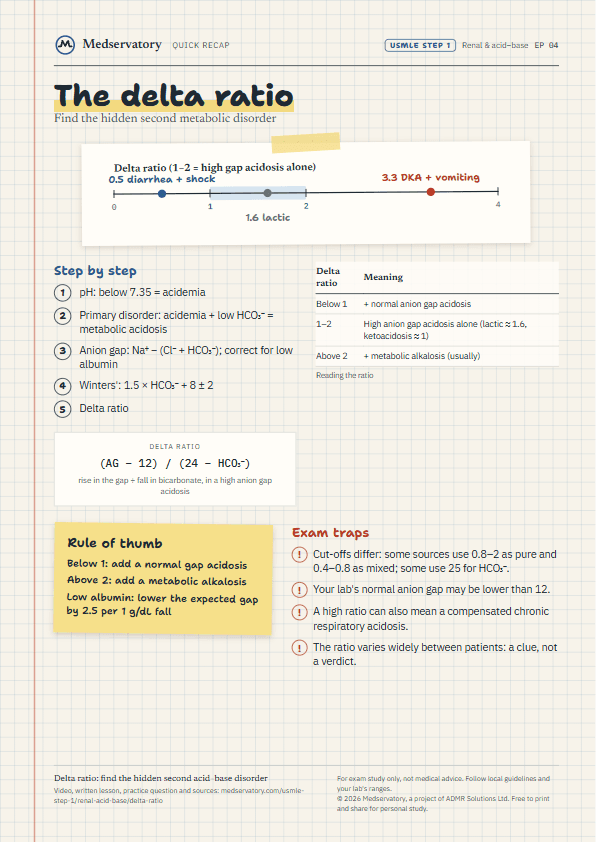
EP 04
Delta ratio: find the hidden second acid–base disorder
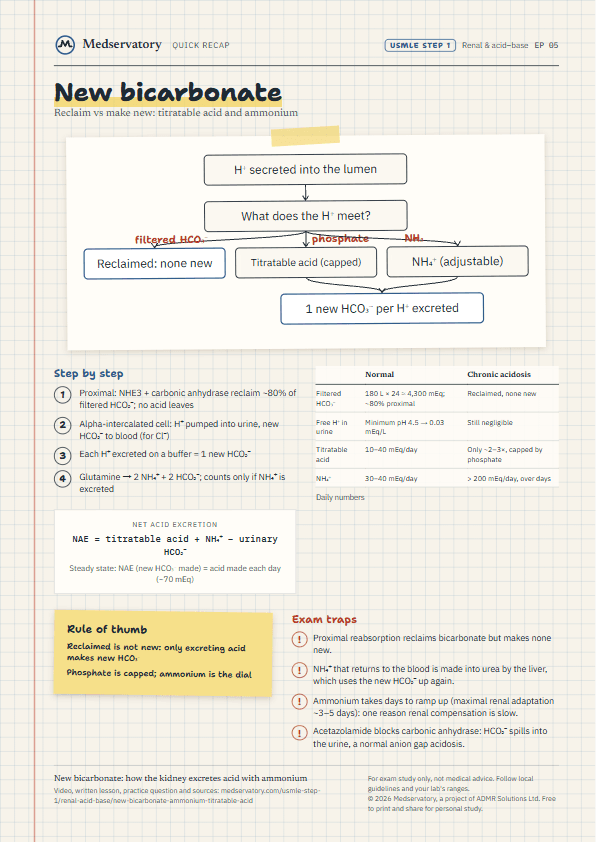
EP 05
New bicarbonate: how the kidney excretes acid with ammonium
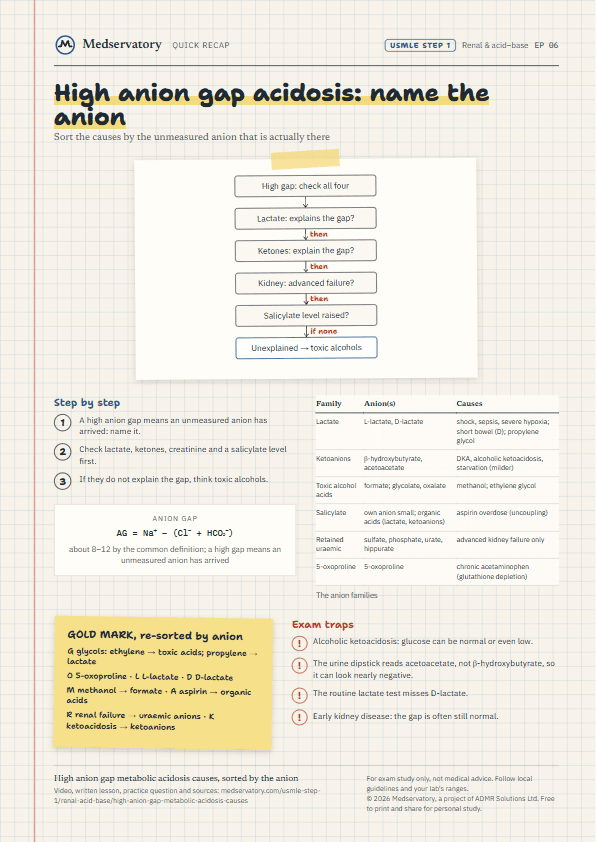
EP 06
High anion gap metabolic acidosis causes, sorted by the anion
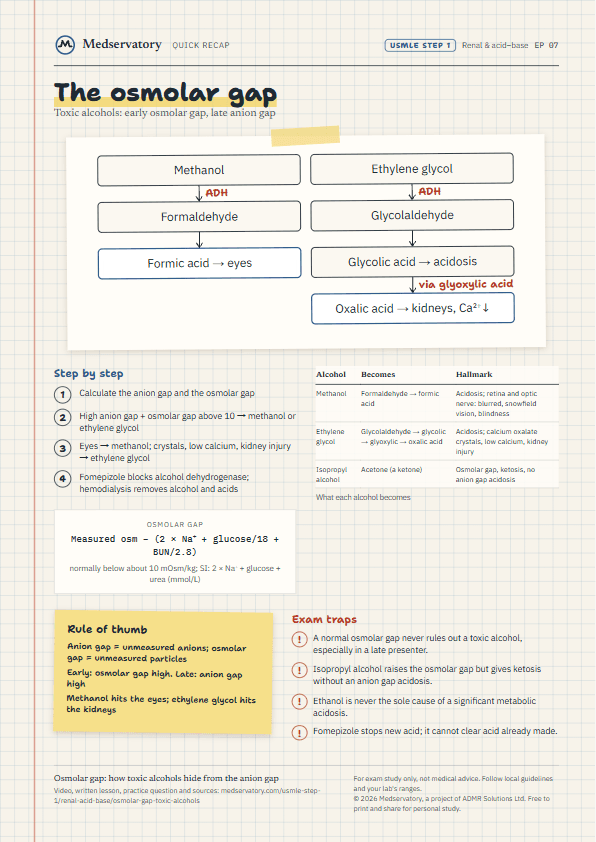
EP 07
Osmolar gap: how toxic alcohols hide from the anion gap
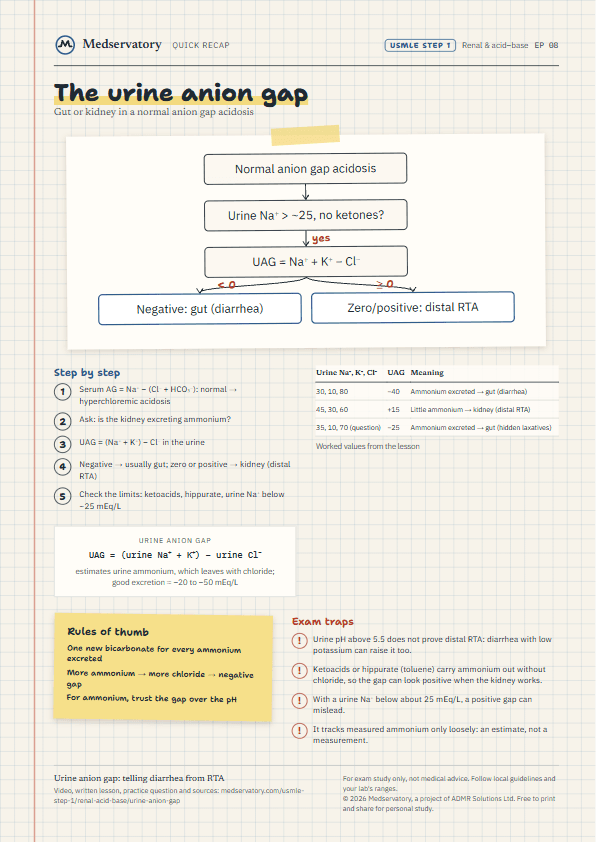
EP 08
Urine anion gap: telling diarrhea from RTA
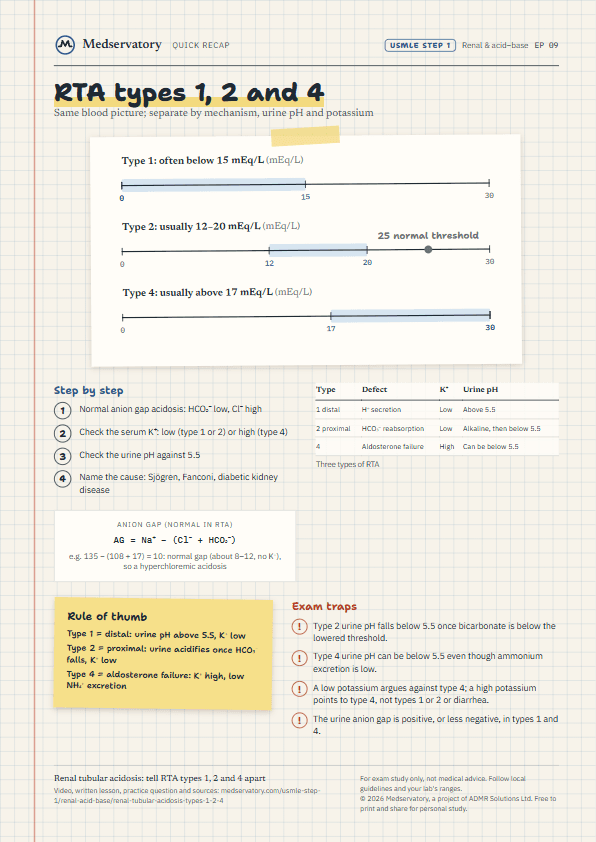
EP 09
Renal tubular acidosis: tell RTA types 1, 2 and 4 apart
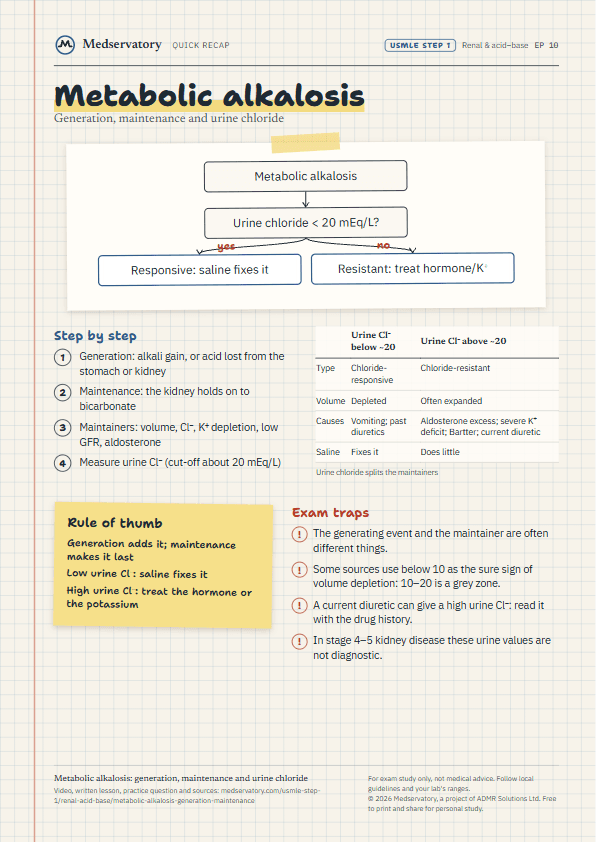
EP 10
Metabolic alkalosis: generation, maintenance and urine chloride
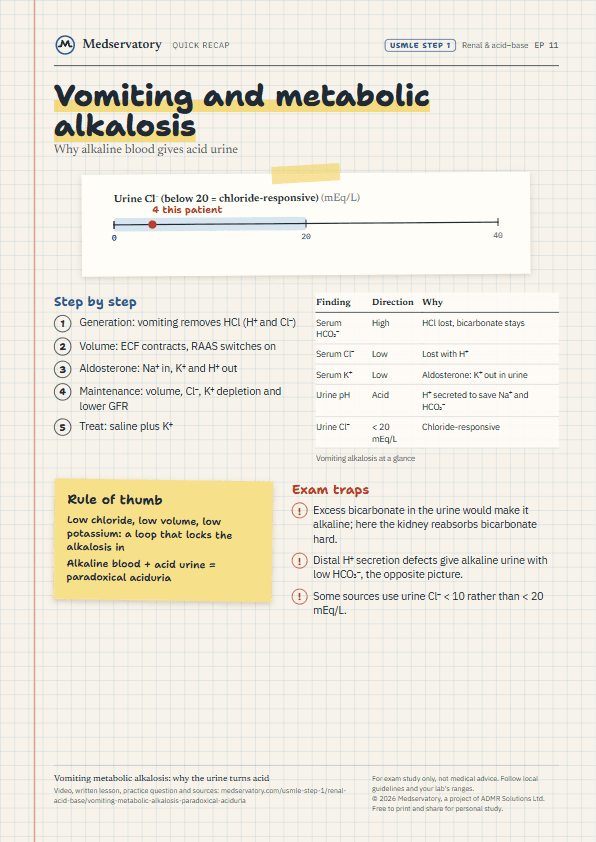
EP 11
Vomiting metabolic alkalosis: why the urine turns acid
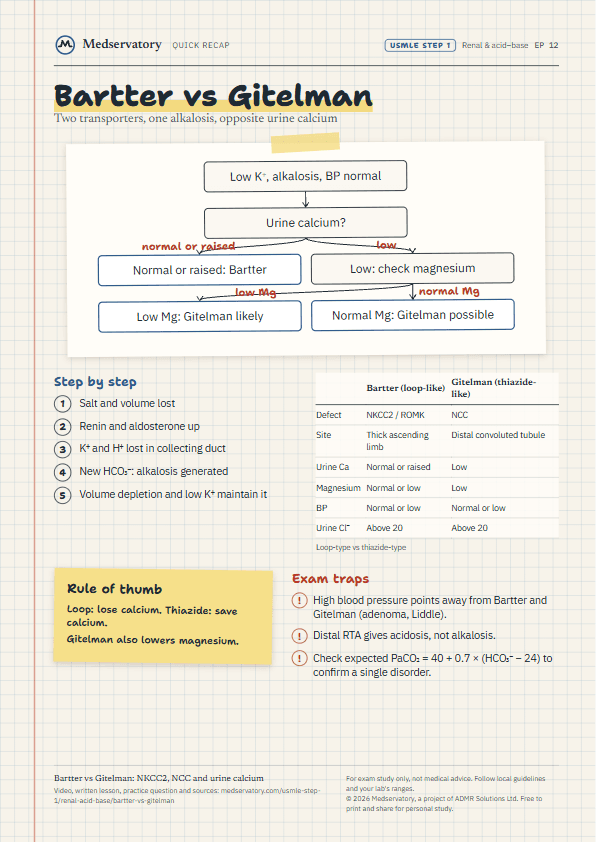
EP 12
Bartter vs Gitelman: NKCC2, NCC and urine calcium
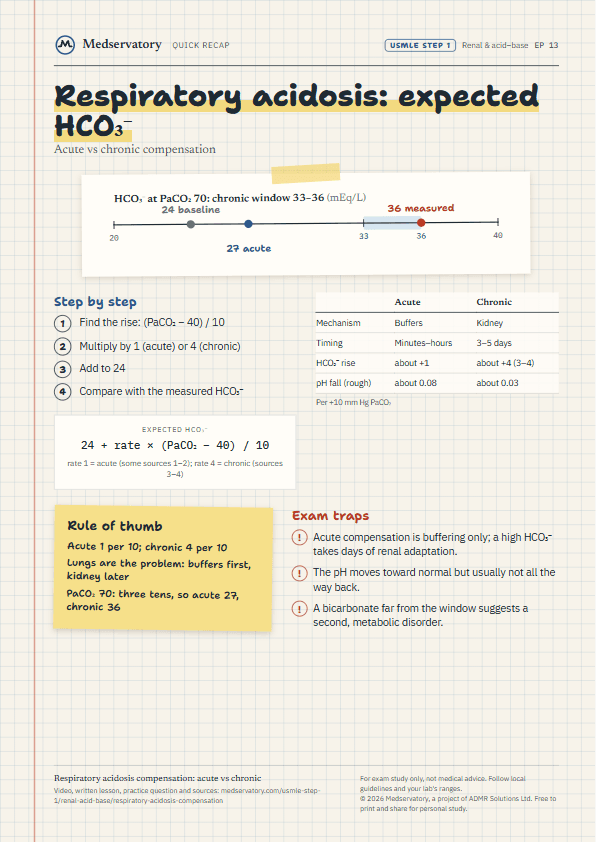
EP 13
Respiratory acidosis compensation: acute vs chronic
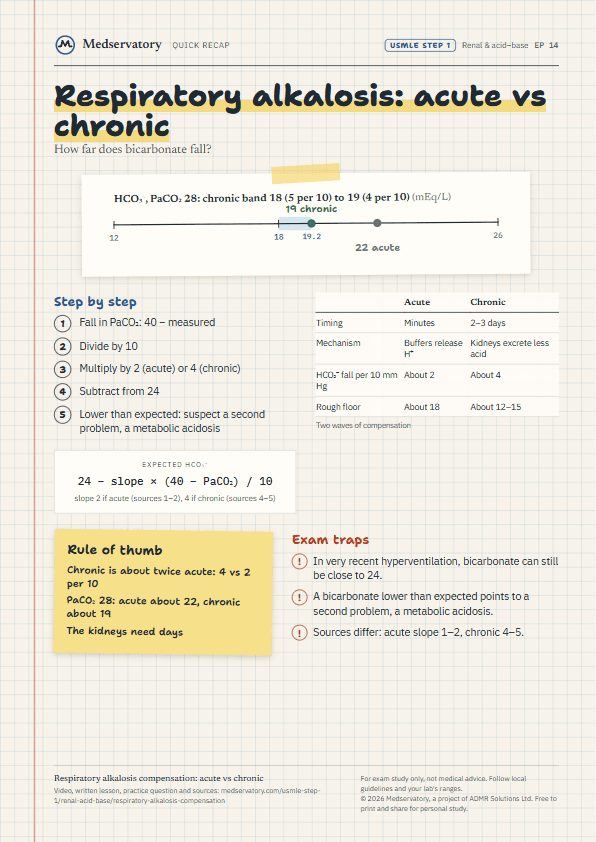
EP 14
Respiratory alkalosis compensation: acute vs chronic
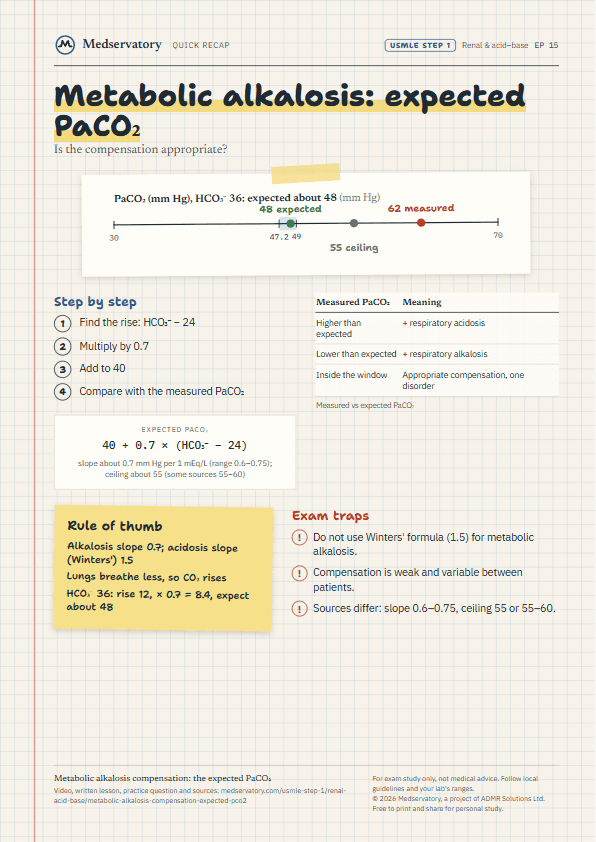
EP 15
Metabolic alkalosis compensation: the expected PaCO₂
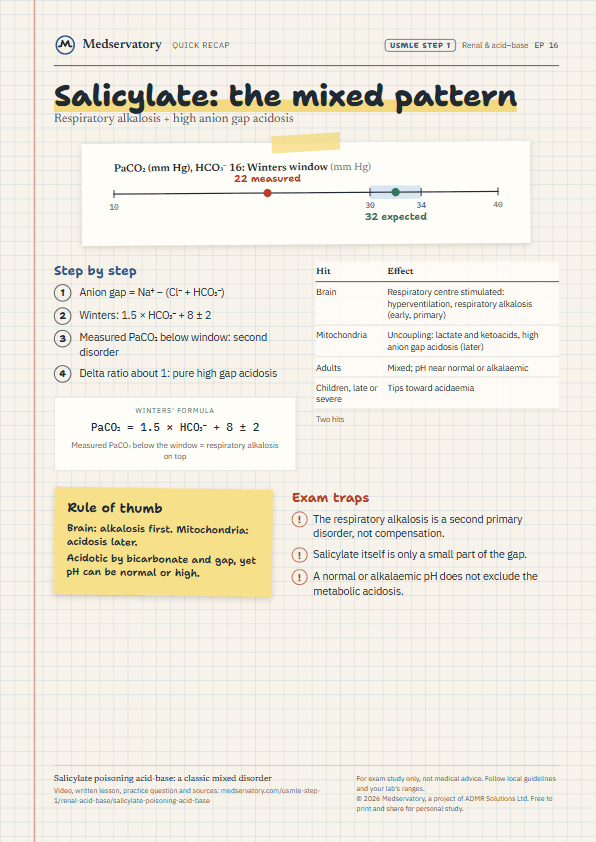
EP 16
Salicylate poisoning acid-base: a classic mixed disorder
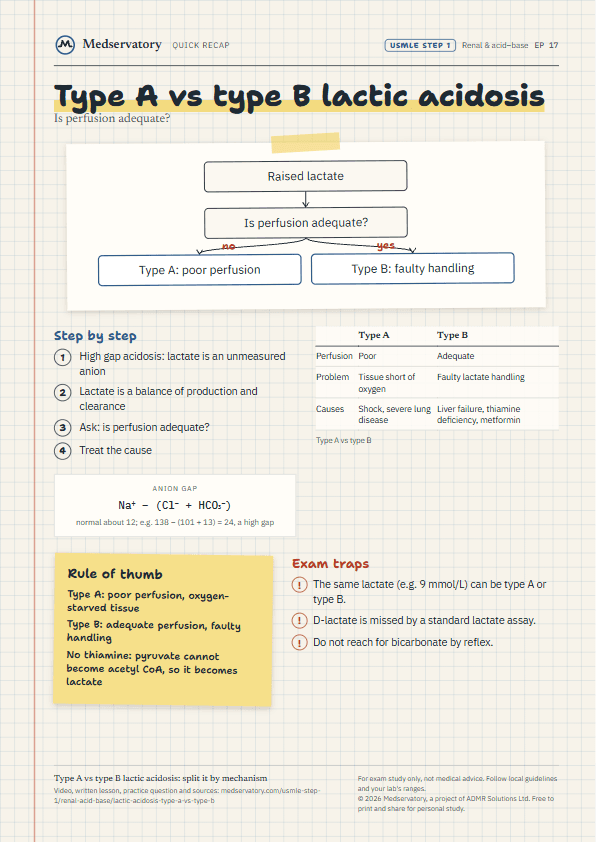
EP 17
Type A vs type B lactic acidosis: split it by mechanism
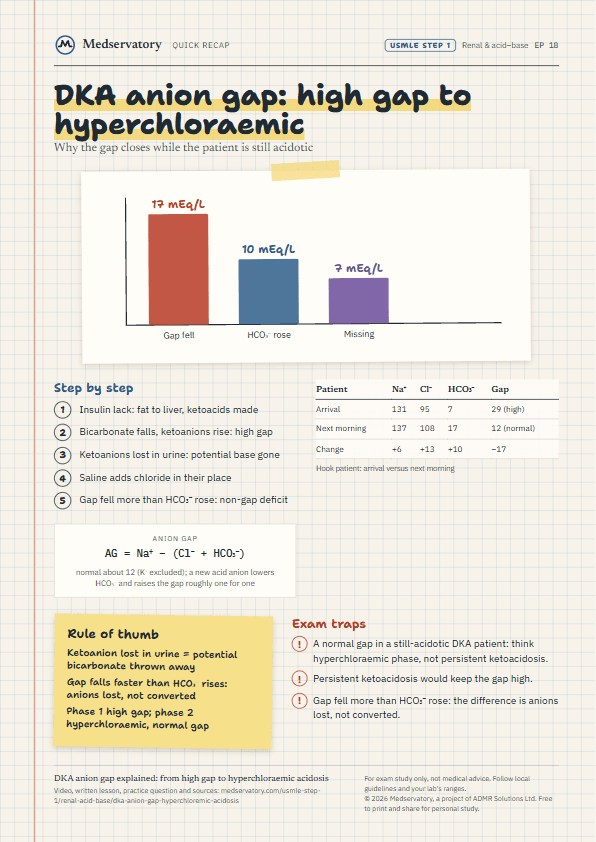
EP 18
DKA anion gap explained: from high gap to hyperchloraemic acidosis
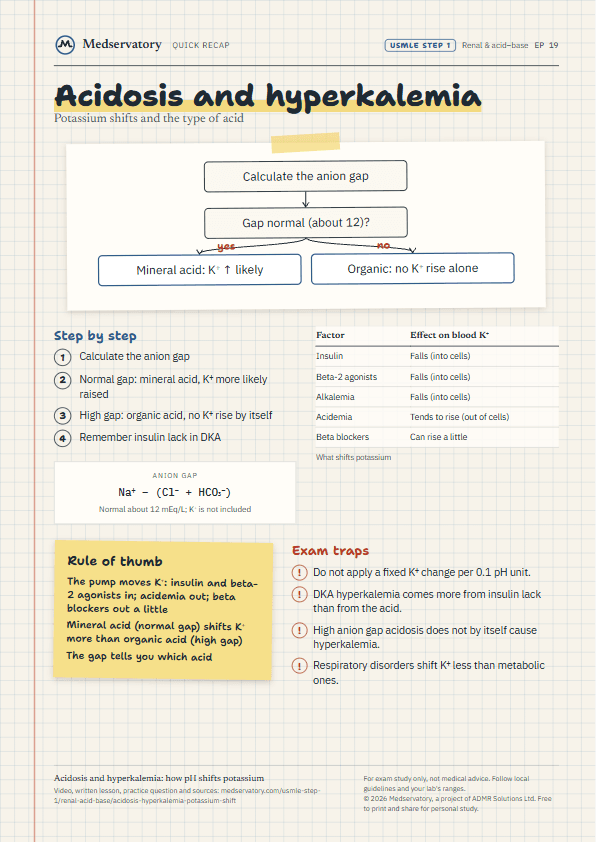
EP 19
Acidosis and hyperkalemia: how pH shifts potassium
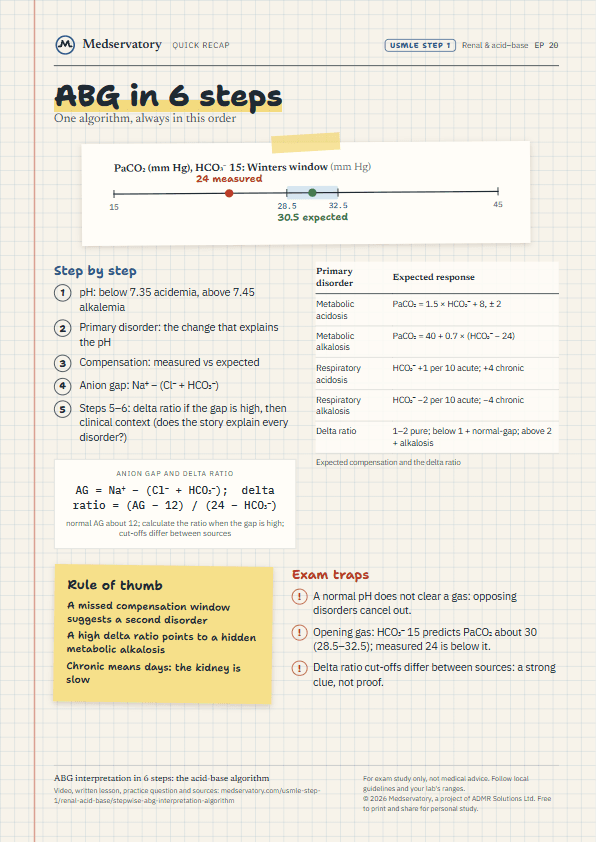
EP 20
ABG interpretation in 6 steps: the acid-base algorithm
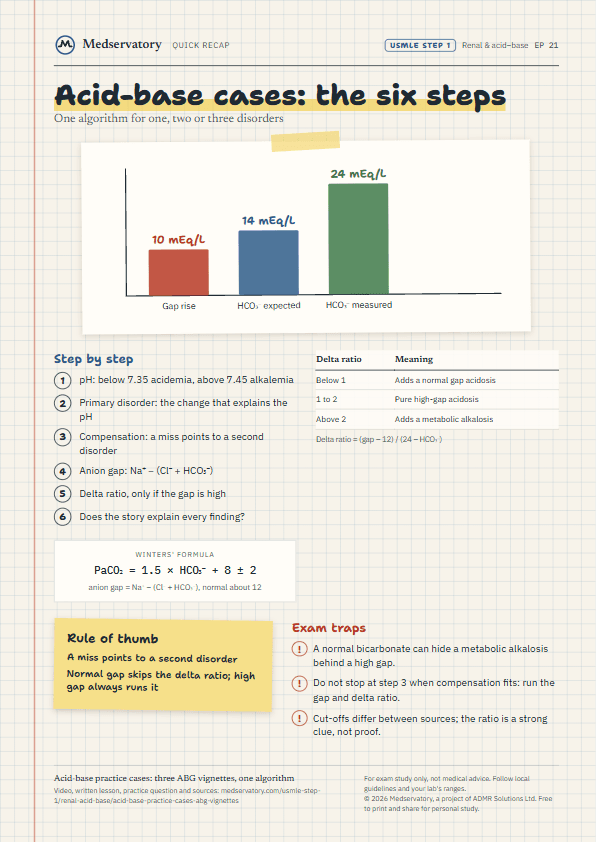
EP 21
Acid-base practice cases: three ABG vignettes, one algorithm
USMLE Step 1
Renal physiology
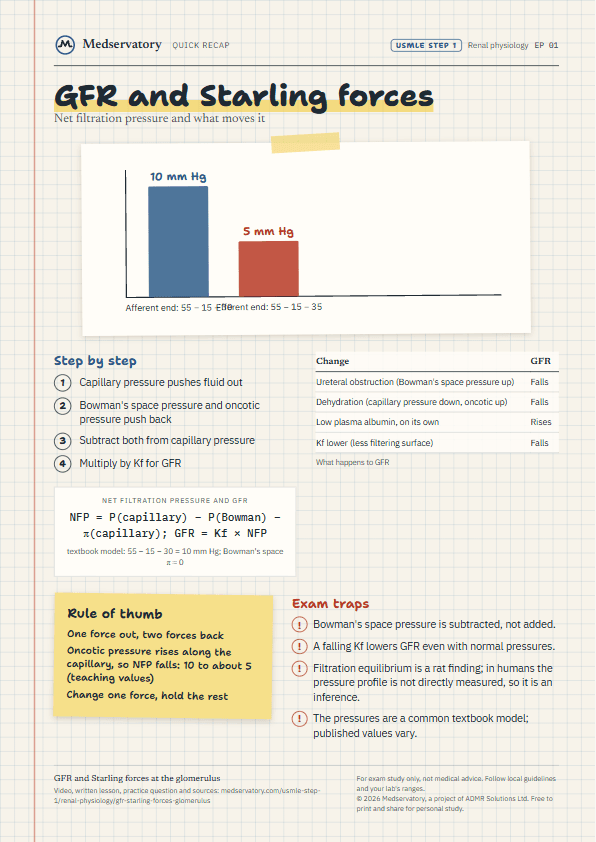
EP 01
GFR and Starling forces at the glomerulus
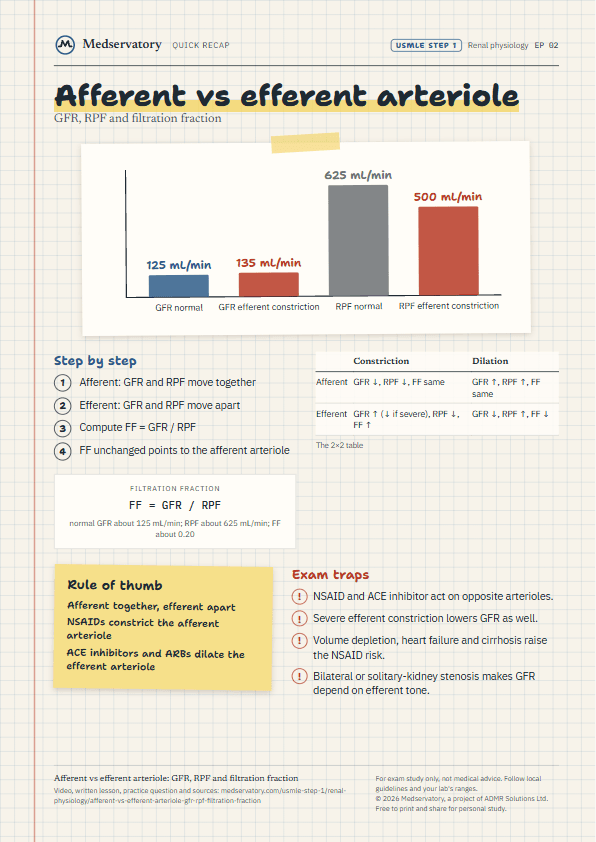
EP 02
Afferent vs efferent arteriole: GFR, RPF and filtration fraction
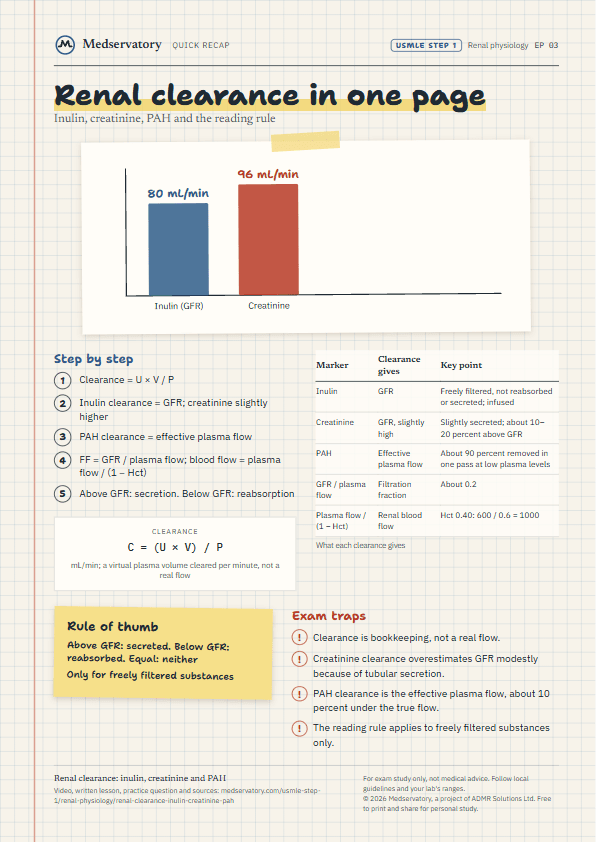
EP 03
Renal clearance: inulin, creatinine and PAH
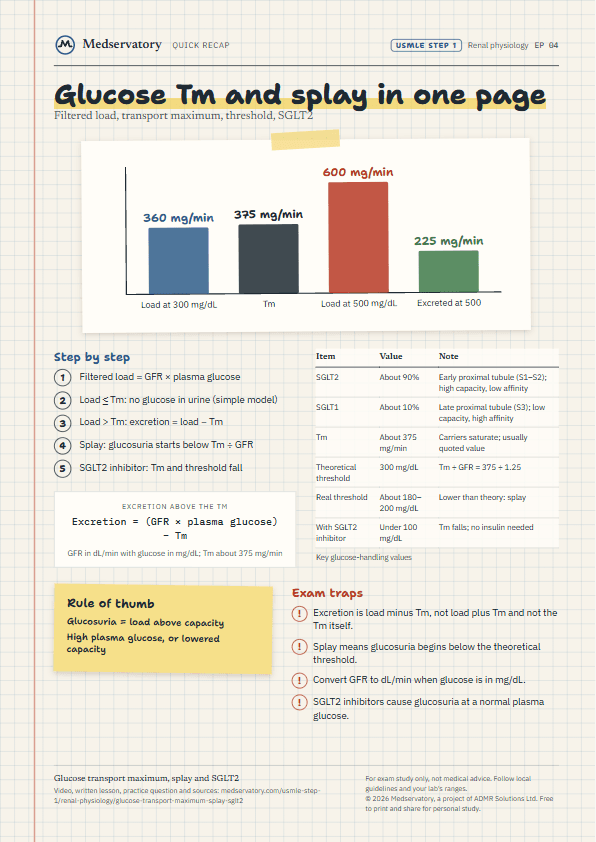
EP 04
Glucose transport maximum, splay and SGLT2
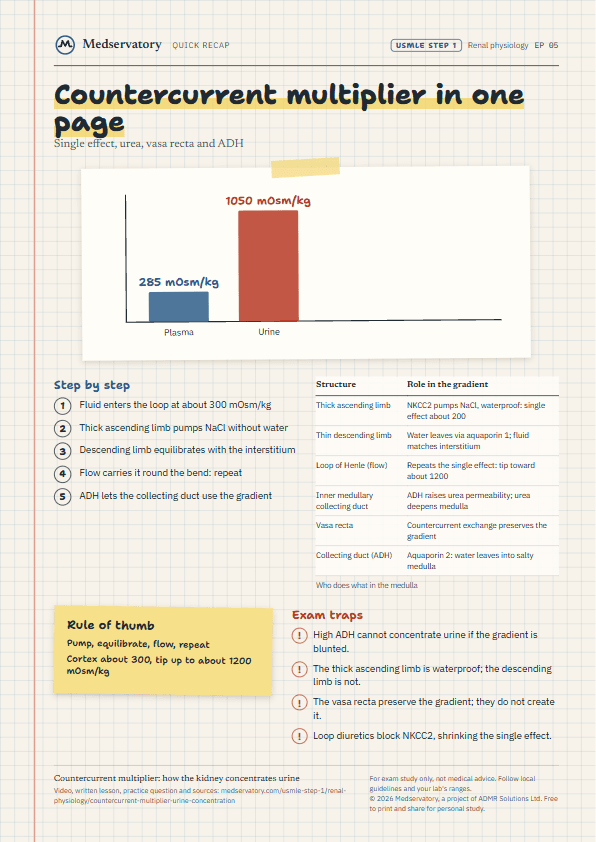
EP 05
Countercurrent multiplier: how the kidney concentrates urine
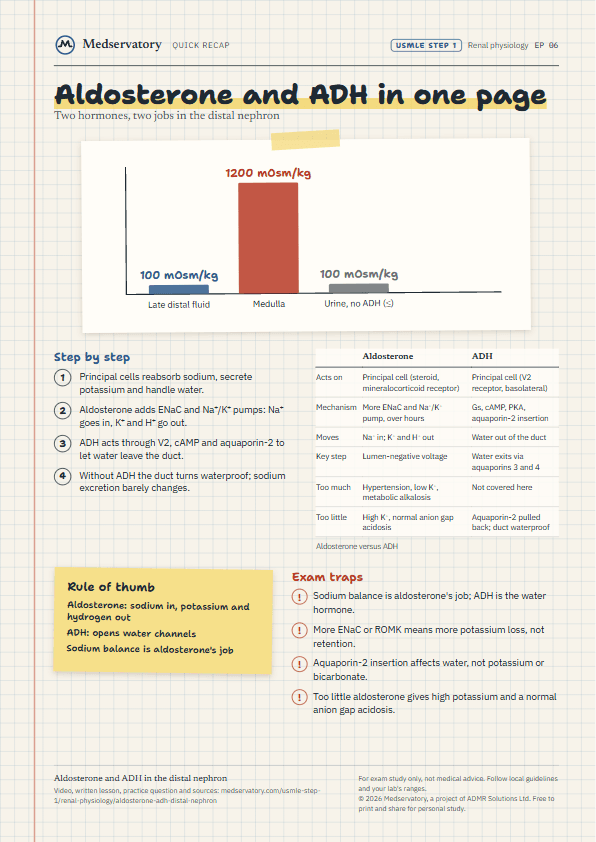
EP 06
Aldosterone and ADH in the distal nephron
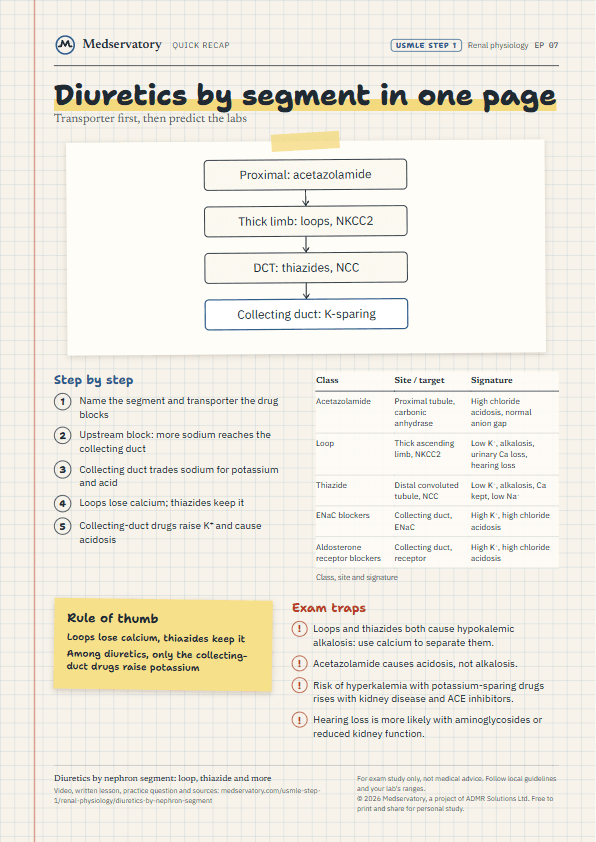
EP 07
Diuretics by nephron segment: loop, thiazide and more
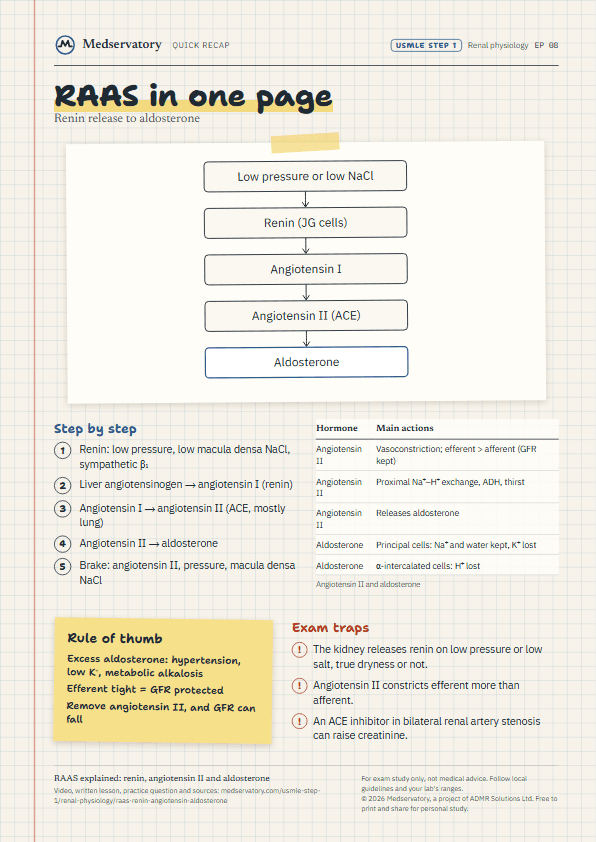
EP 08
RAAS explained: renin, angiotensin II and aldosterone
USMLE Step 1
Cardiovascular physiology
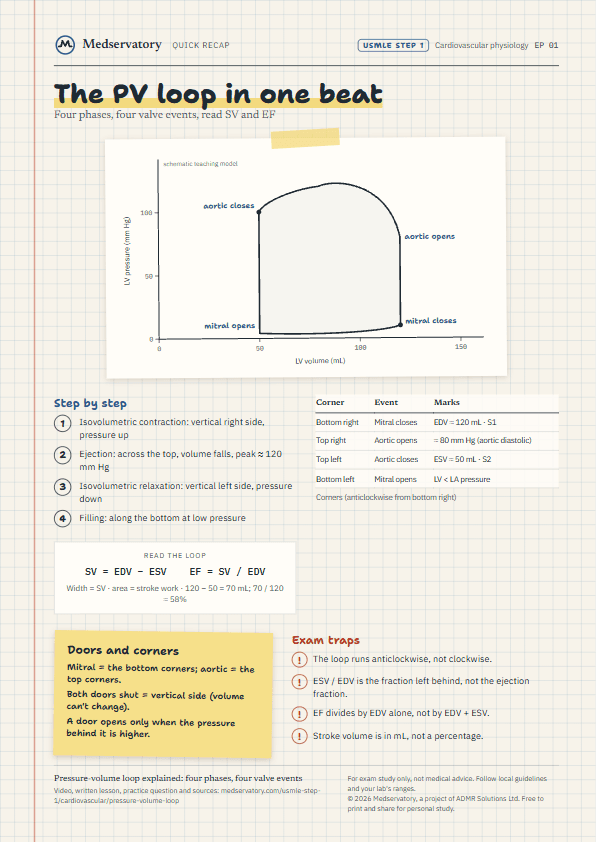
EP 01
Pressure-volume loop explained: four phases, four valve events
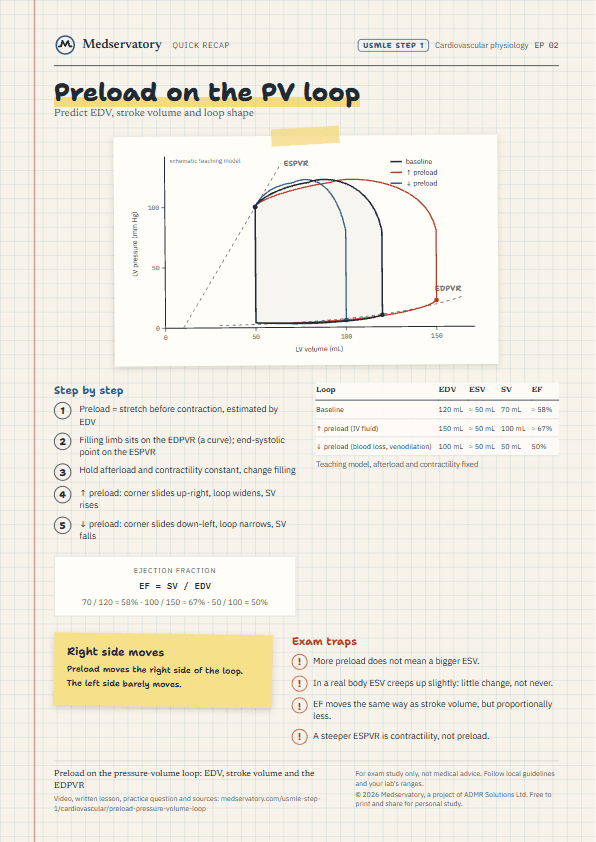
EP 02
Preload on the pressure-volume loop: EDV, stroke volume and the EDPVR
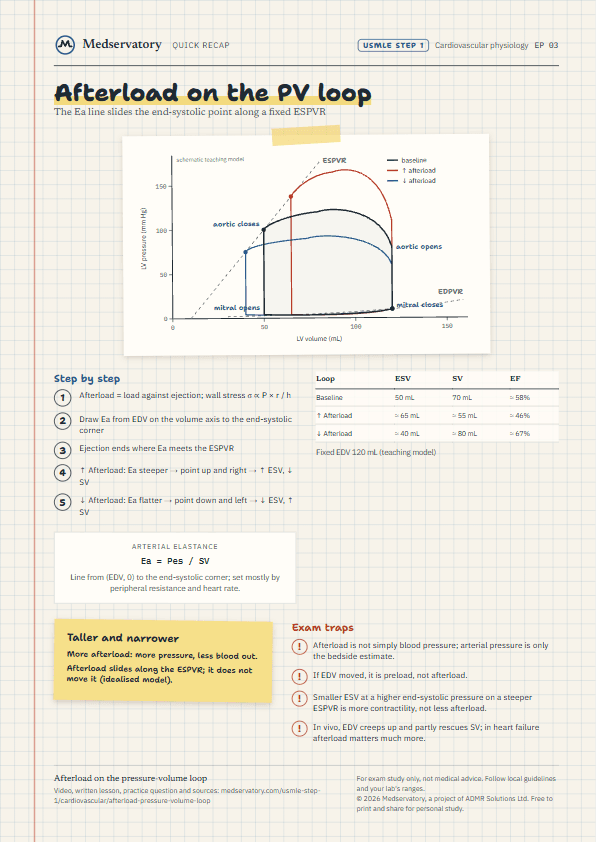
EP 03
Afterload on the pressure-volume loop
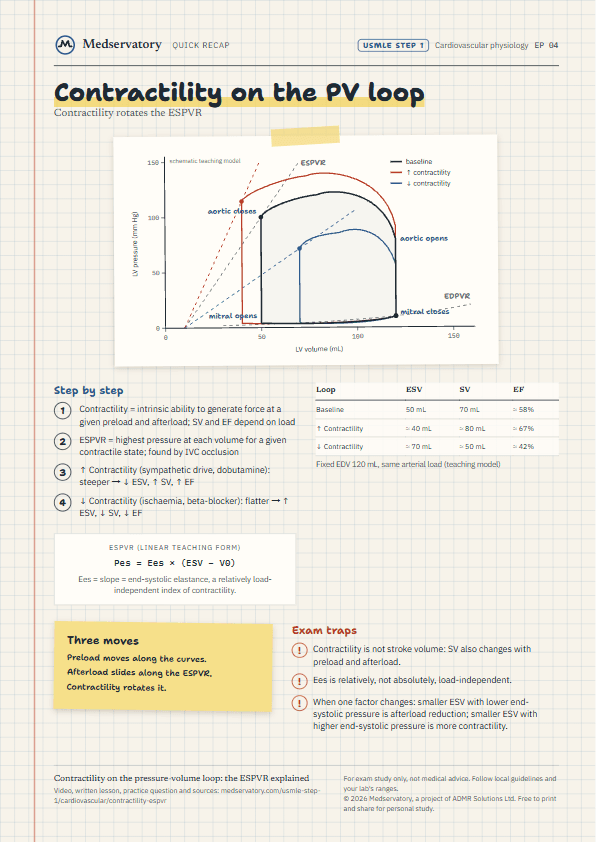
EP 04
Contractility on the pressure-volume loop: the ESPVR explained
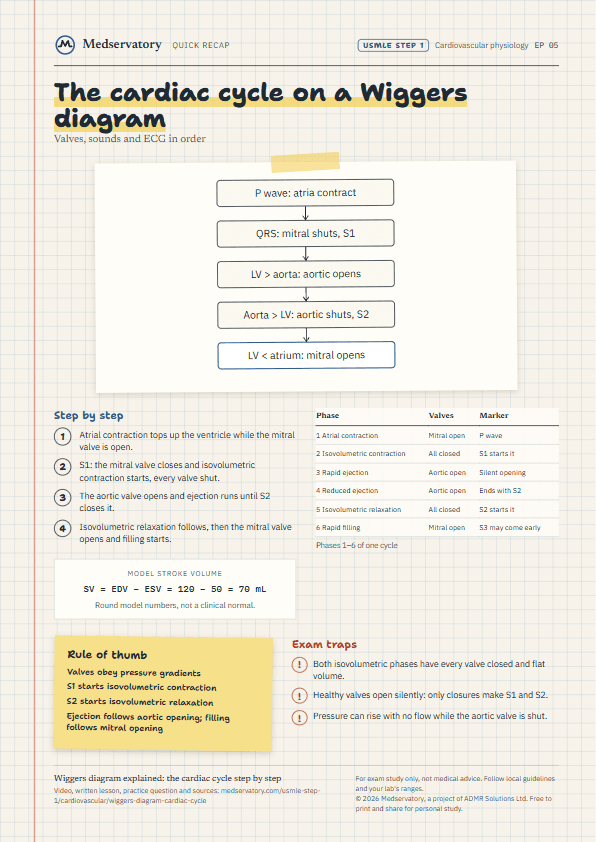
EP 05
Wiggers diagram explained: the cardiac cycle step by step
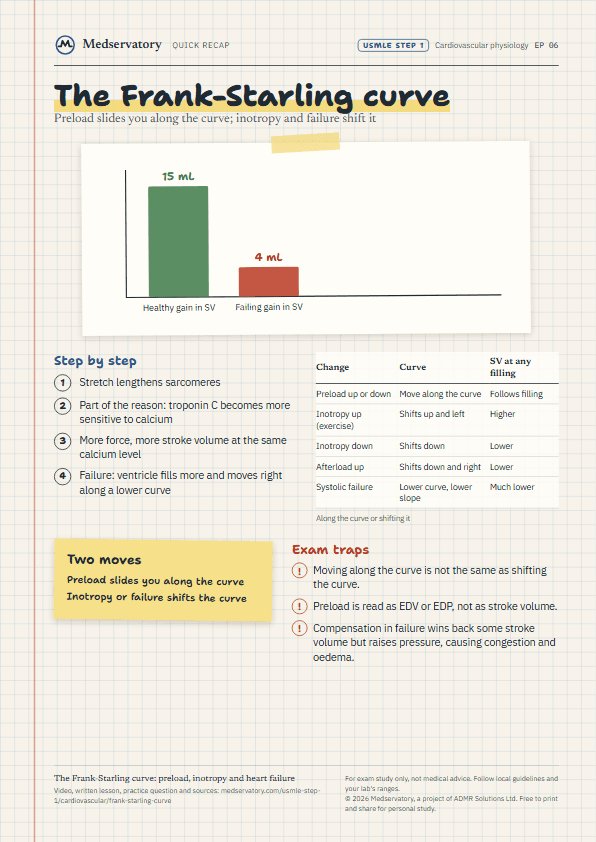
EP 06
The Frank-Starling curve: preload, inotropy and heart failure
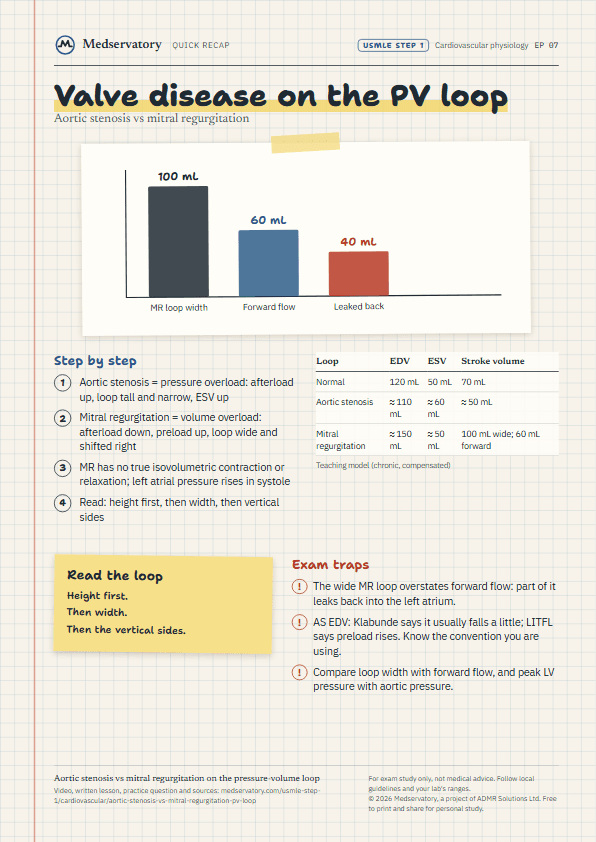
EP 07
Aortic stenosis vs mitral regurgitation on the pressure-volume loop
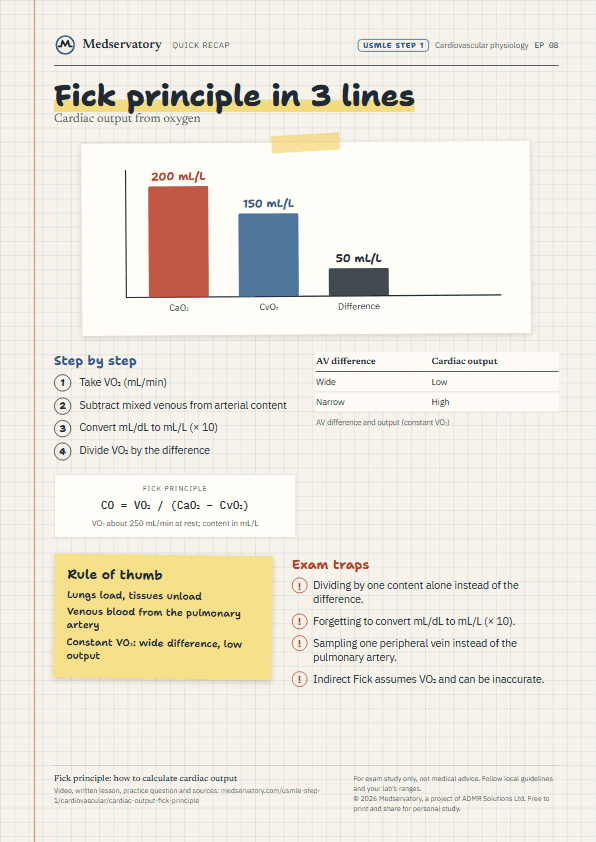
EP 08
Fick principle: how to calculate cardiac output
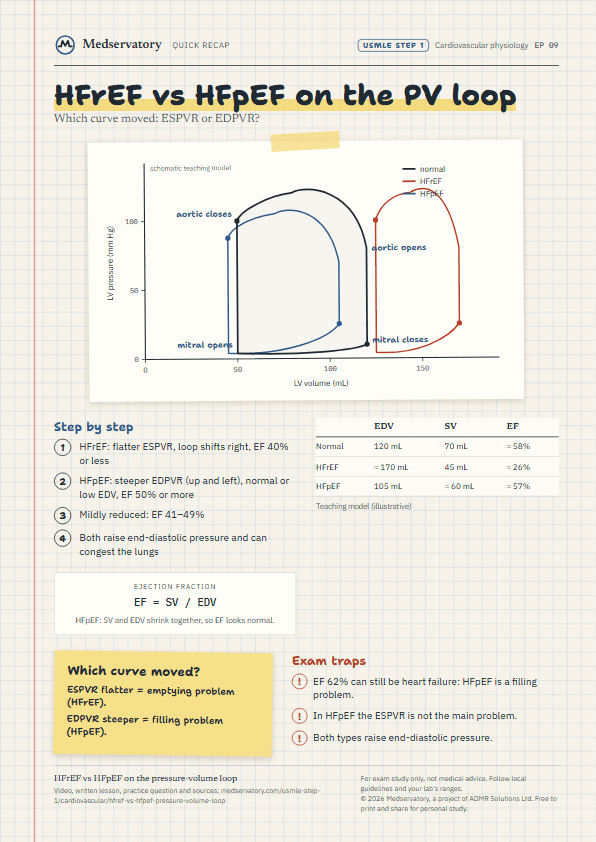
EP 09
HFrEF vs HFpEF on the pressure-volume loop
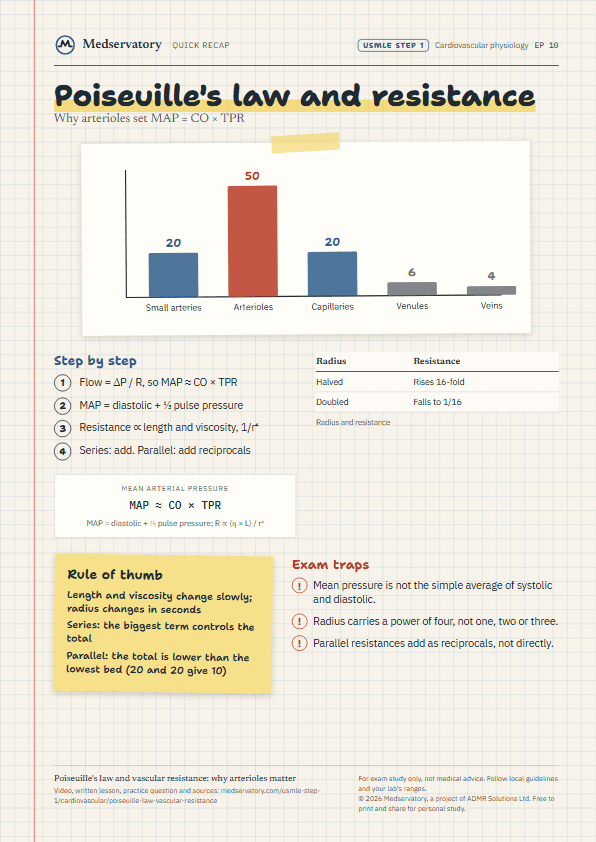
EP 10
Poiseuille's law and vascular resistance: why arterioles matter
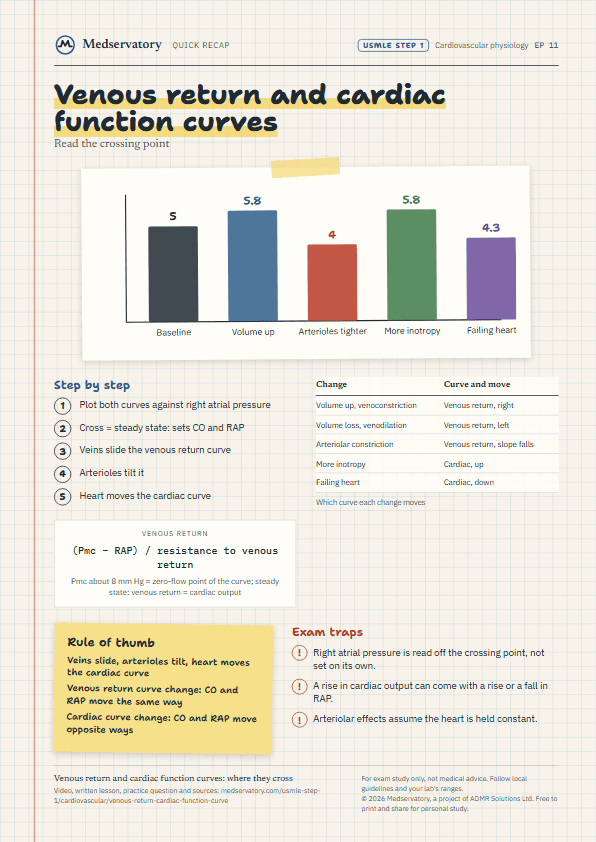
EP 11
Venous return and cardiac function curves: where they cross
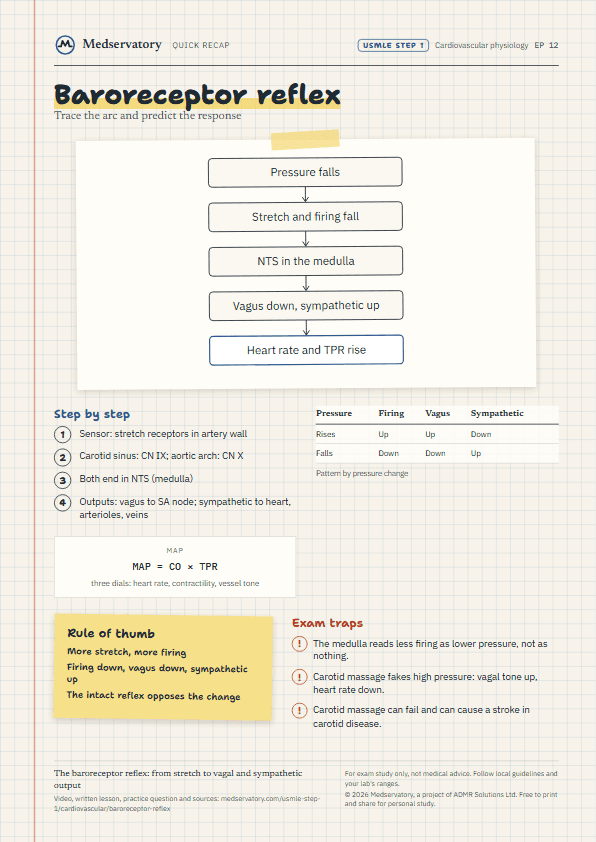
EP 12
The baroreceptor reflex: from stretch to vagal and sympathetic output
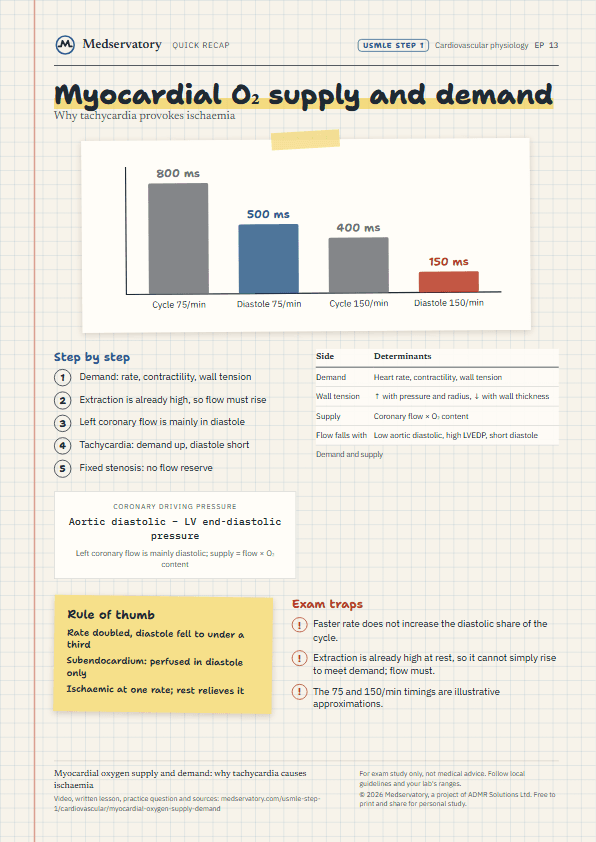
EP 13
Myocardial oxygen supply and demand: why tachycardia causes ischaemia
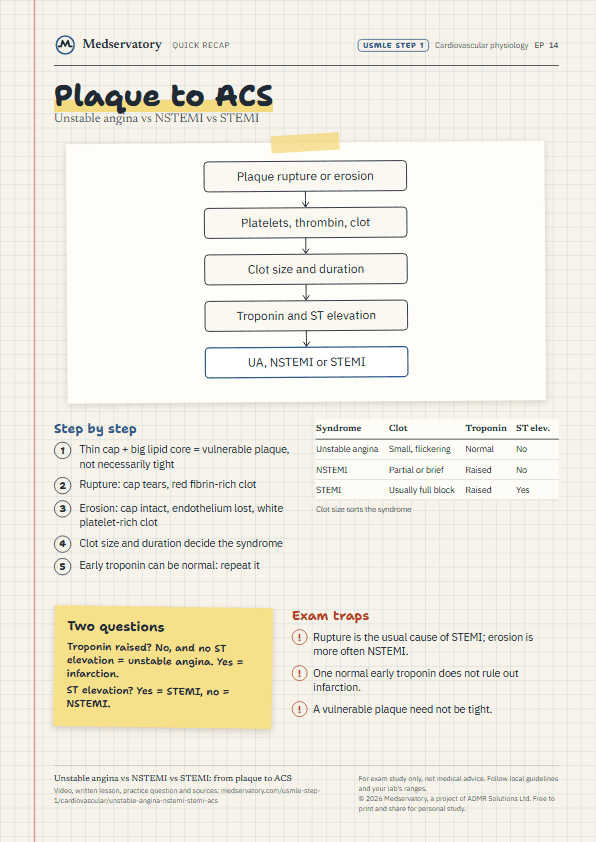
EP 14
Unstable angina vs NSTEMI vs STEMI: from plaque to ACS
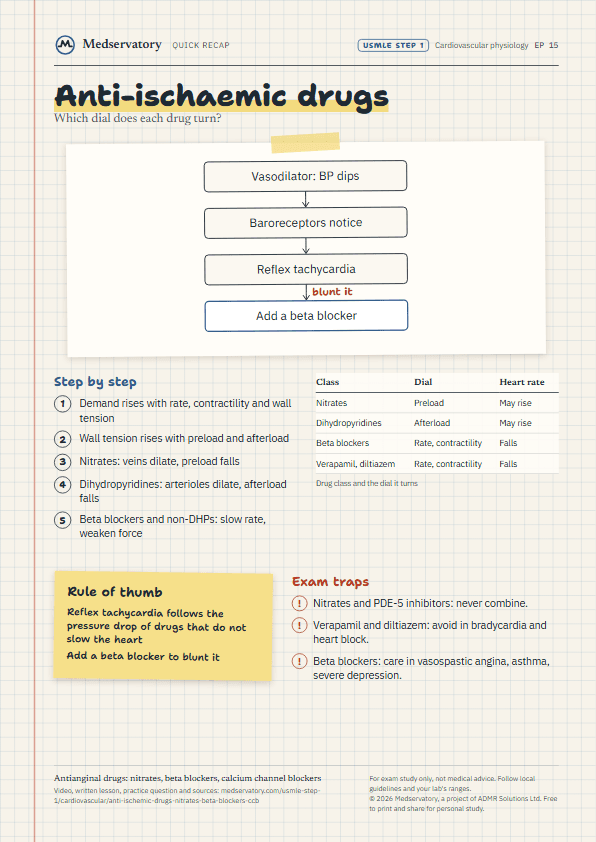
EP 15
Antianginal drugs: nitrates, beta blockers, calcium channel blockers
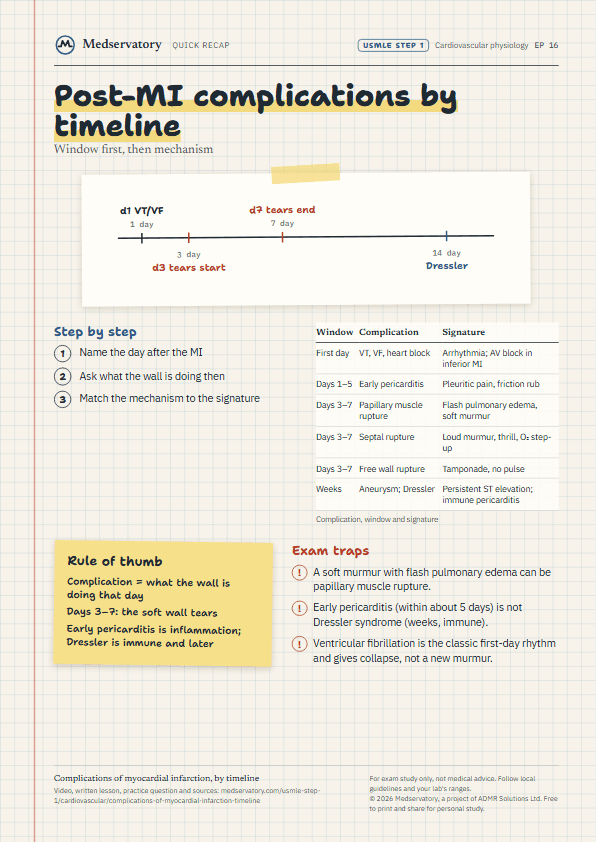
EP 16
Complications of myocardial infarction, by timeline
USMLE Step 1
Heart sounds, murmurs and ECG
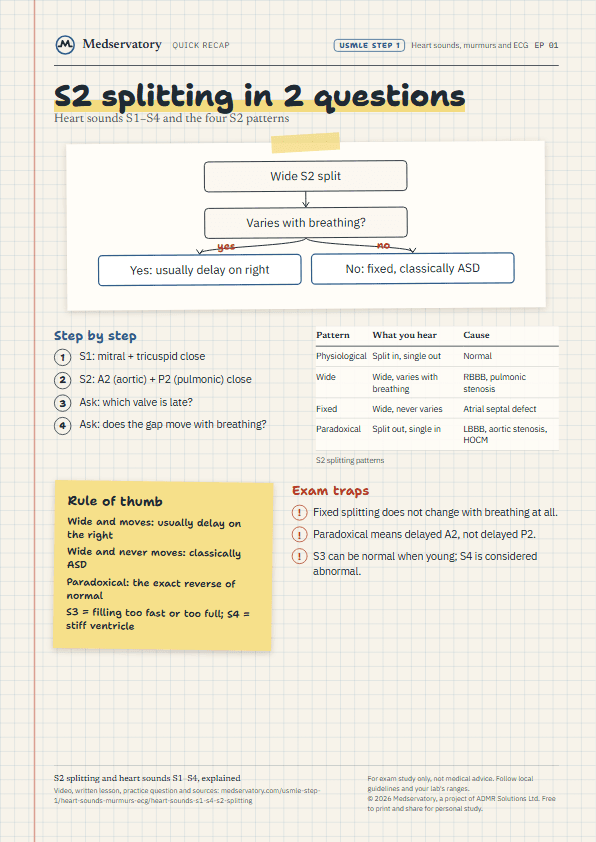
EP 01
S2 splitting and heart sounds S1–S4, explained
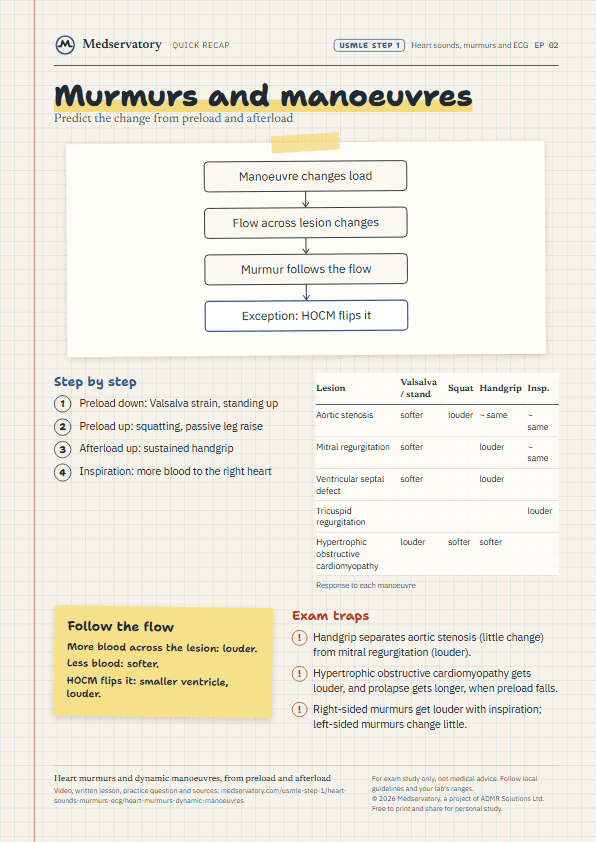
EP 02
Heart murmurs and dynamic manoeuvres, from preload and afterload
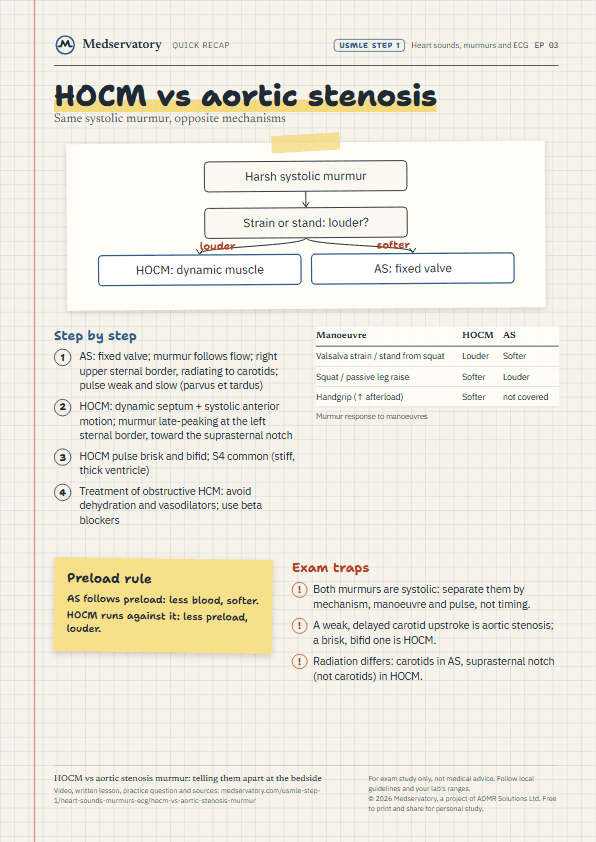
EP 03
HOCM vs aortic stenosis murmur: telling them apart at the bedside
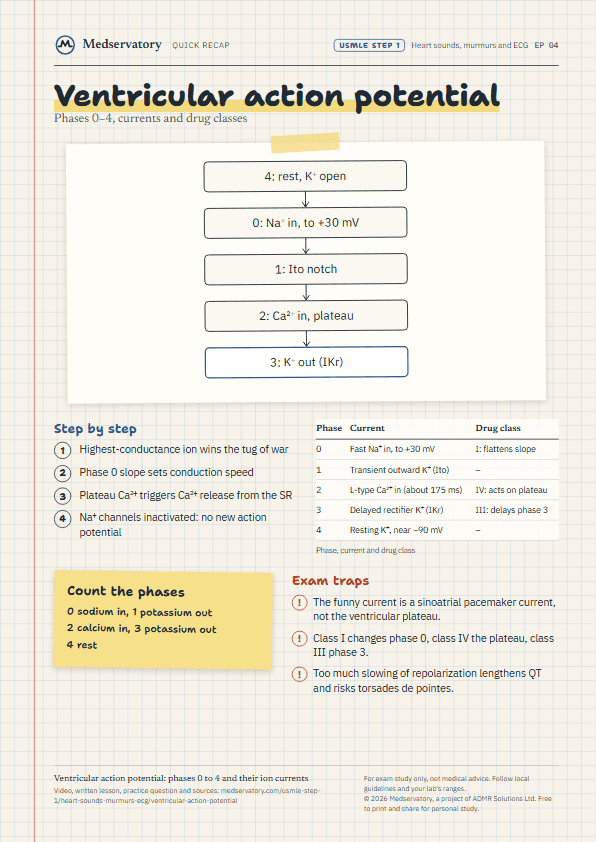
EP 04
Ventricular action potential: phases 0 to 4 and their ion currents
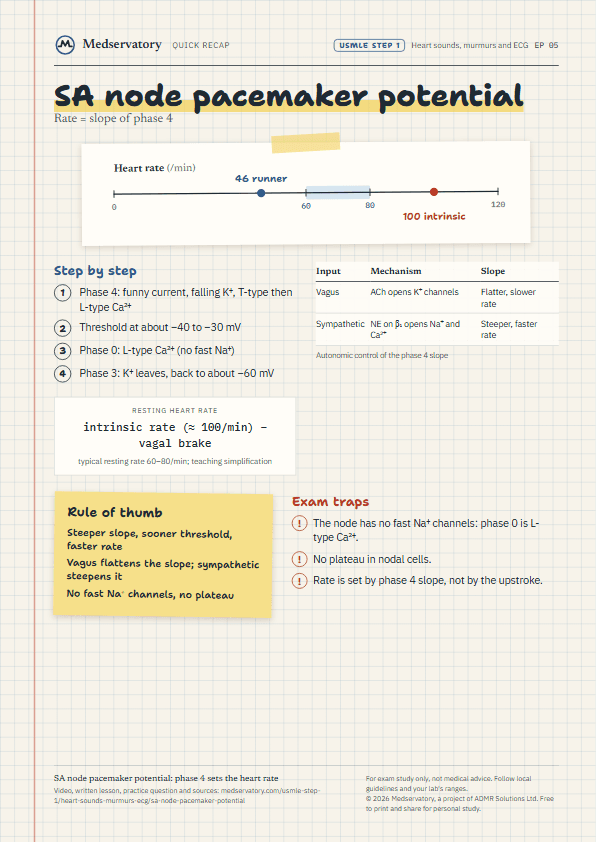
EP 05
SA node pacemaker potential: phase 4 sets the heart rate
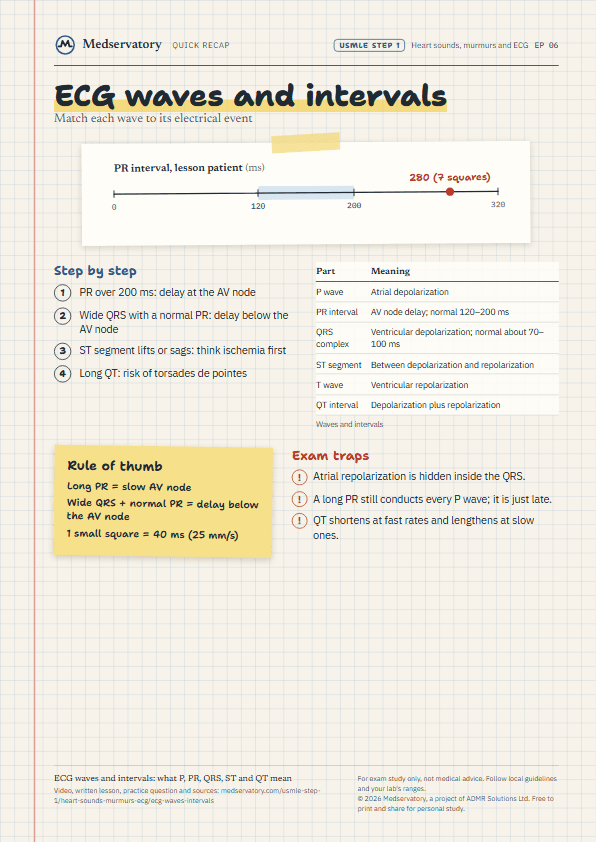
EP 06
ECG waves and intervals: what P, PR, QRS, ST and QT mean
USMLE Step 1
Respiratory physiology
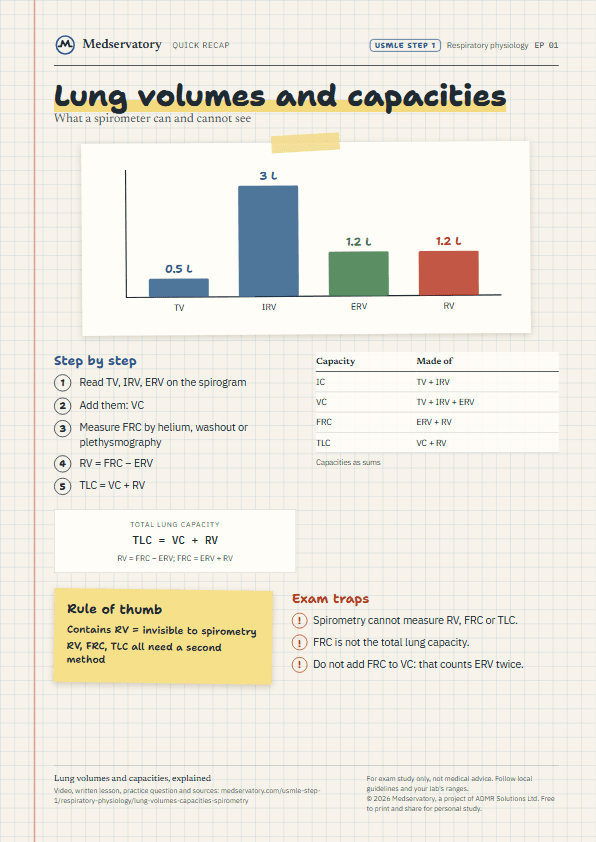
EP 01
Lung volumes and capacities, explained
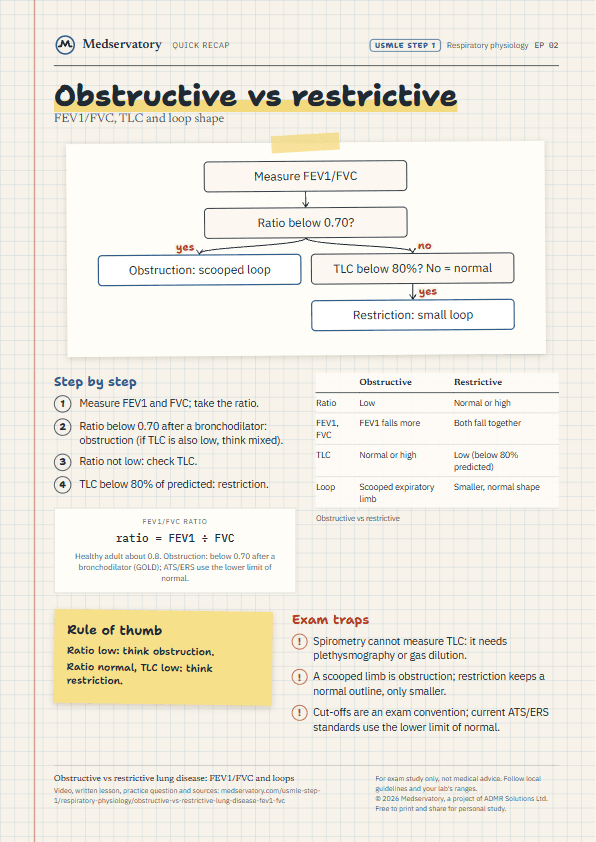
EP 02
Obstructive vs restrictive lung disease: FEV1/FVC and loops
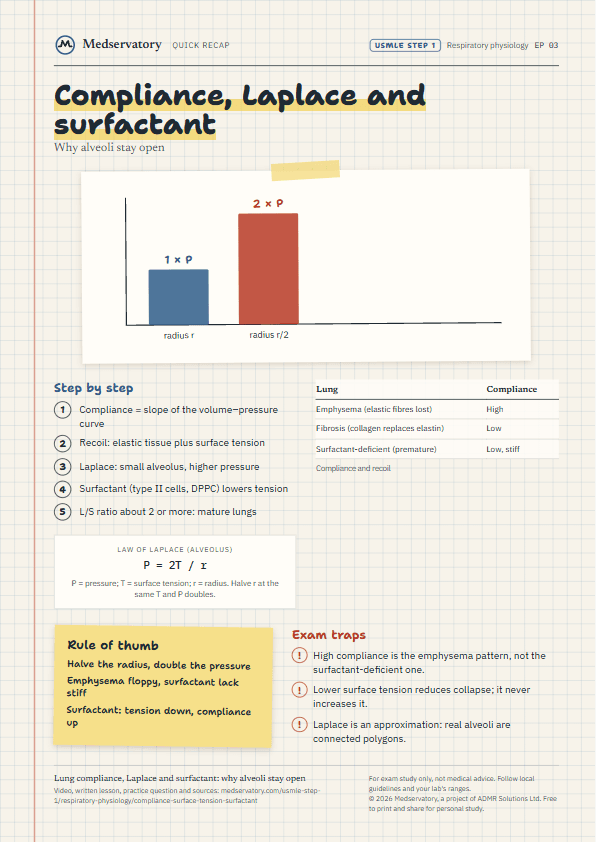
EP 03
Lung compliance, Laplace and surfactant: why alveoli stay open
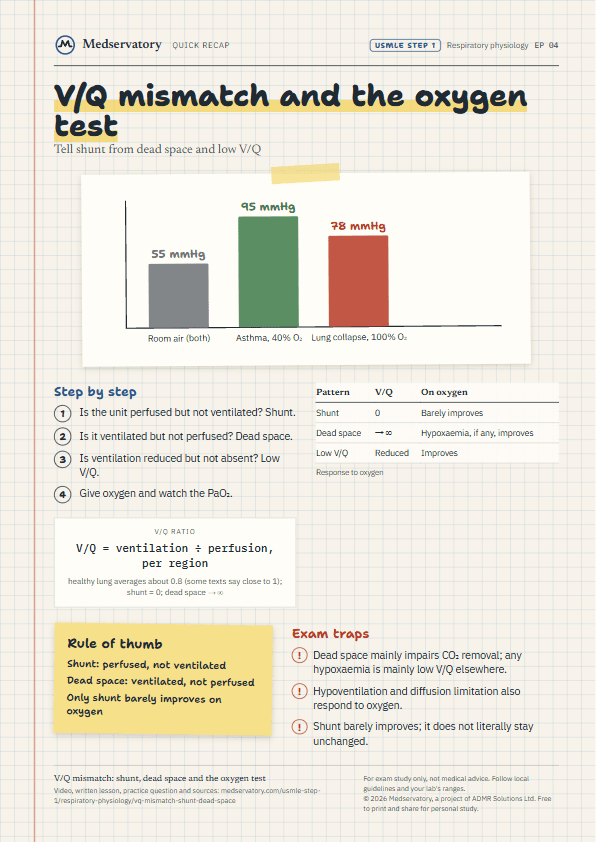
EP 04
V/Q mismatch: shunt, dead space and the oxygen test
EP 05
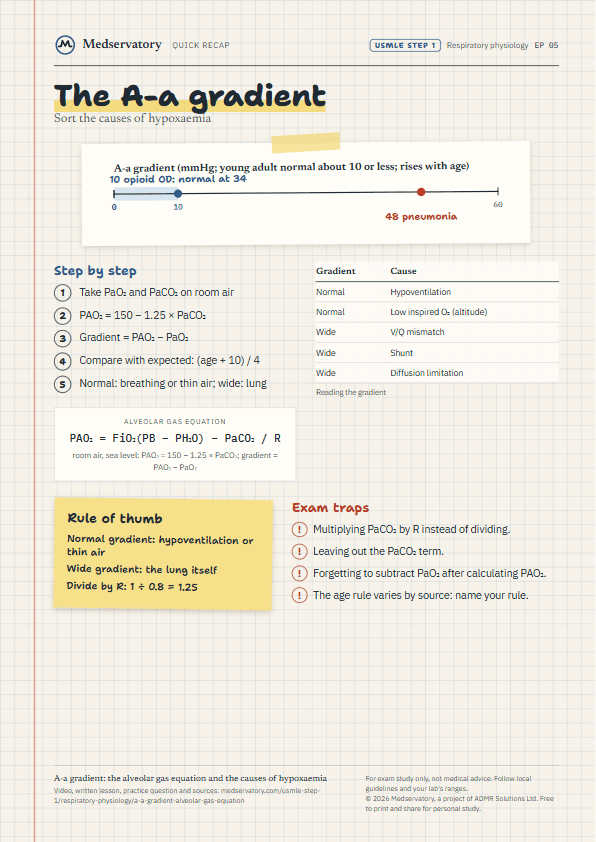
A-a gradient: the alveolar gas equation and the causes of hypoxaemia
EP 06
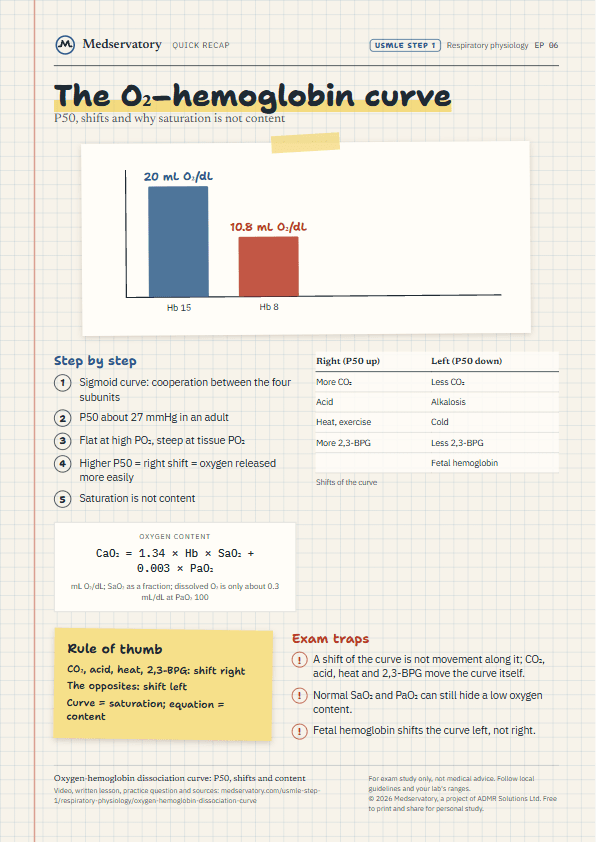
Oxygen-hemoglobin dissociation curve: P50, shifts and content
EP 07
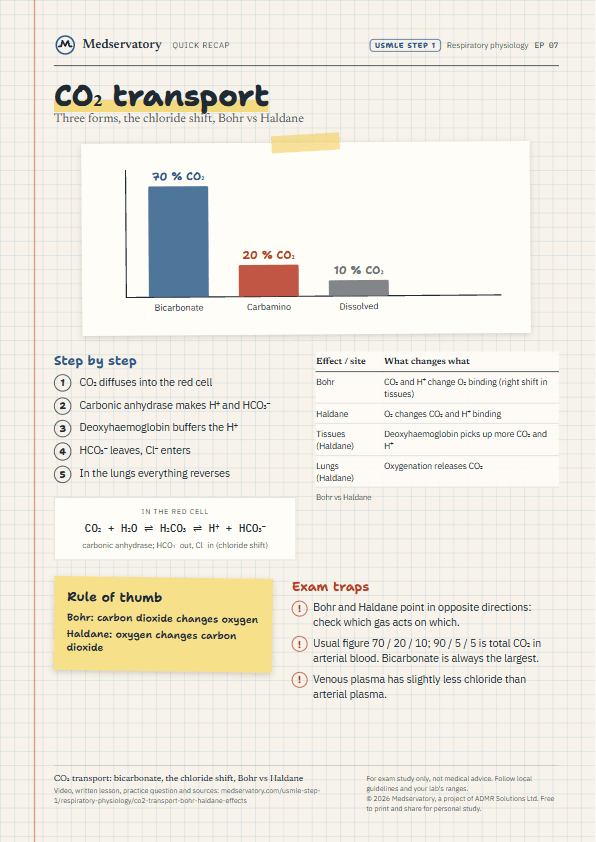
CO₂ transport: bicarbonate, the chloride shift, Bohr vs Haldane
EP 08
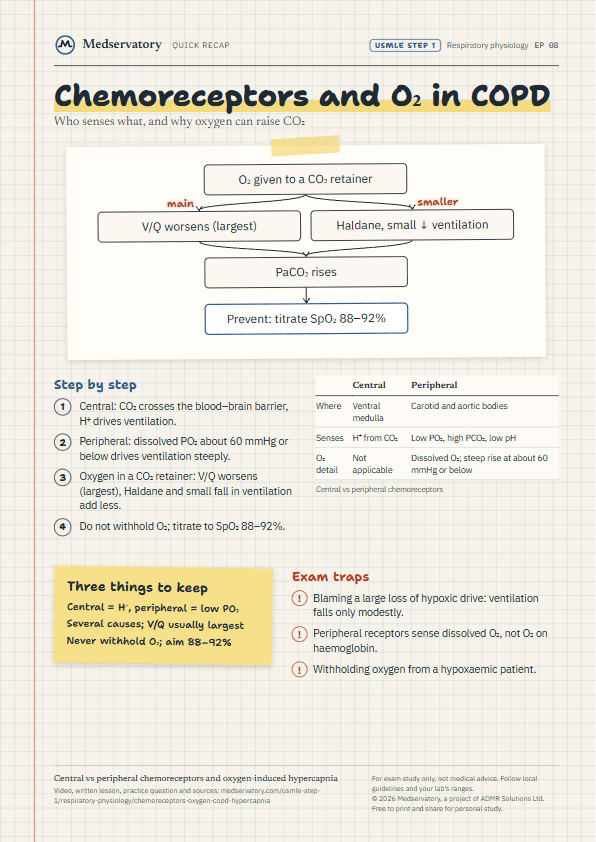
Central vs peripheral chemoreceptors and oxygen-induced hypercapnia
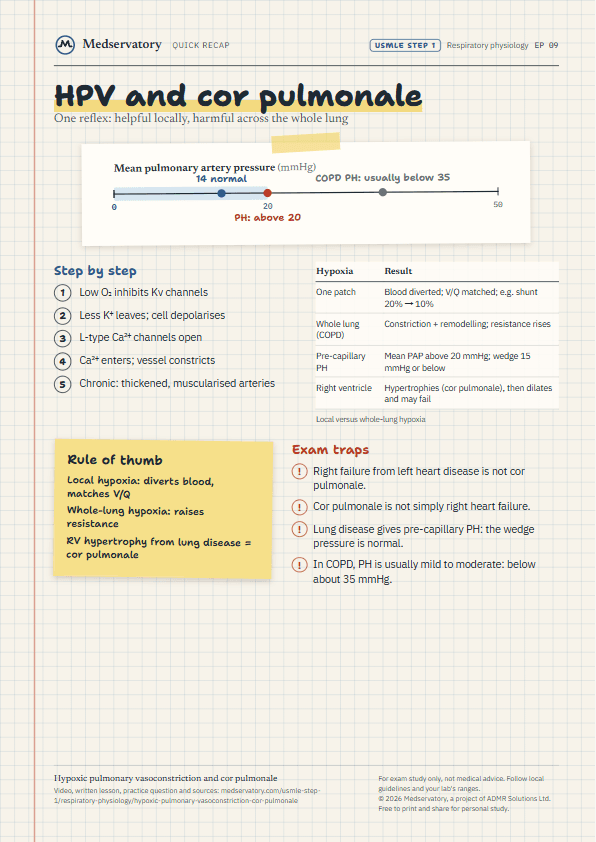
EP 09
Hypoxic pulmonary vasoconstriction and cor pulmonale
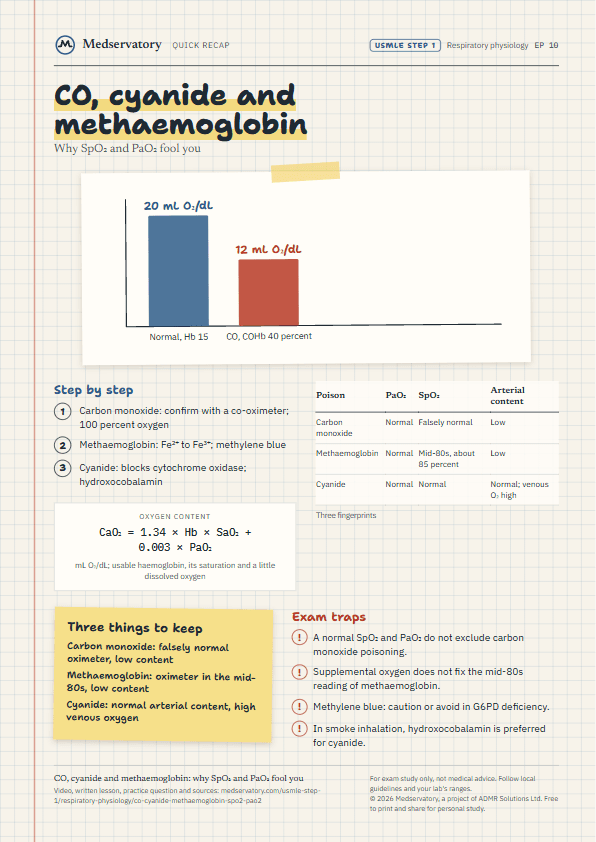
EP 10
CO, cyanide and methaemoglobin: why SpO₂ and PaO₂ fool you
USMLE Step 1
Neuroanatomy and lesion localisation
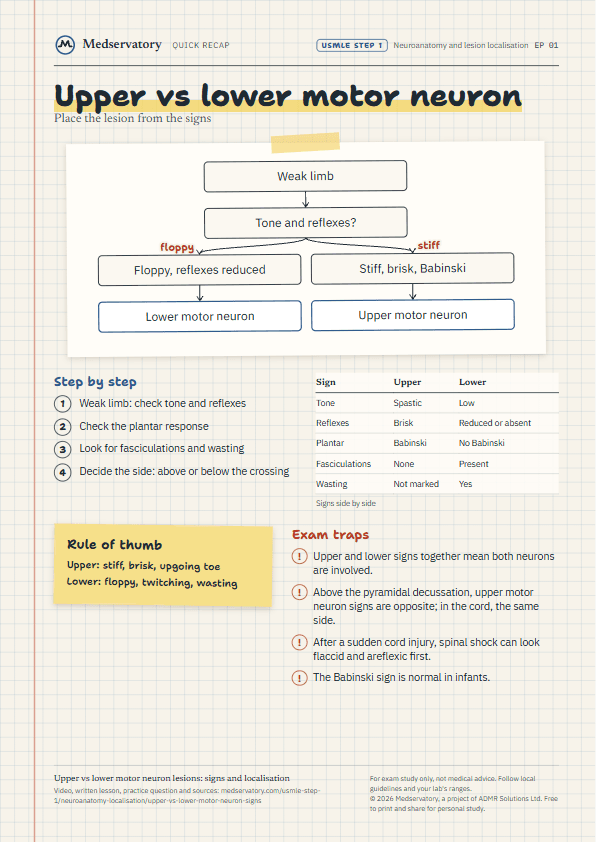
EP 01
Upper vs lower motor neuron lesions: signs and localisation
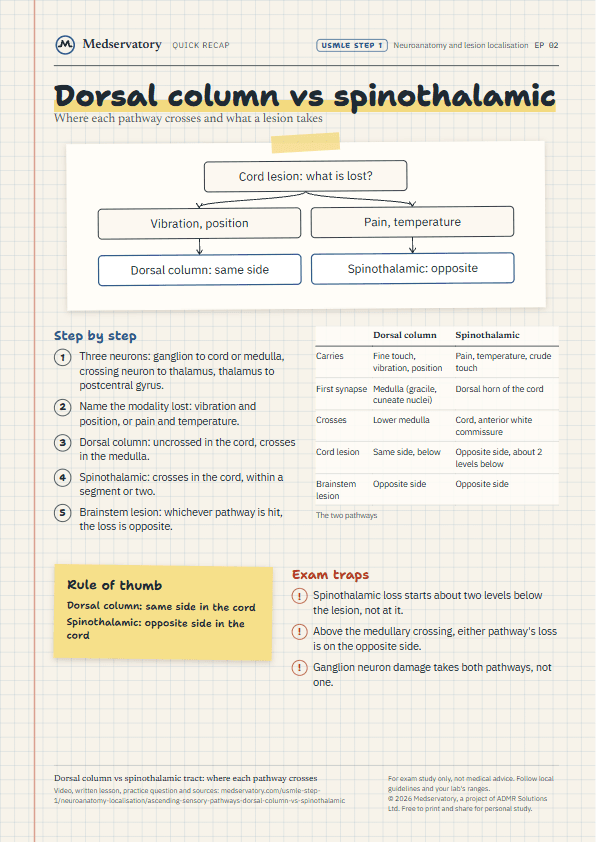
EP 02
Dorsal column vs spinothalamic tract: where each pathway crosses
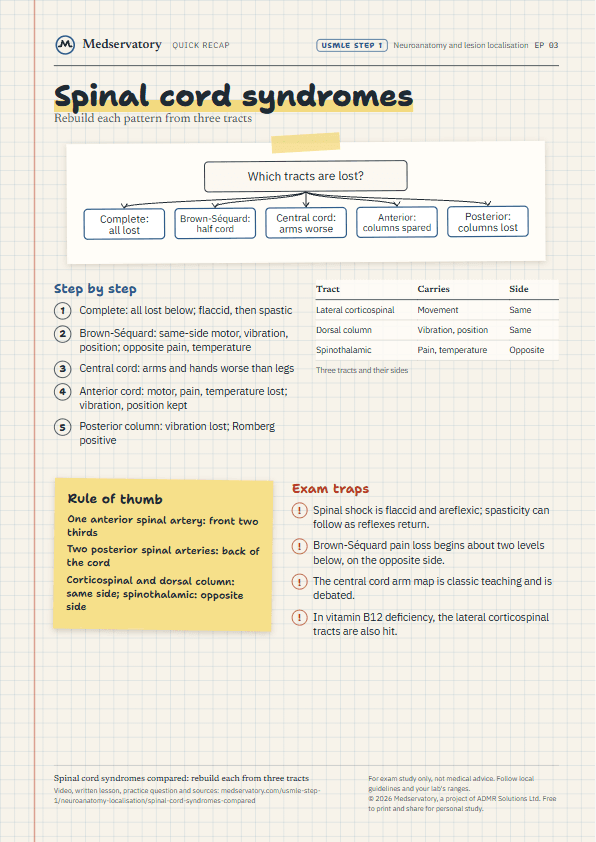
EP 03
Spinal cord syndromes compared: rebuild each from three tracts
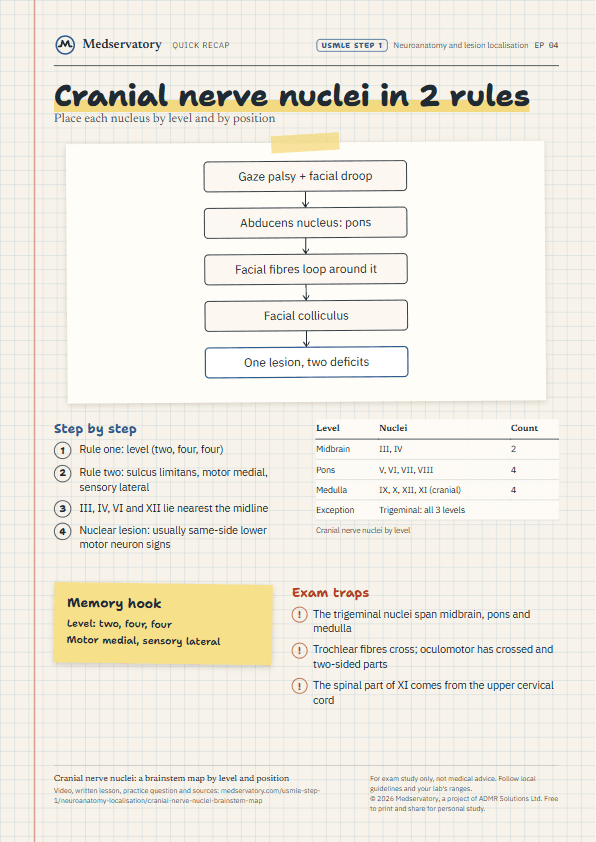
EP 04
Cranial nerve nuclei: a brainstem map by level and position
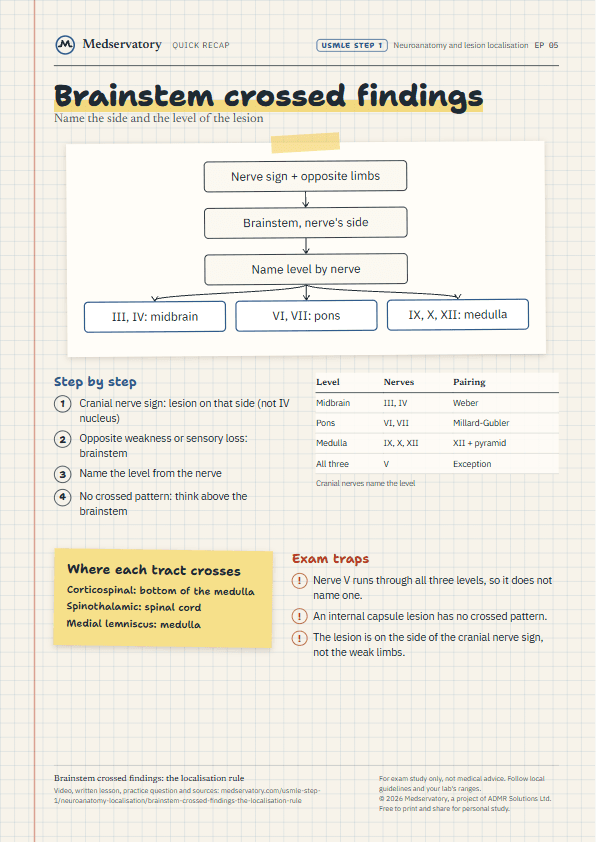
EP 05
Brainstem crossed findings: the localisation rule
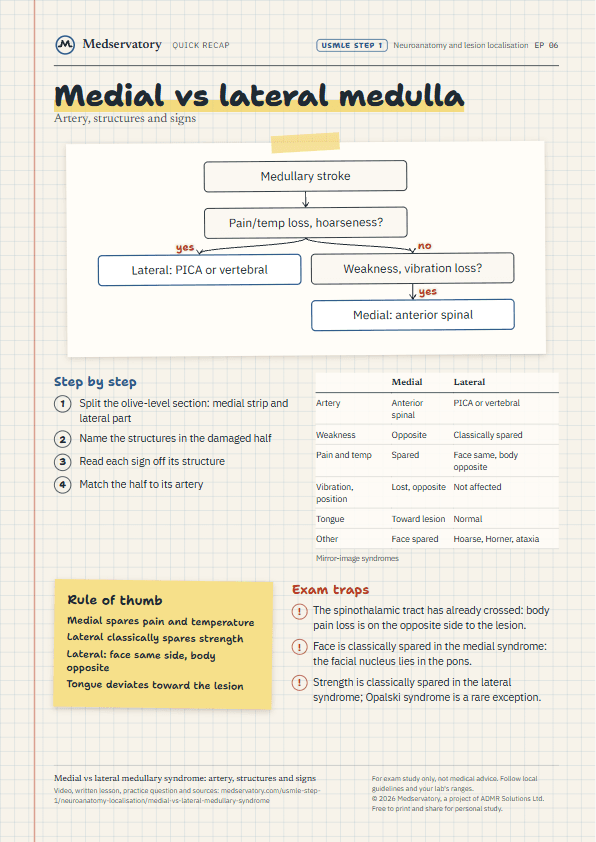
EP 06
Medial vs lateral medullary syndrome: artery, structures and signs
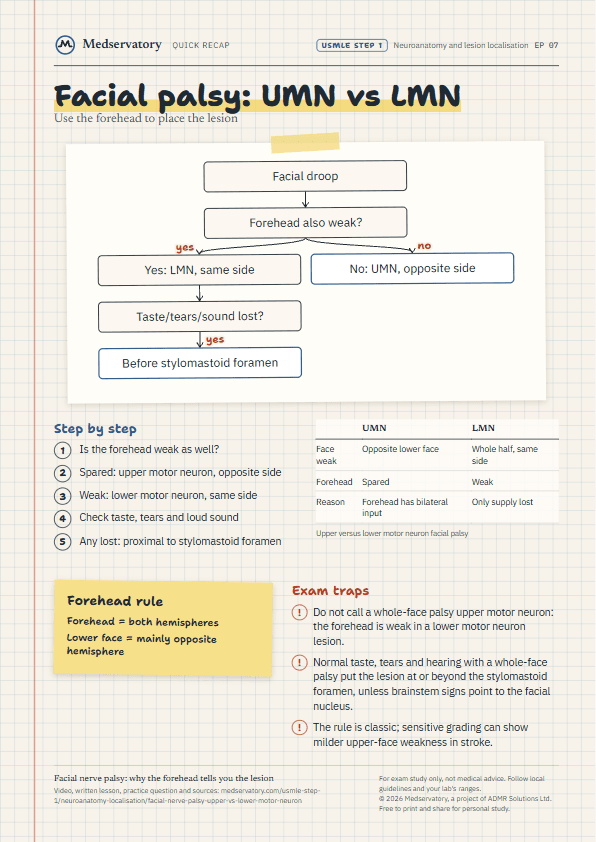
EP 07
Facial nerve palsy: why the forehead tells you the lesion
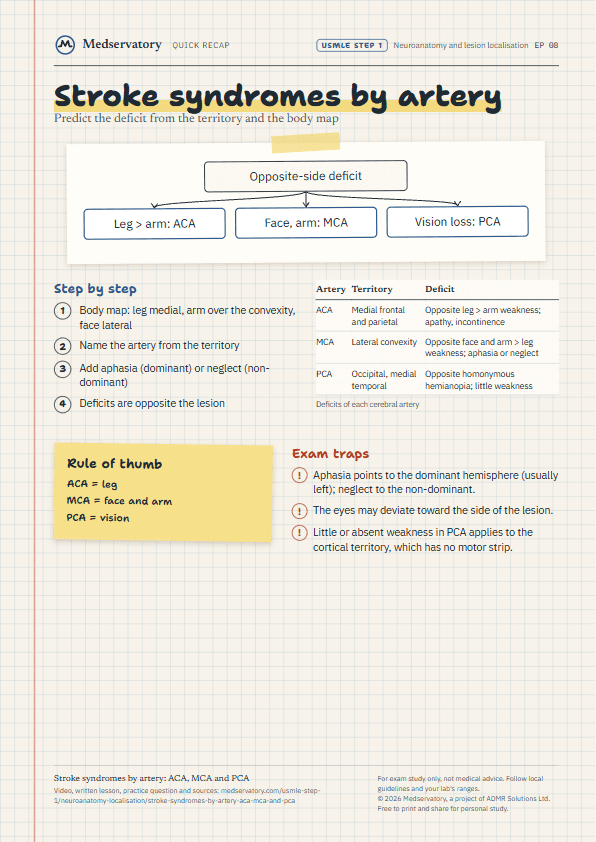
EP 08
Stroke syndromes by artery: ACA, MCA and PCA
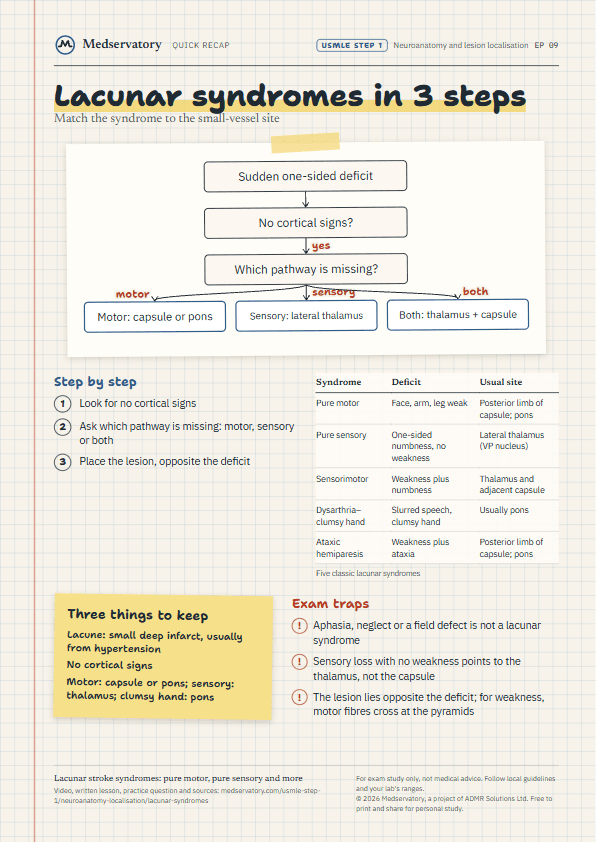
EP 09
Lacunar stroke syndromes: pure motor, pure sensory and more
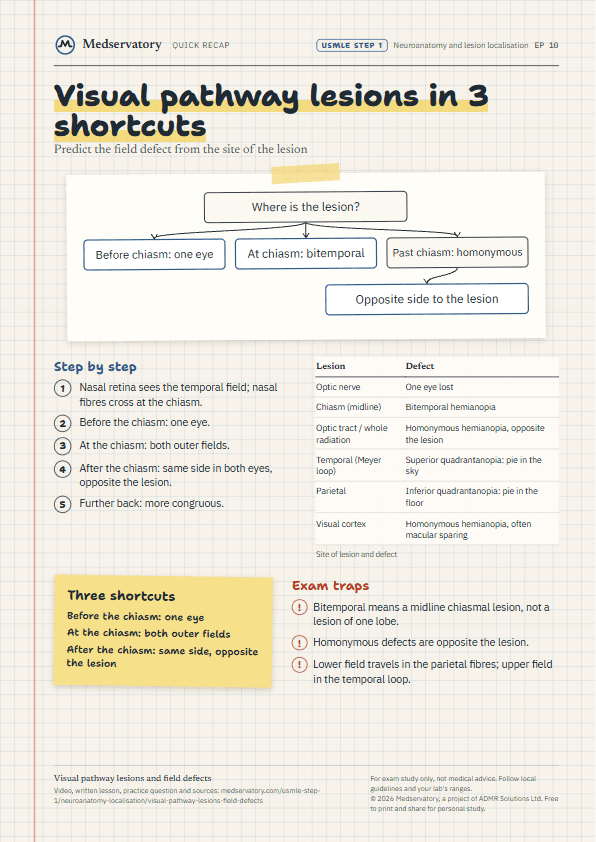
EP 10
Visual pathway lesions and field defects
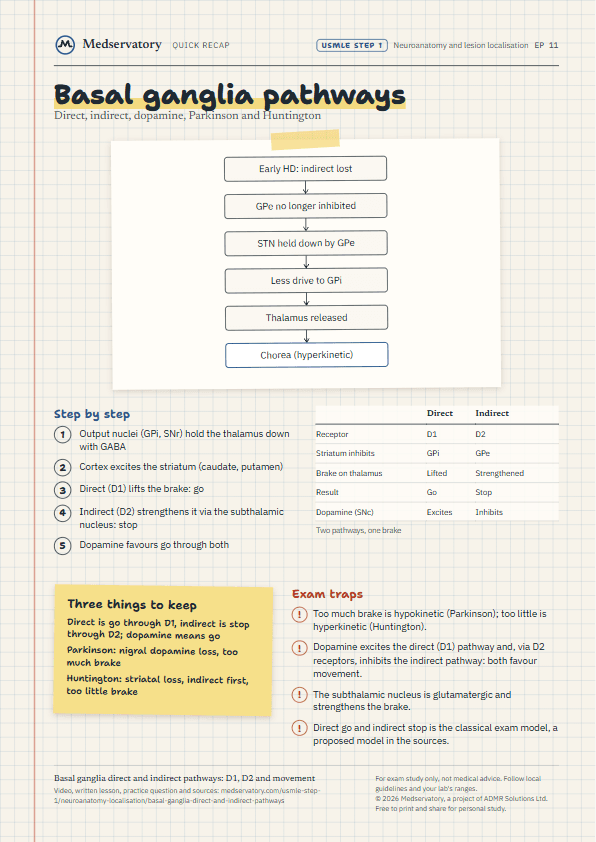
EP 11
Basal ganglia direct and indirect pathways: D1, D2 and movement
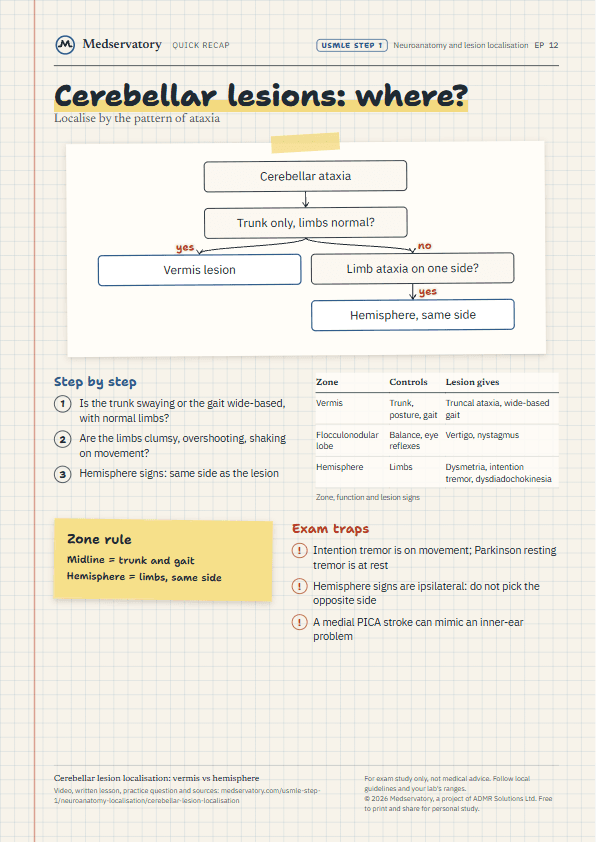
EP 12
Cerebellar lesion localisation: vermis vs hemisphere
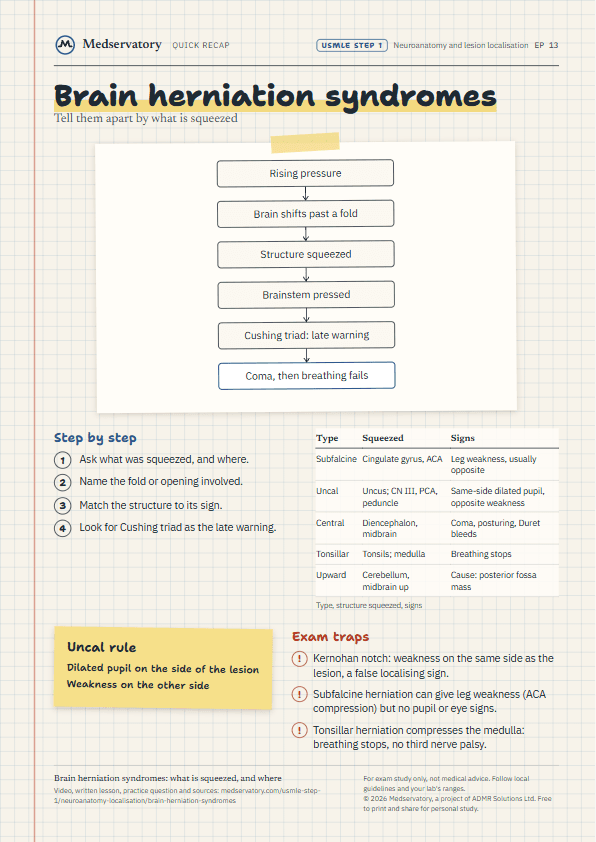
EP 13
Brain herniation syndromes: what is squeezed, and where
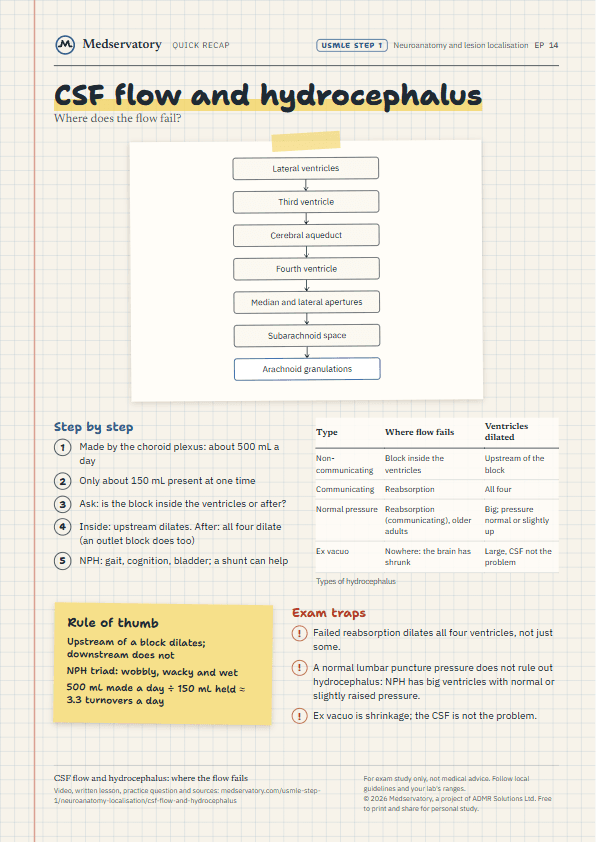
EP 14
CSF flow and hydrocephalus: where the flow fails
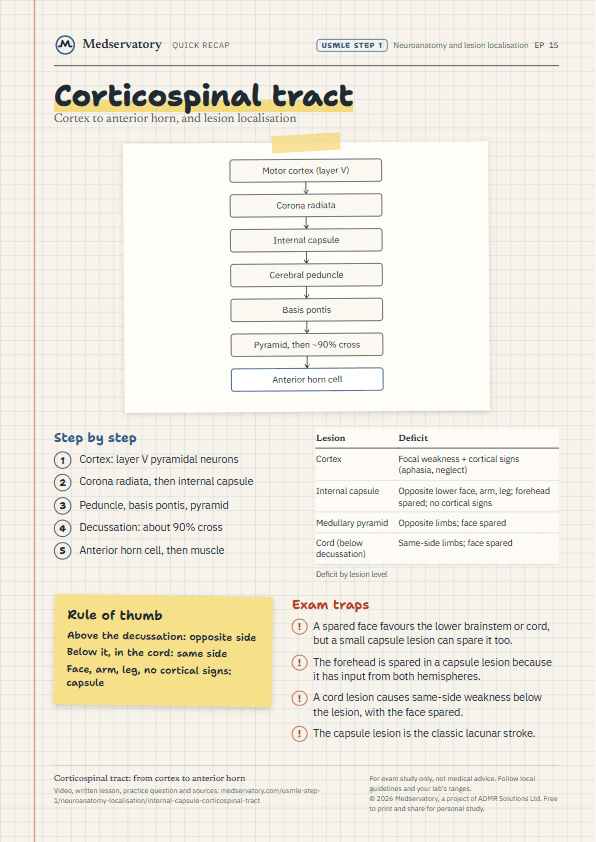
EP 15
Corticospinal tract: from cortex to anterior horn
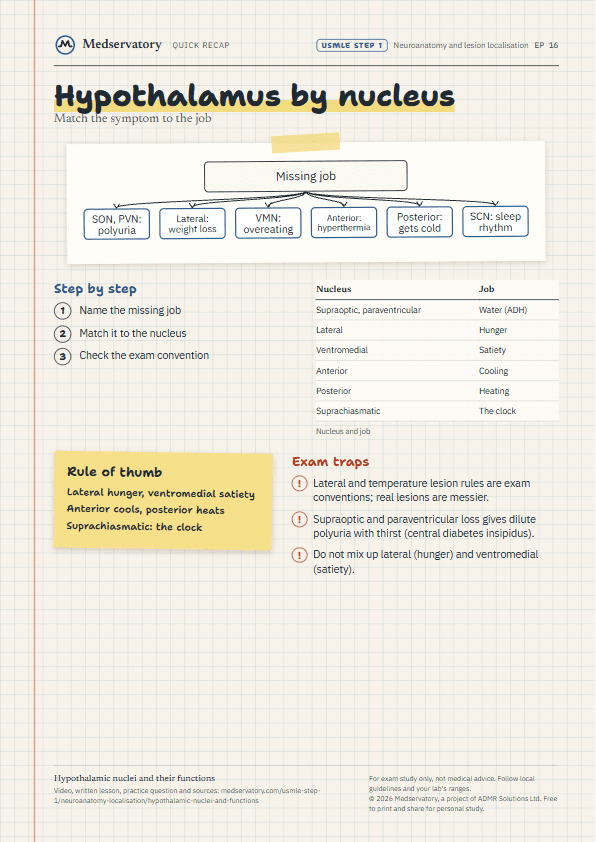
EP 16
Hypothalamic nuclei and their functions
USMLE Step 1
Immunology
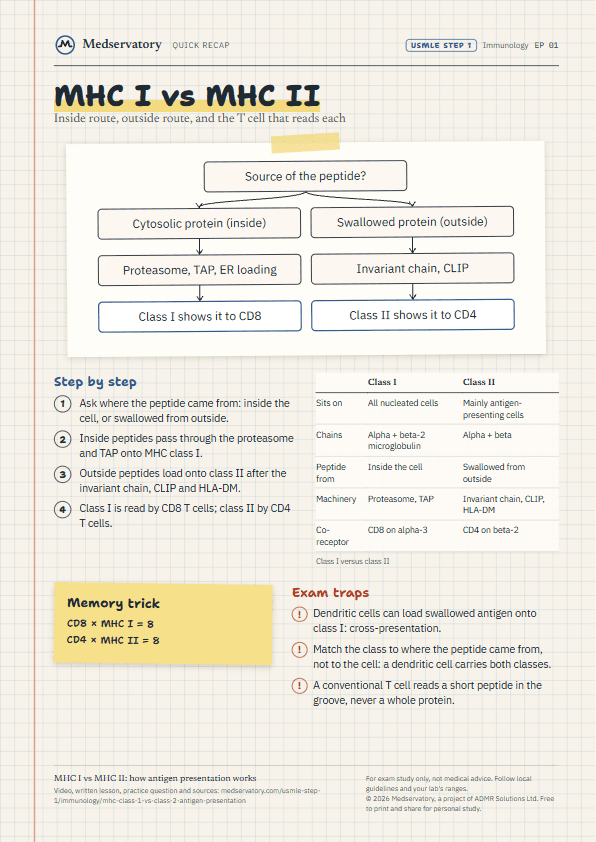
EP 01
MHC I vs MHC II: how antigen presentation works
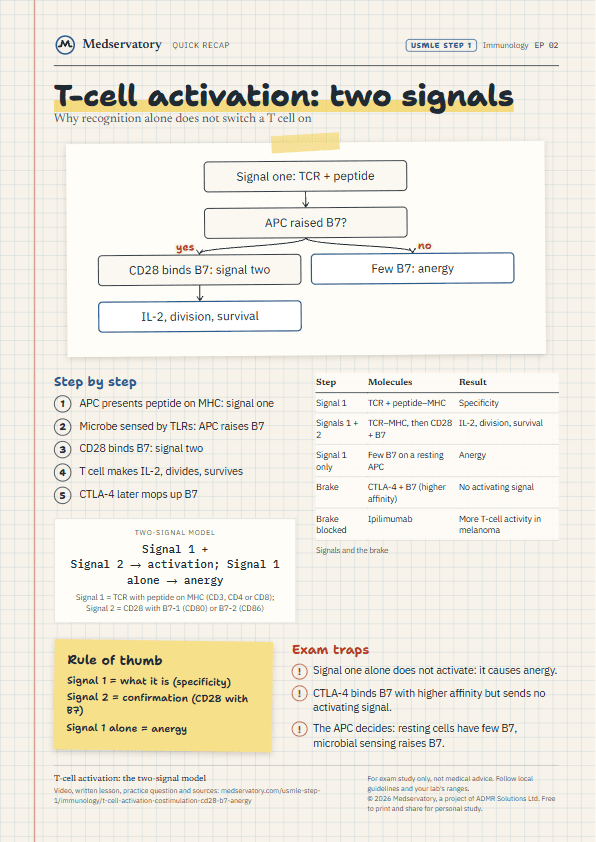
EP 02
T-cell activation: the two-signal model
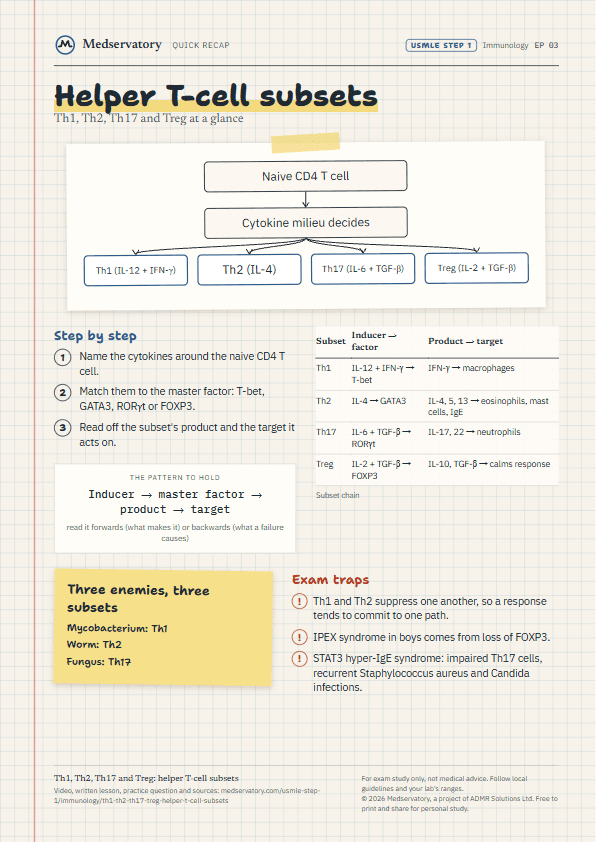
EP 03
Th1, Th2, Th17 and Treg: helper T-cell subsets
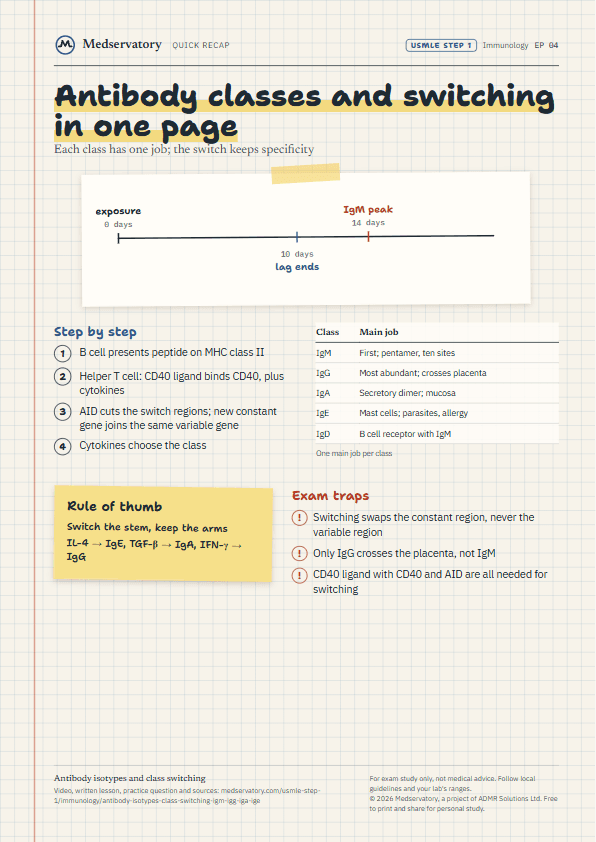
EP 04
Antibody isotypes and class switching
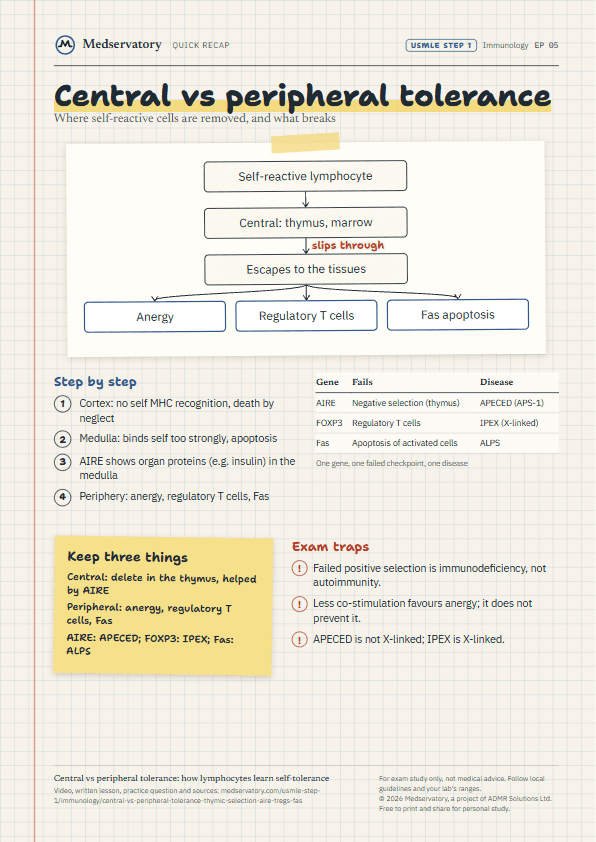
EP 05
Central vs peripheral tolerance: how lymphocytes learn self-tolerance
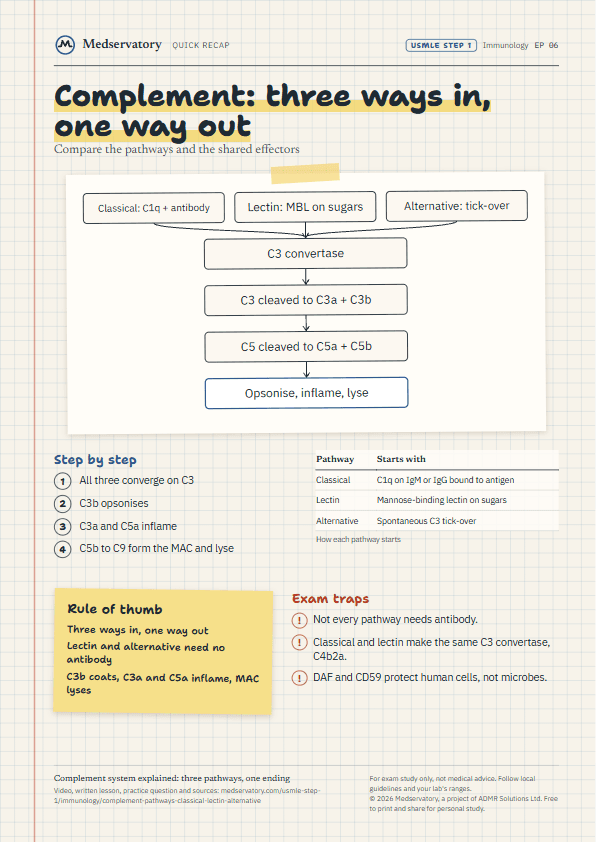
EP 06
Complement system explained: three pathways, one ending
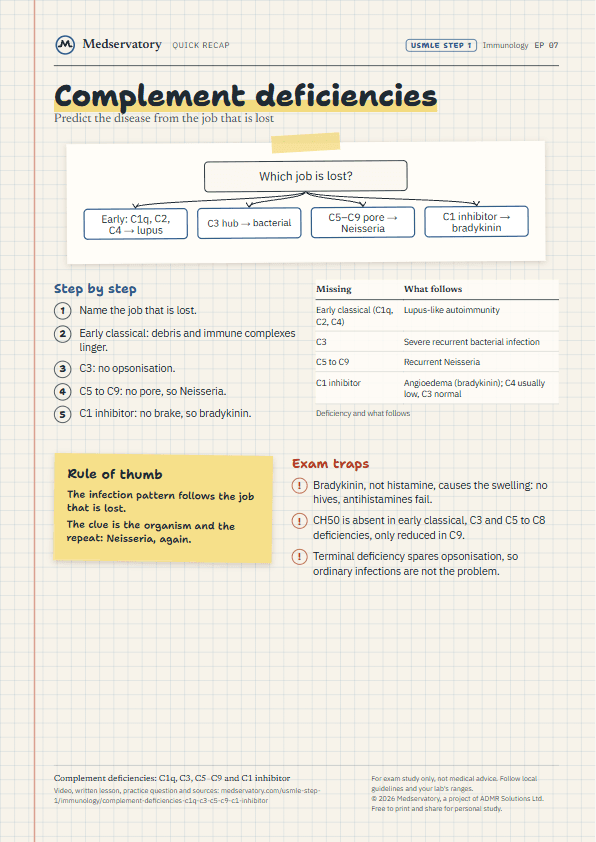
EP 07
Complement deficiencies: C1q, C3, C5–C9 and C1 inhibitor
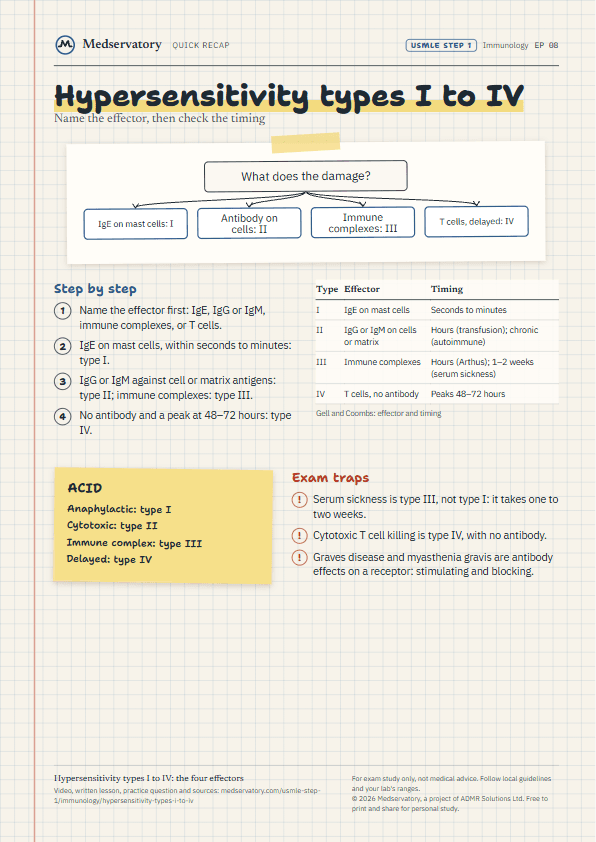
EP 08
Hypersensitivity types I to IV: the four effectors
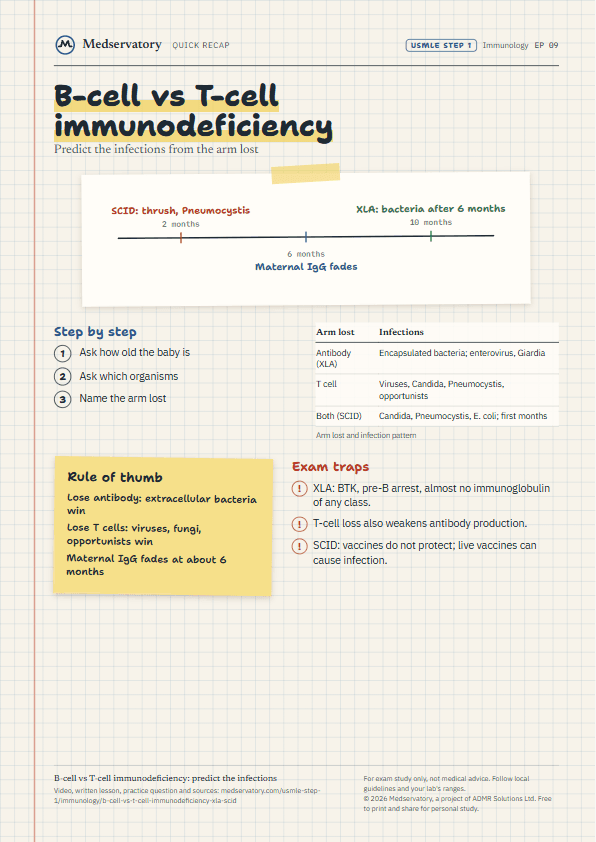
EP 09
B-cell vs T-cell immunodeficiency: predict the infections
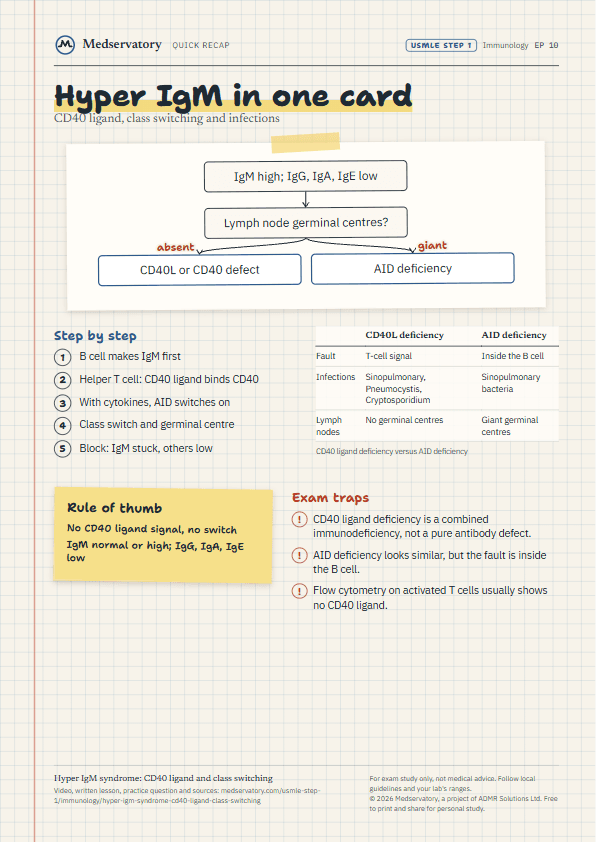
EP 10
Hyper IgM syndrome: CD40 ligand and class switching
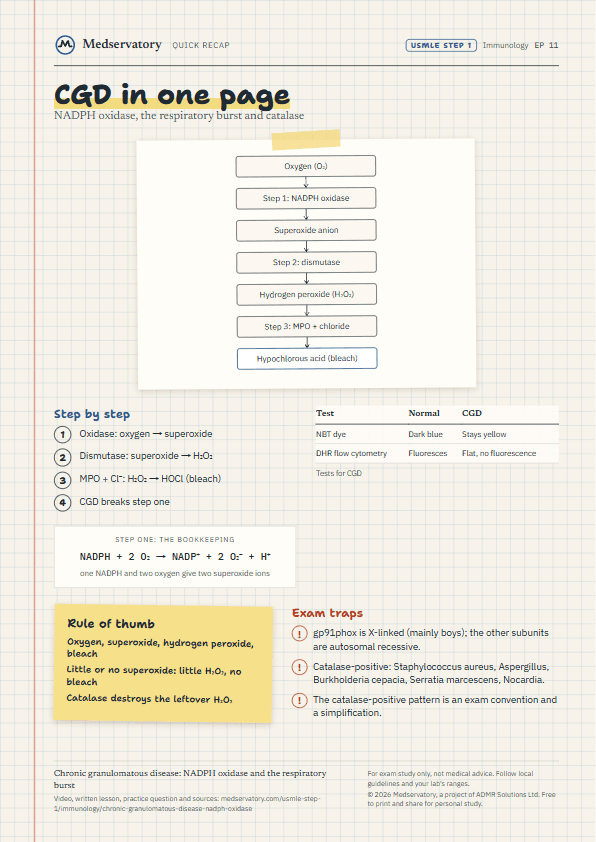
EP 11
Chronic granulomatous disease: NADPH oxidase and the respiratory burst
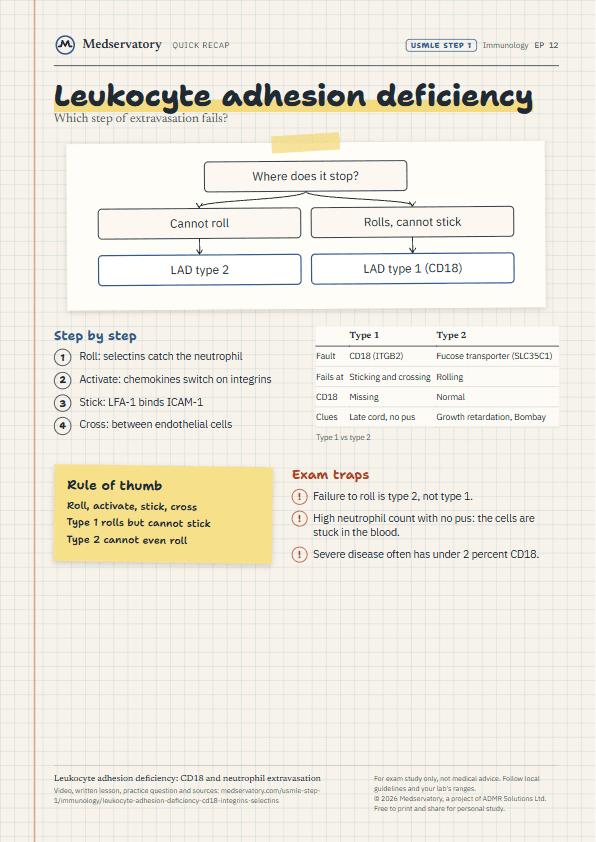
EP 12
Leukocyte adhesion deficiency: CD18 and neutrophil extravasation
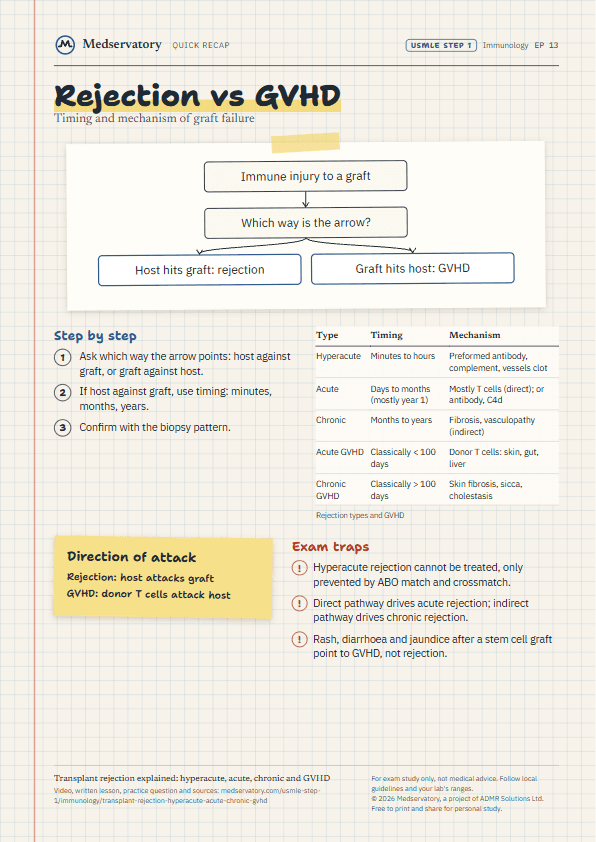
EP 13
Transplant rejection explained: hyperacute, acute, chronic and GVHD
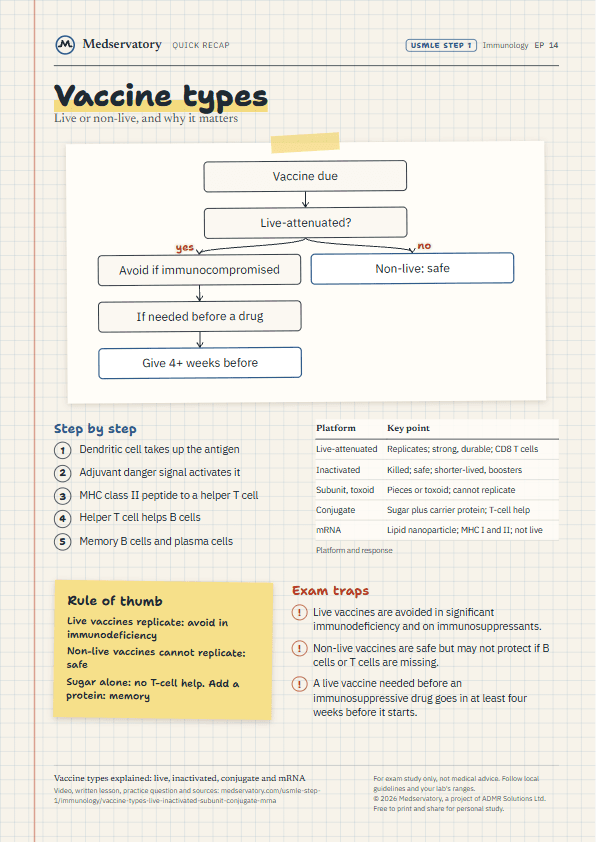
EP 14
Vaccine types explained: live, inactivated, conjugate and mRNA
USMLE Step 1
Pharmacology: principles and autonomic drugs
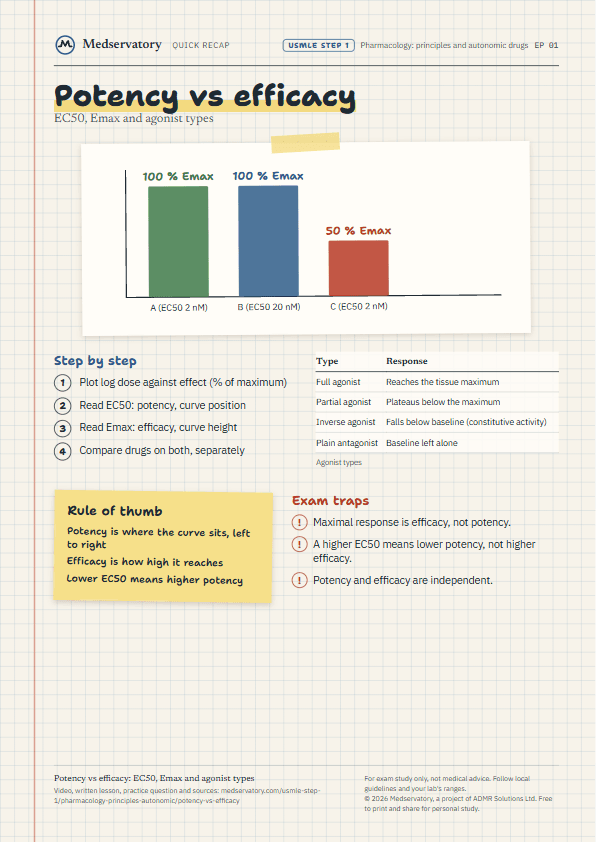
EP 01
Potency vs efficacy: EC50, Emax and agonist types
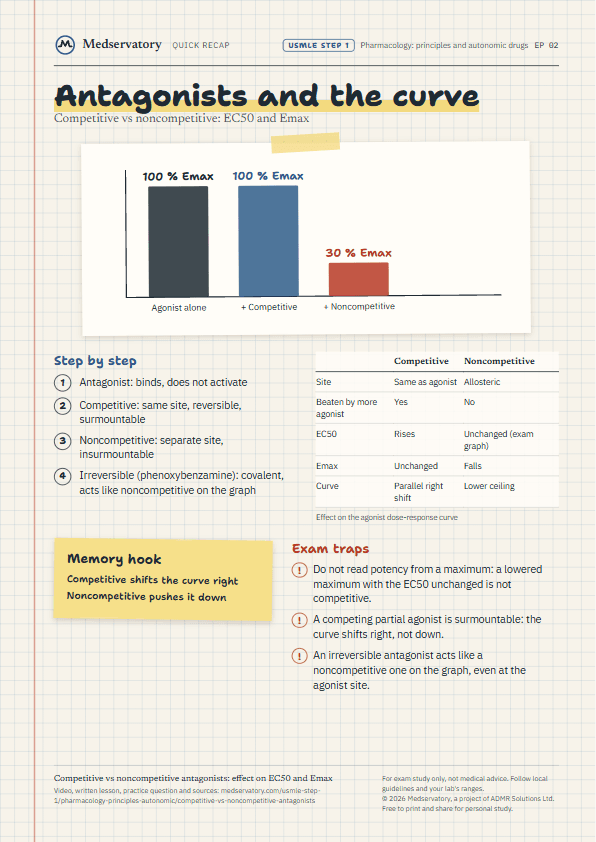
EP 02
Competitive vs noncompetitive antagonists: effect on EC50 and Emax
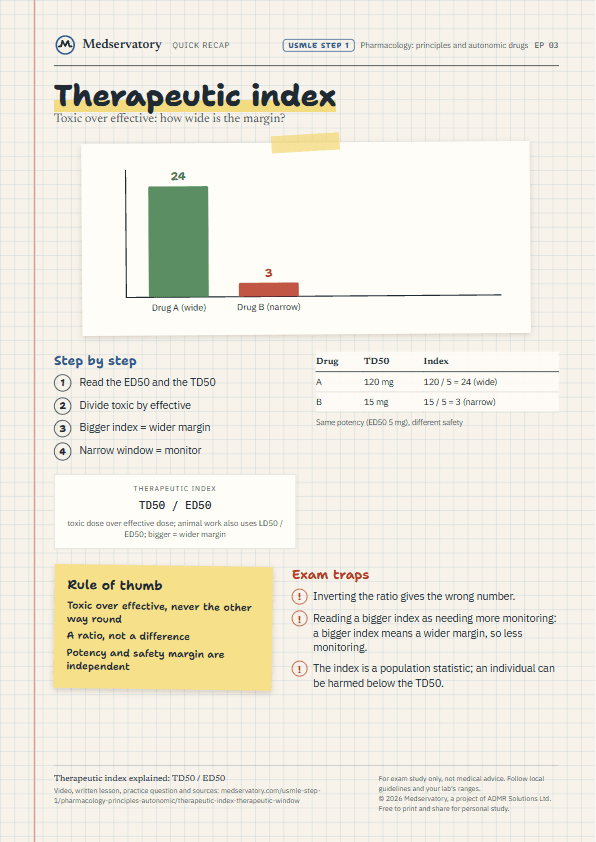
EP 03
Therapeutic index explained: TD50 / ED50
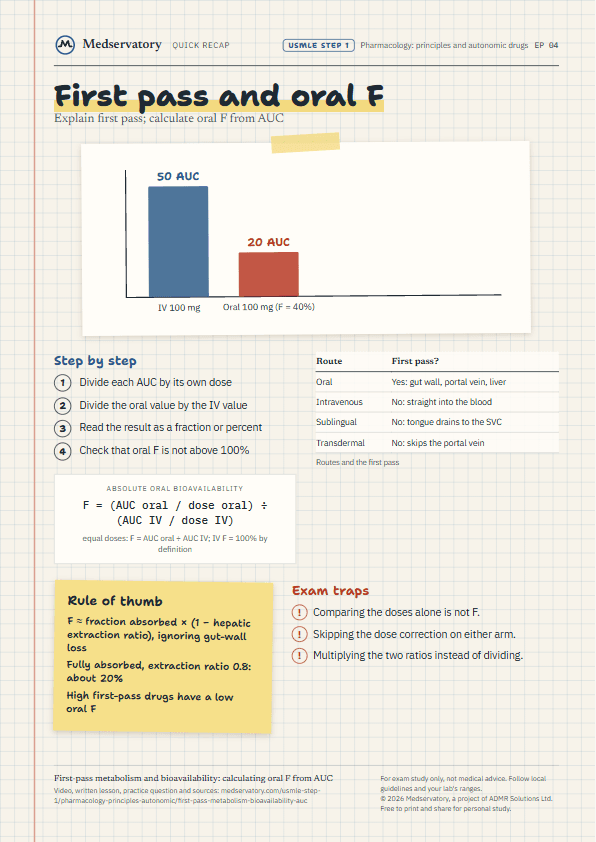
EP 04
First-pass metabolism and bioavailability: calculating oral F from AUC
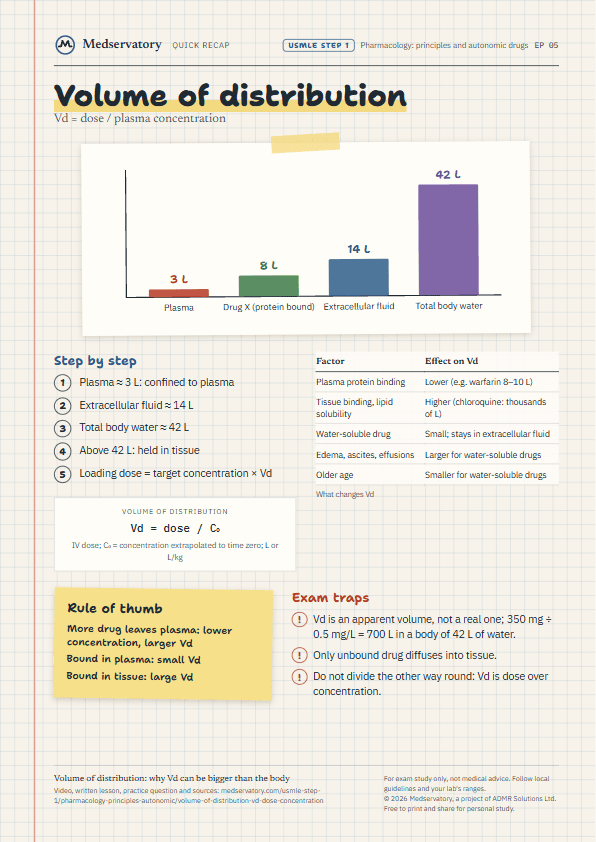
EP 05
Volume of distribution: why Vd can be bigger than the body
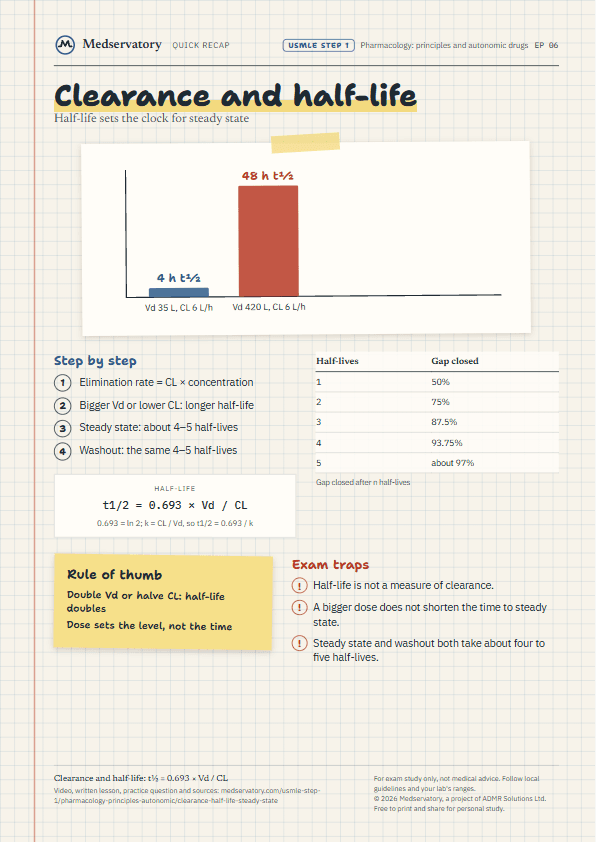
EP 06
Clearance and half-life: t½ = 0.693 × Vd / CL
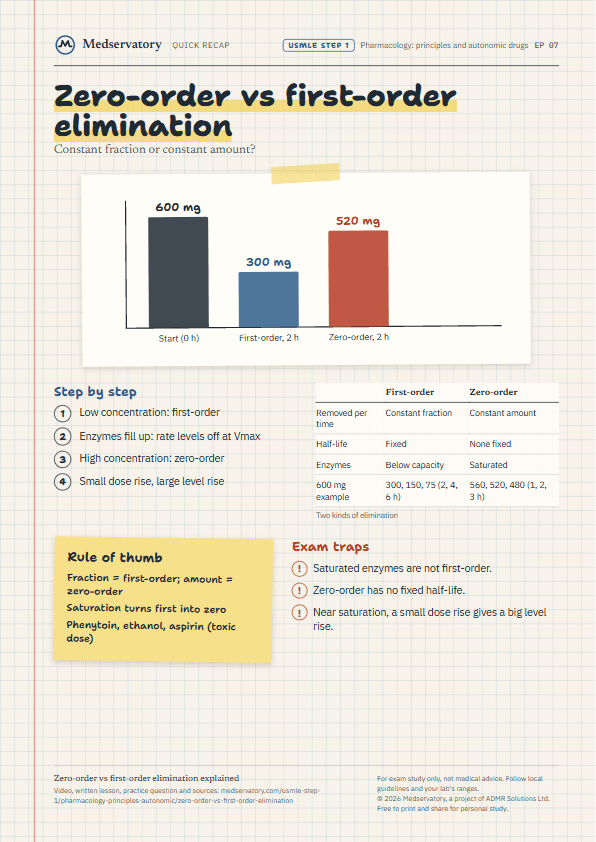
EP 07
Zero-order vs first-order elimination explained
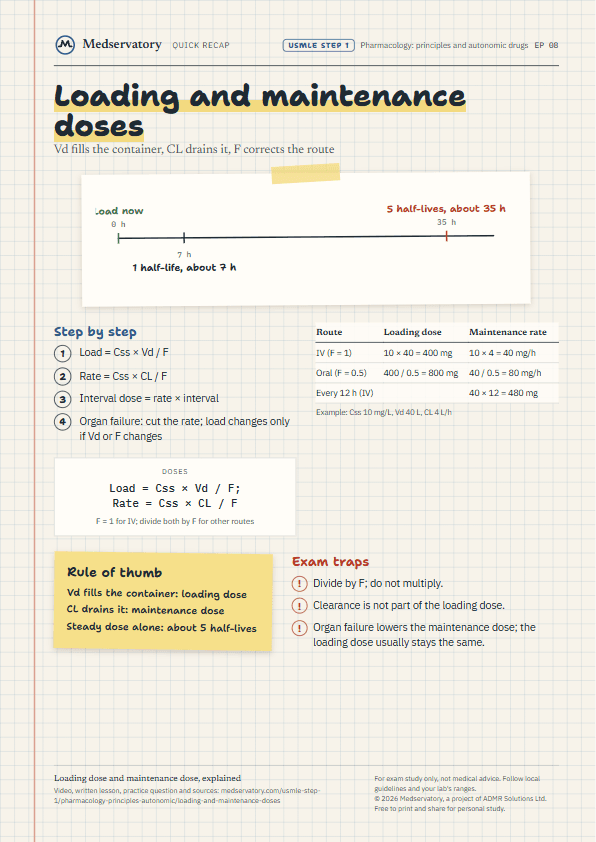
EP 08
Loading dose and maintenance dose, explained
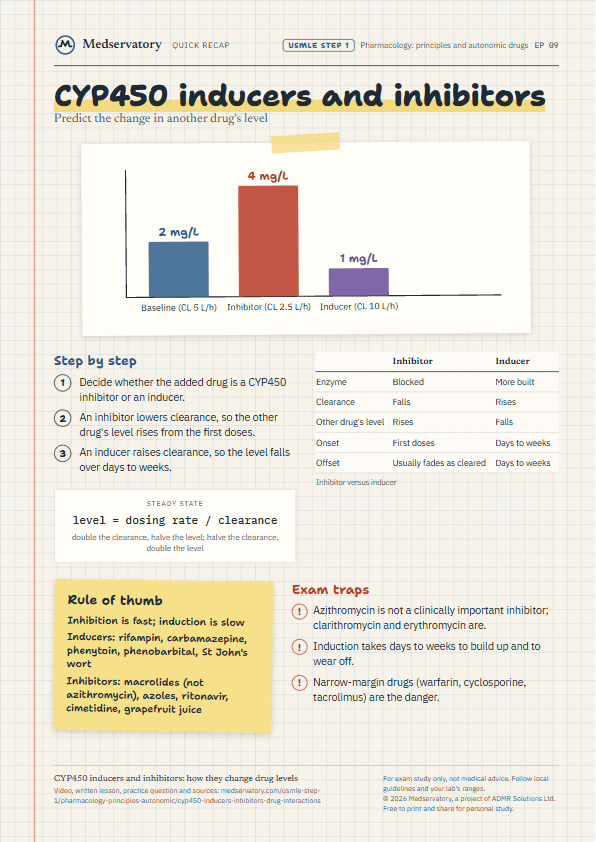
EP 09
CYP450 inducers and inhibitors: how they change drug levels
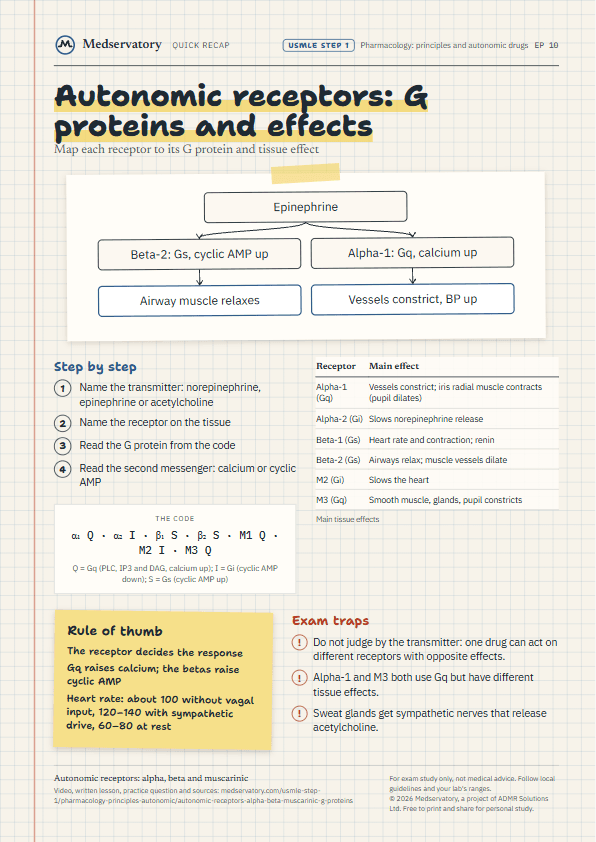
EP 10
Autonomic receptors: alpha, beta and muscarinic
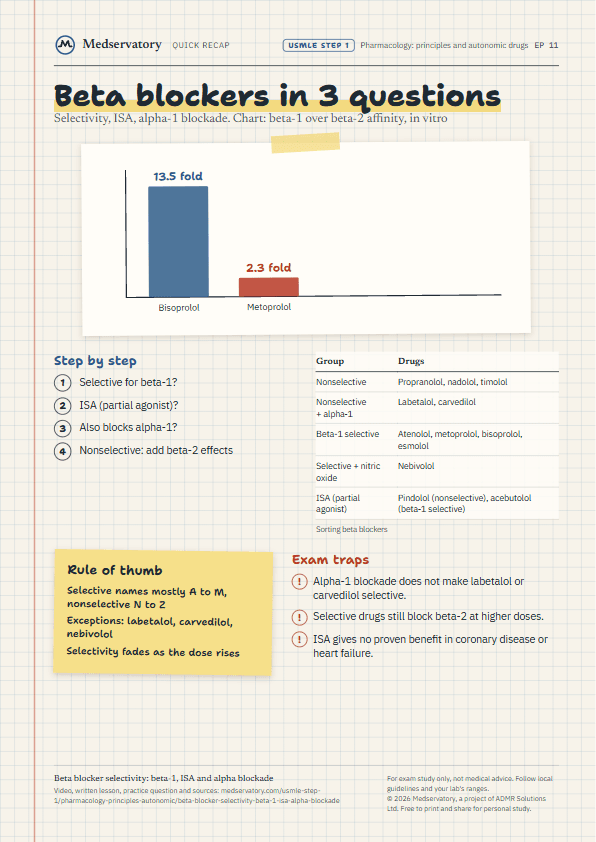
EP 11
Beta blocker selectivity: beta-1, ISA and alpha blockade
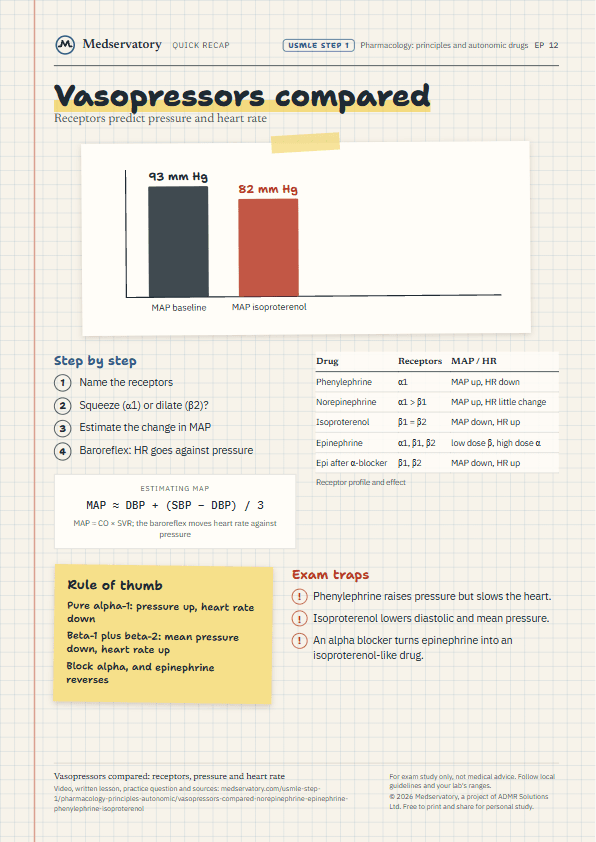
EP 12
Vasopressors compared: receptors, pressure and heart rate
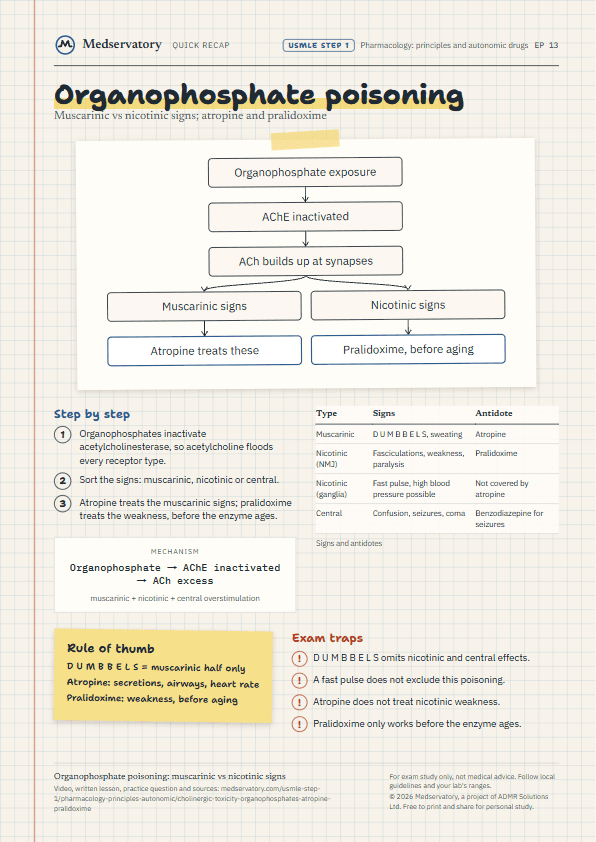
EP 13
Organophosphate poisoning: muscarinic vs nicotinic signs
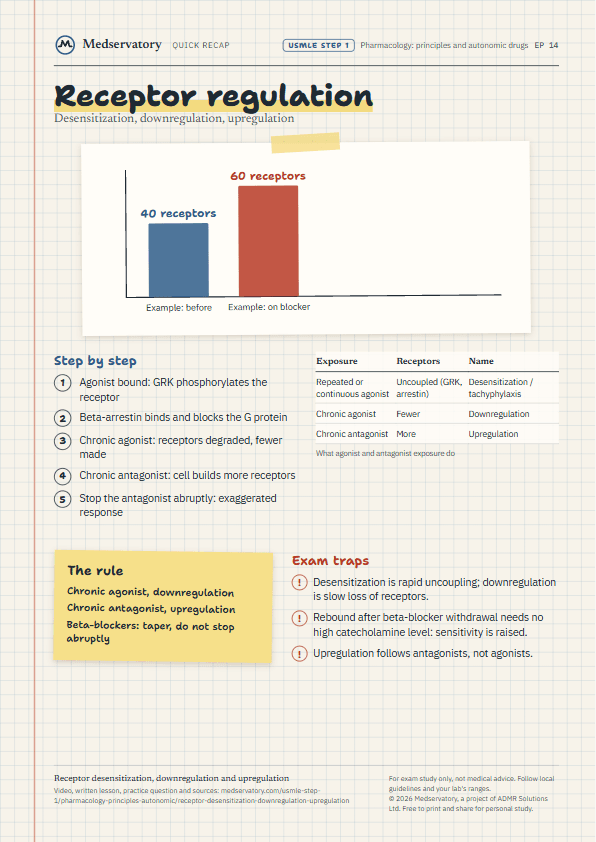
EP 14
Receptor desensitization, downregulation and upregulation
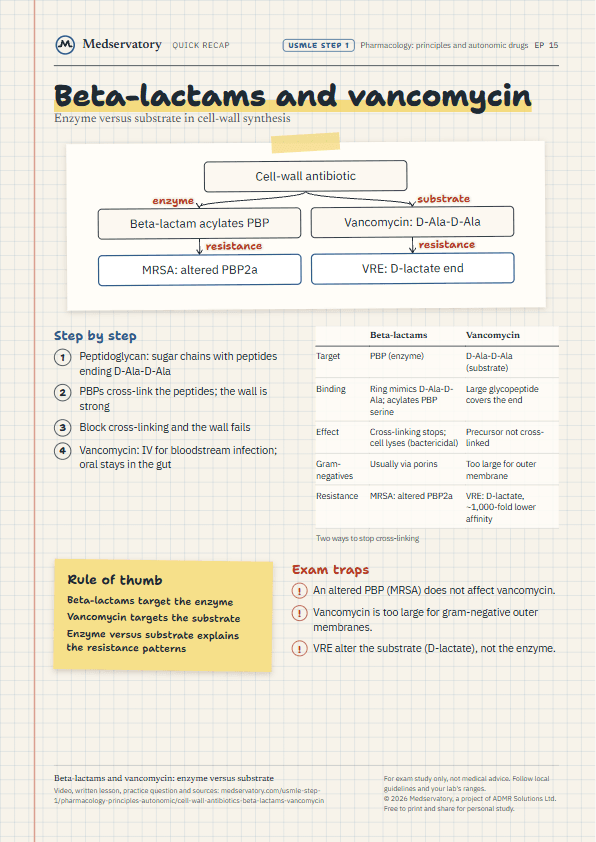
EP 15
Beta-lactams and vancomycin: enzyme versus substrate
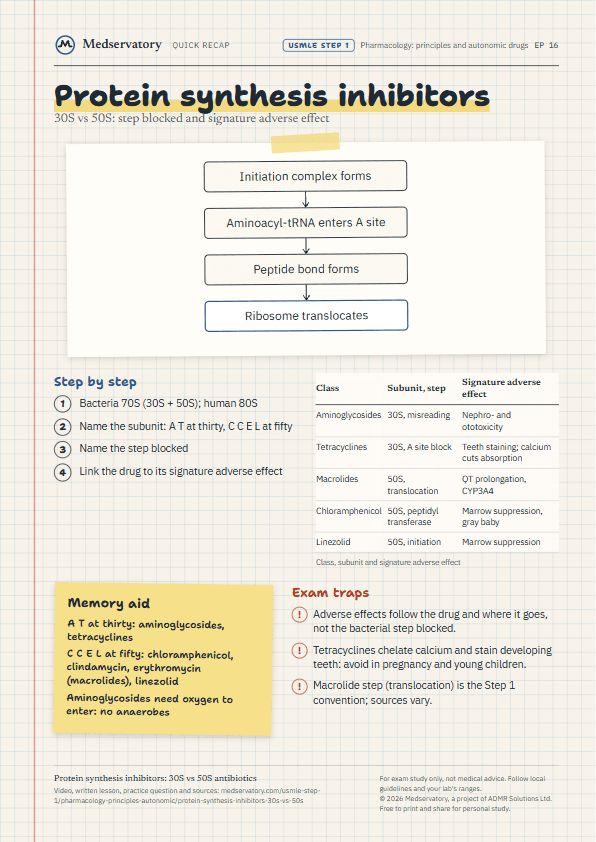
EP 16
Protein synthesis inhibitors: 30S vs 50S antibiotics
USMLE Step 1
Endocrinology
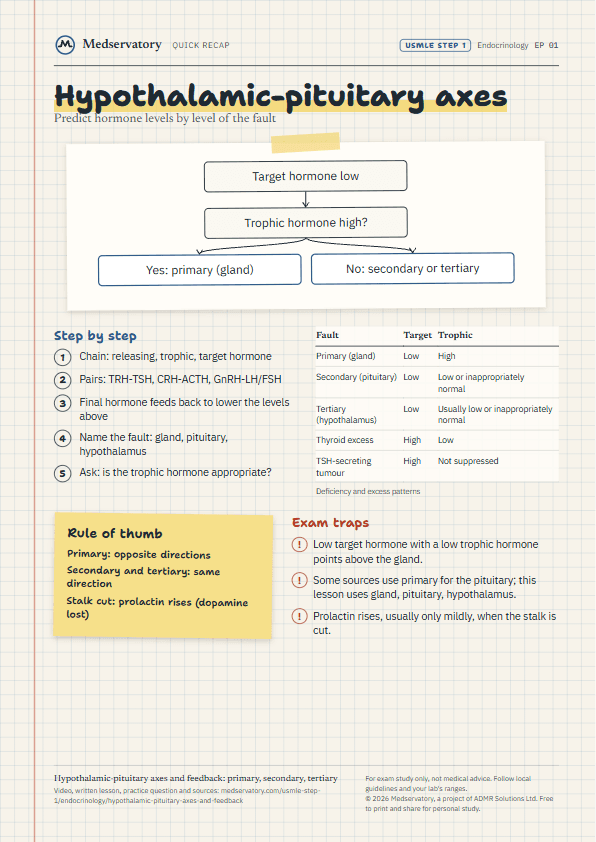
EP 01
Hypothalamic-pituitary axes and feedback: primary, secondary, tertiary
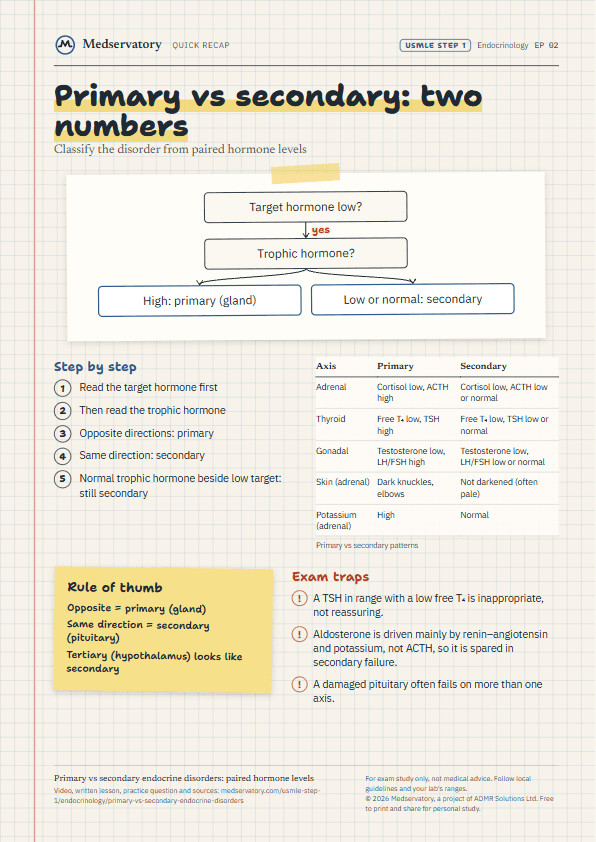
EP 02
Primary vs secondary endocrine disorders: paired hormone levels
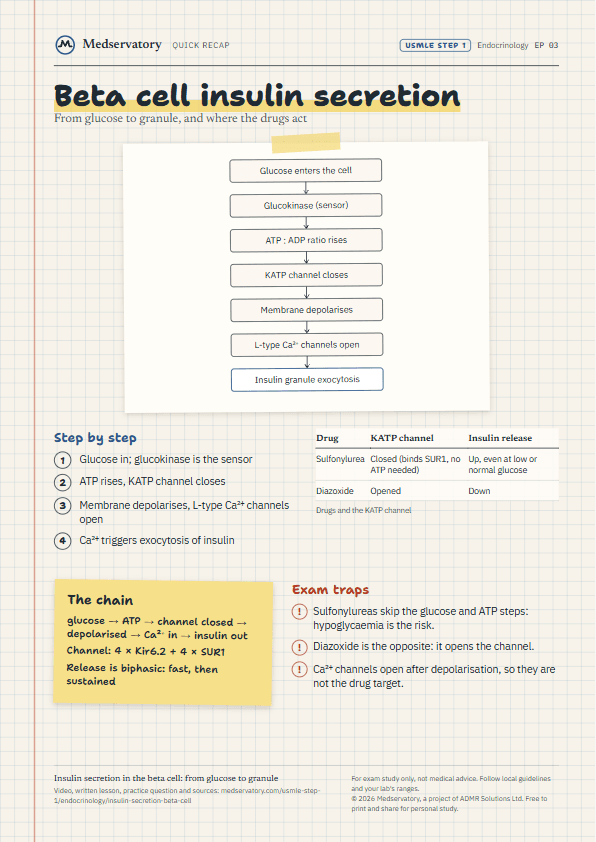
EP 03
Insulin secretion in the beta cell: from glucose to granule
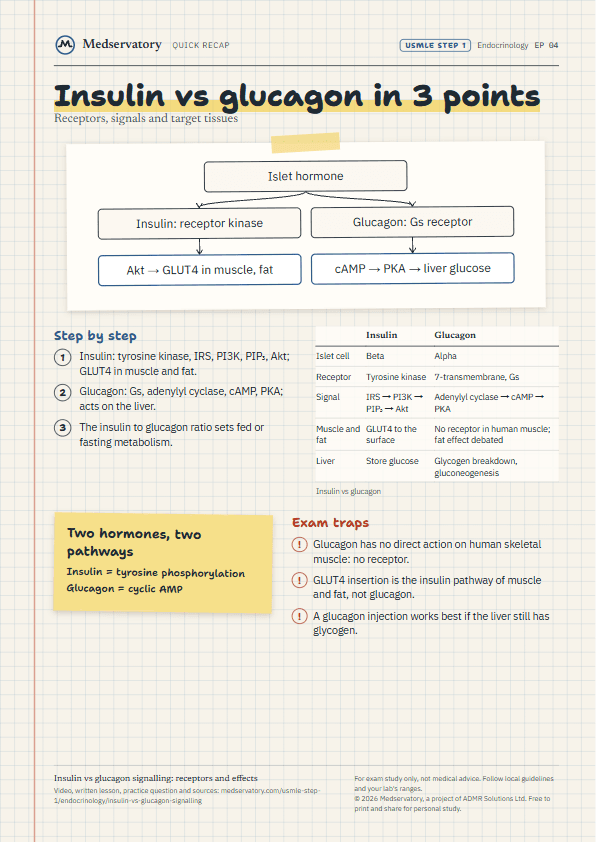
EP 04
Insulin vs glucagon signalling: receptors and effects
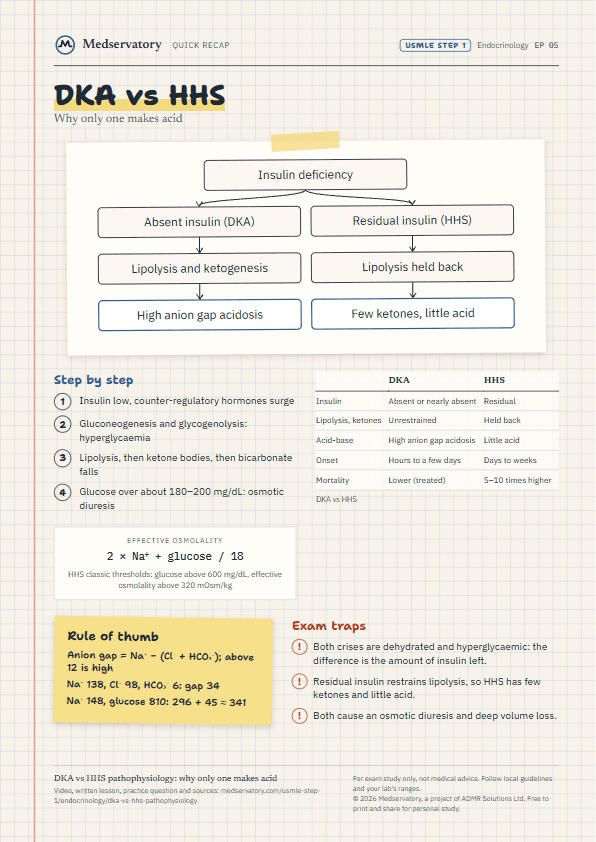
EP 05
DKA vs HHS pathophysiology: why only one makes acid
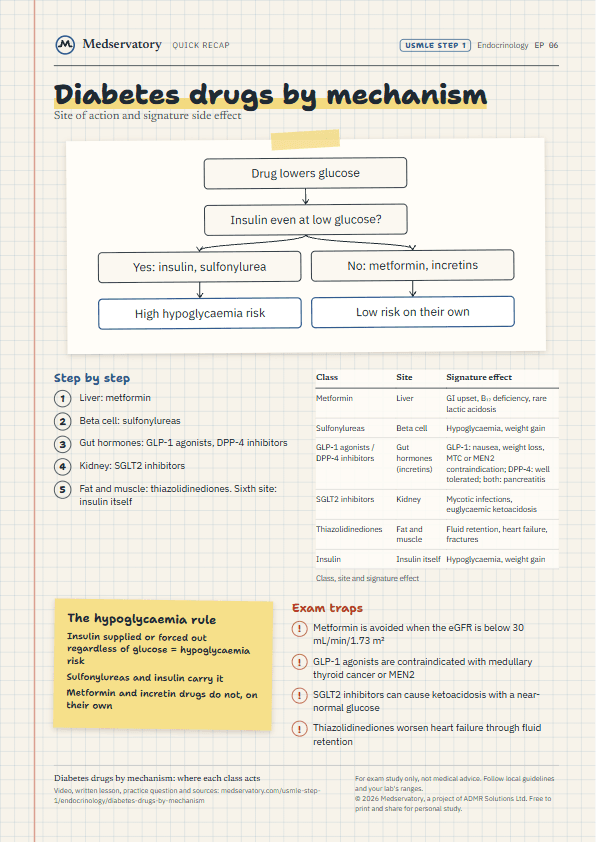
EP 06
Diabetes drugs by mechanism: where each class acts
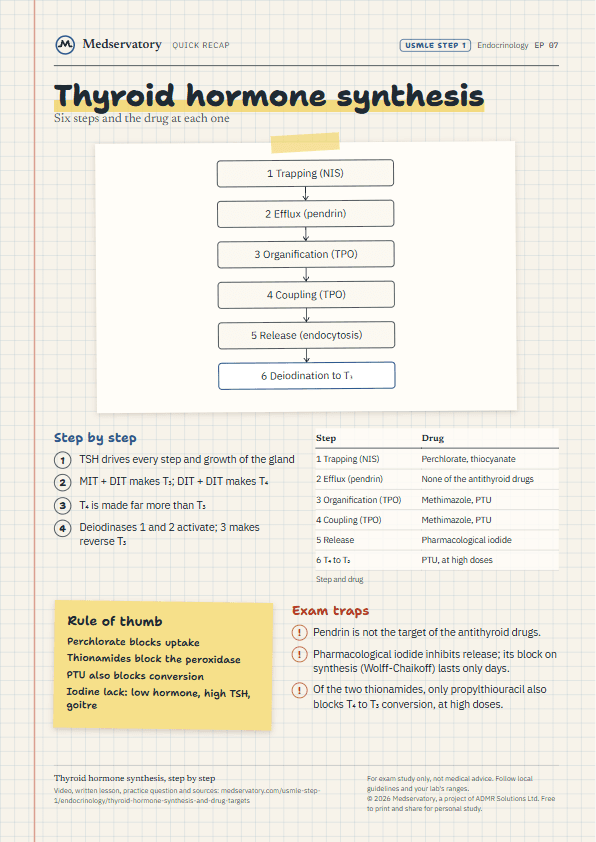
EP 07
Thyroid hormone synthesis, step by step
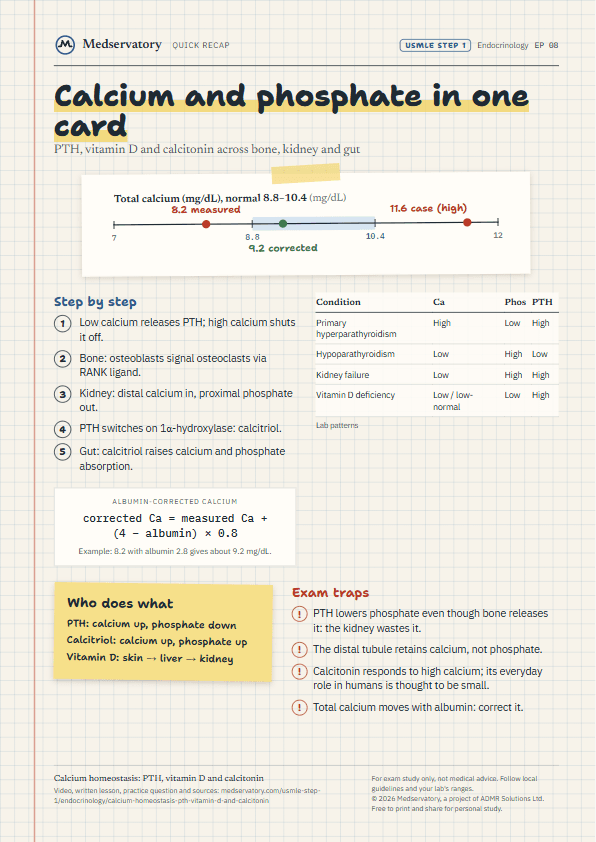
EP 08
Calcium homeostasis: PTH, vitamin D and calcitonin
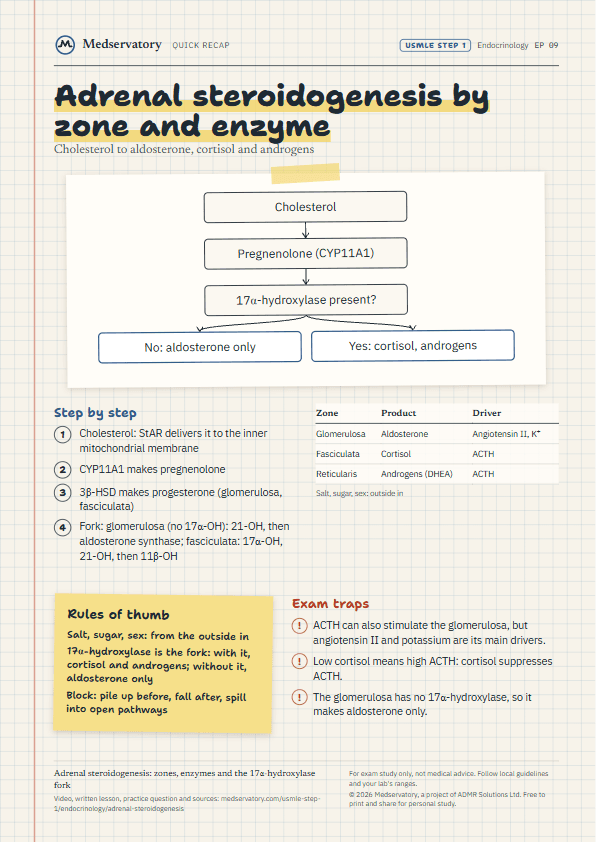
EP 09
Adrenal steroidogenesis: zones, enzymes and the 17α-hydroxylase fork
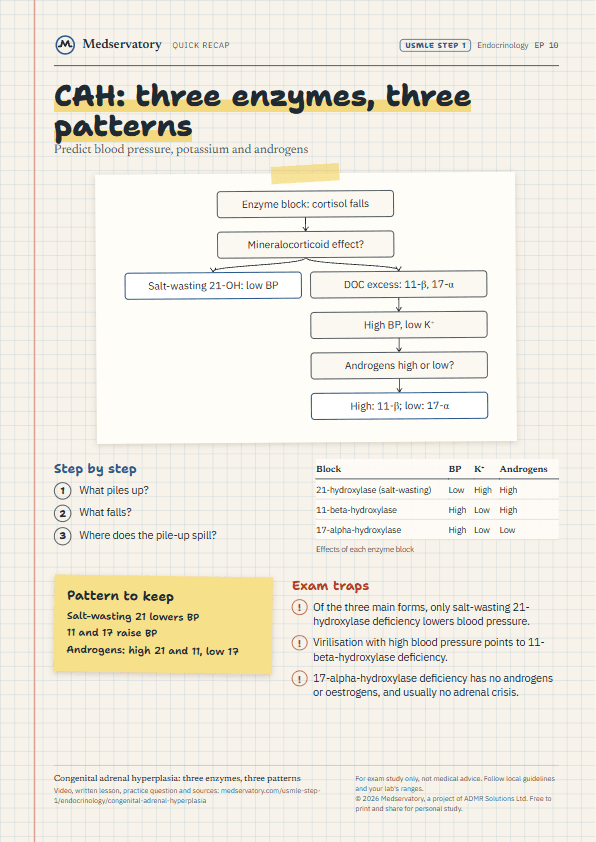
EP 10
Congenital adrenal hyperplasia: three enzymes, three patterns
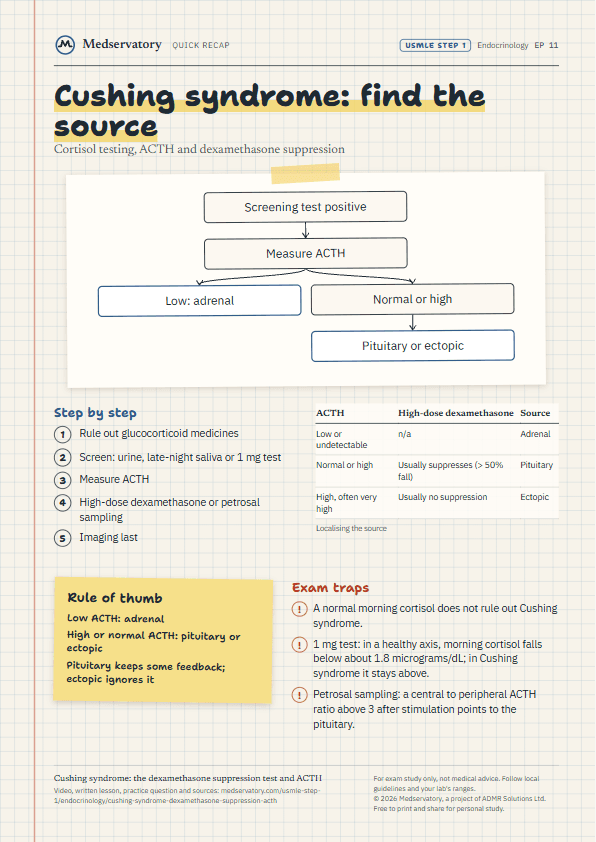
EP 11
Cushing syndrome: the dexamethasone suppression test and ACTH
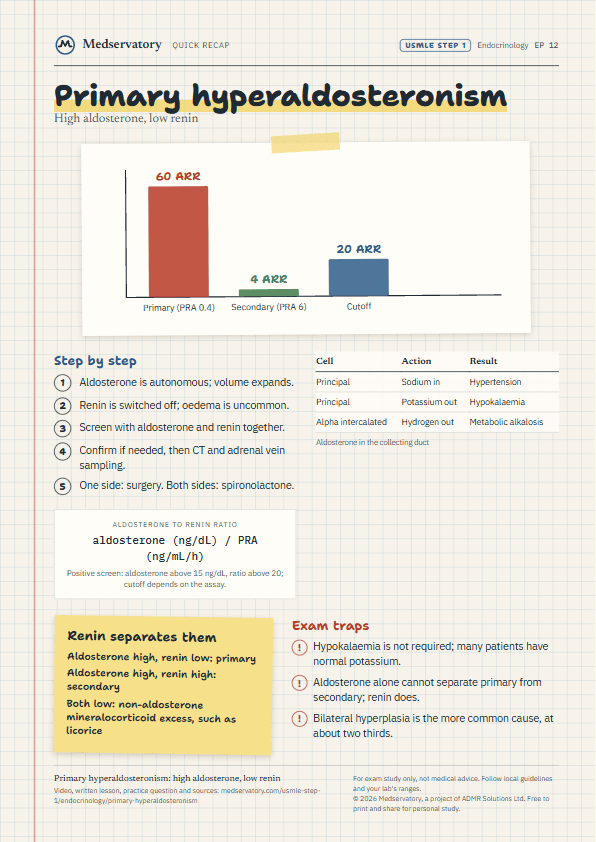
EP 12
Primary hyperaldosteronism: high aldosterone, low renin
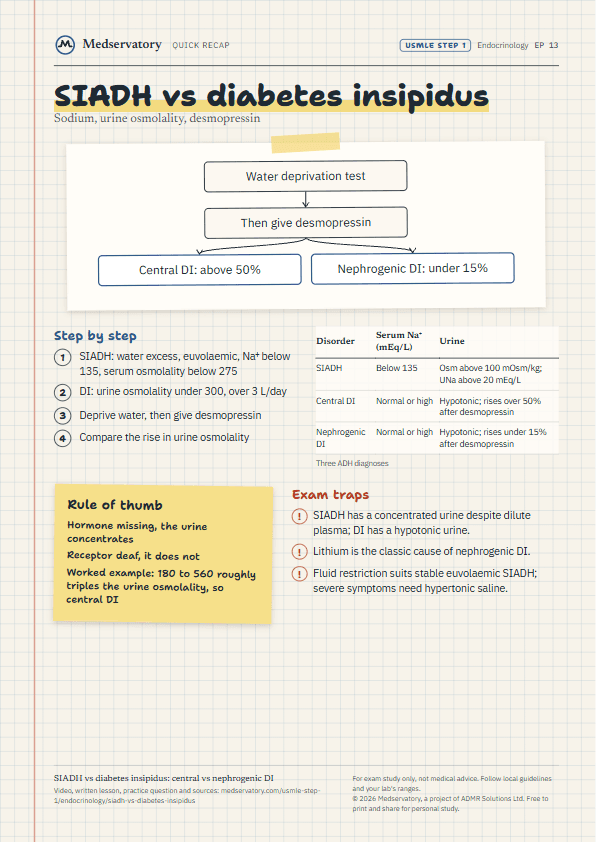
EP 13
SIADH vs diabetes insipidus: central vs nephrogenic DI
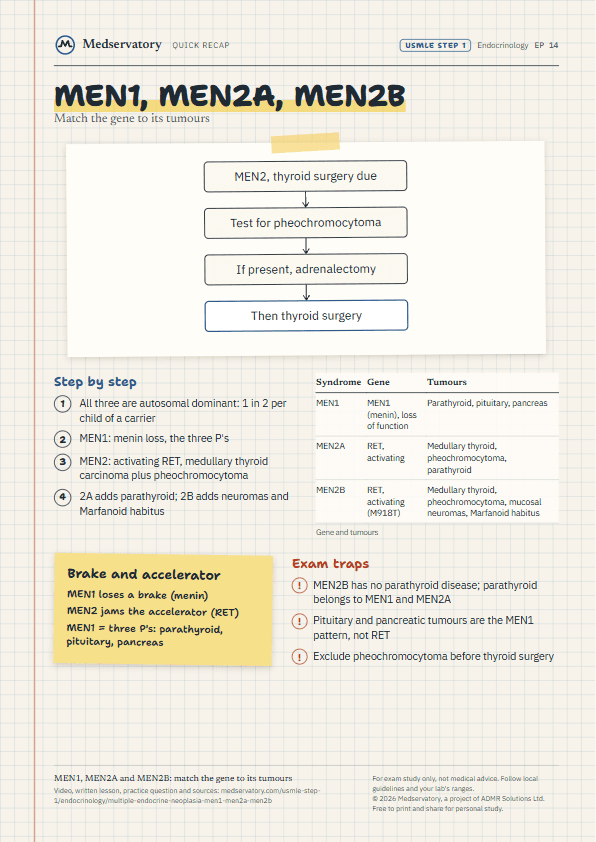
EP 14
MEN1, MEN2A and MEN2B: match the gene to its tumours
USMLE Step 1
Haematology and oncology
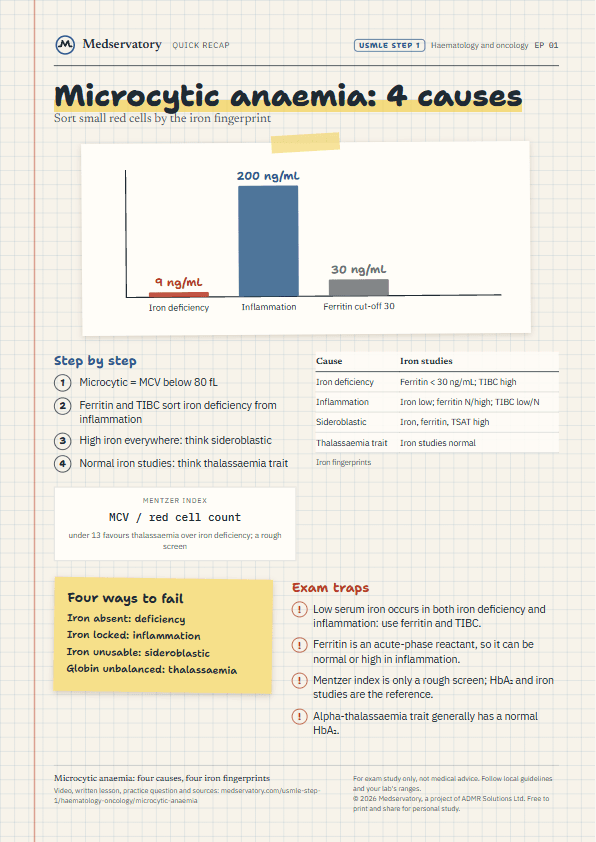
EP 01
Microcytic anaemia: four causes, four iron fingerprints
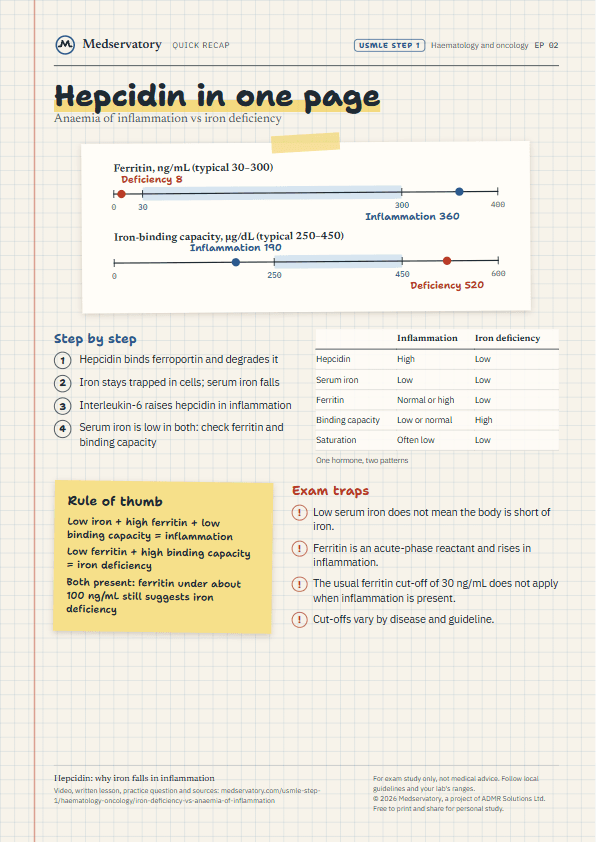
EP 02
Hepcidin: why iron falls in inflammation
EP 03
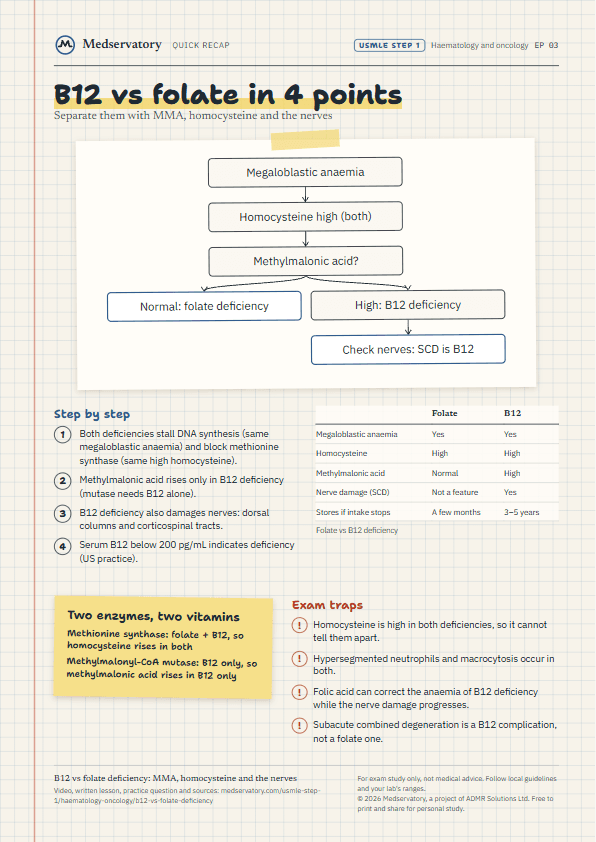
B12 vs folate deficiency: MMA, homocysteine and the nerves
EP 04
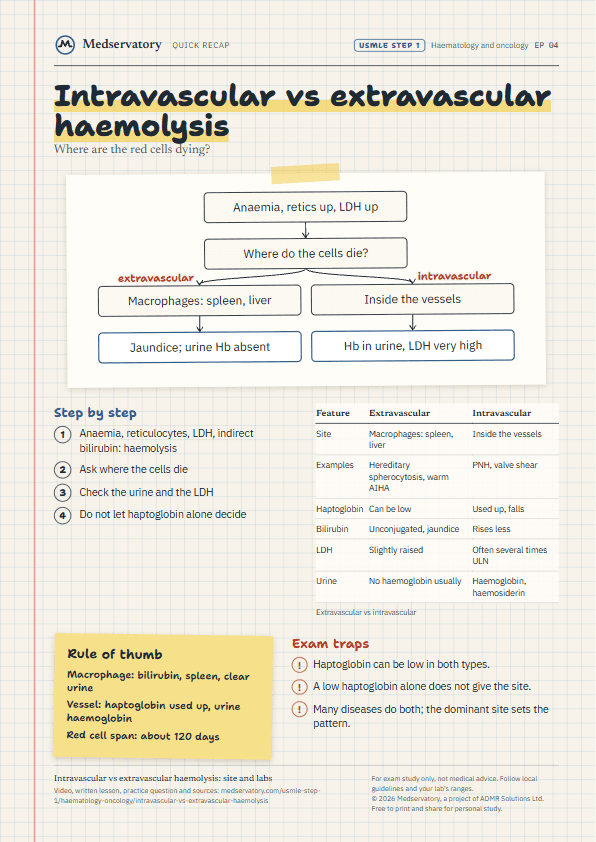
Intravascular vs extravascular haemolysis: site and labs
EP 05
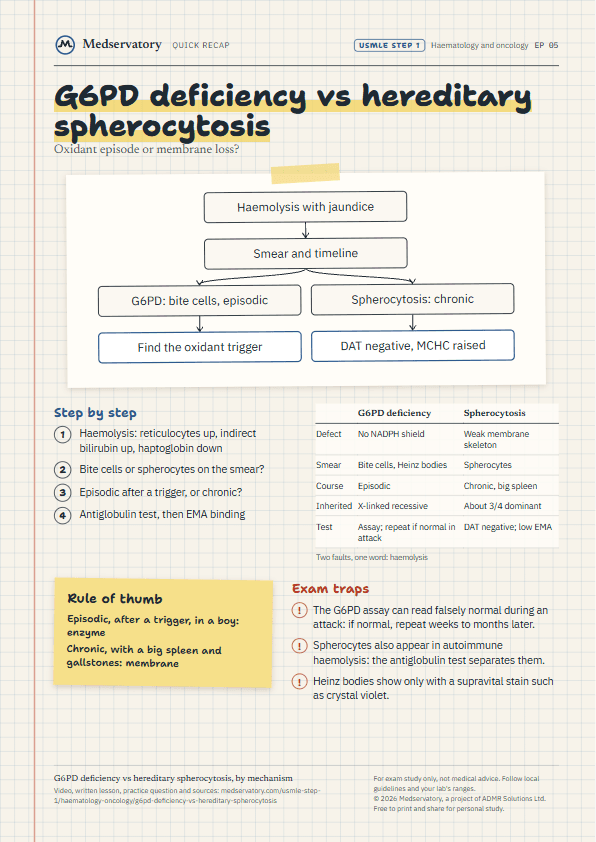
G6PD deficiency vs hereditary spherocytosis, by mechanism
EP 06
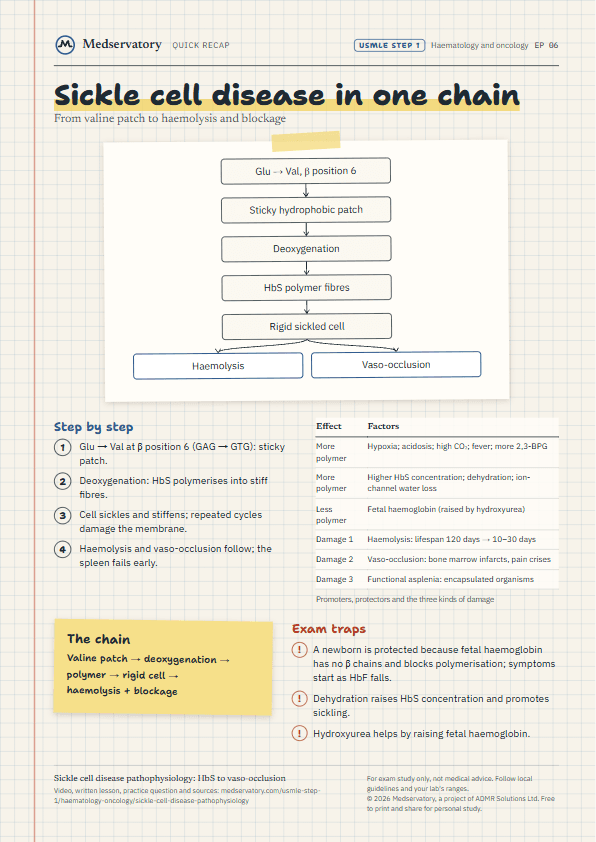
Sickle cell disease pathophysiology: HbS to vaso-occlusion
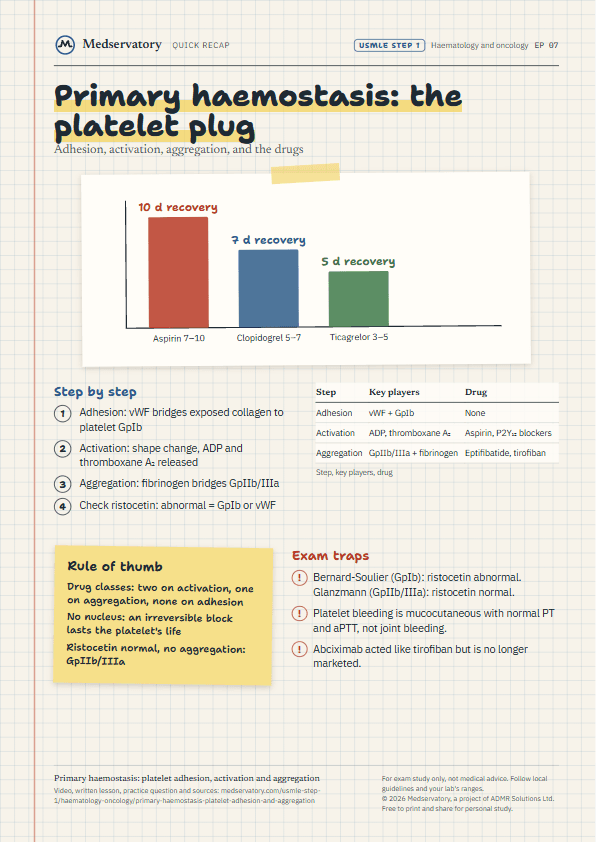
EP 07
Primary haemostasis: platelet adhesion, activation and aggregation
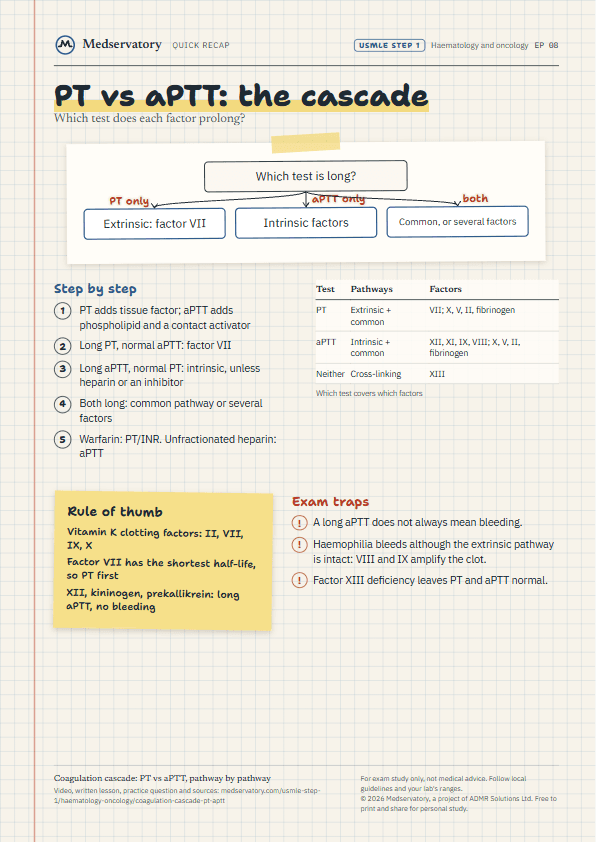
EP 08
Coagulation cascade: PT vs aPTT, pathway by pathway
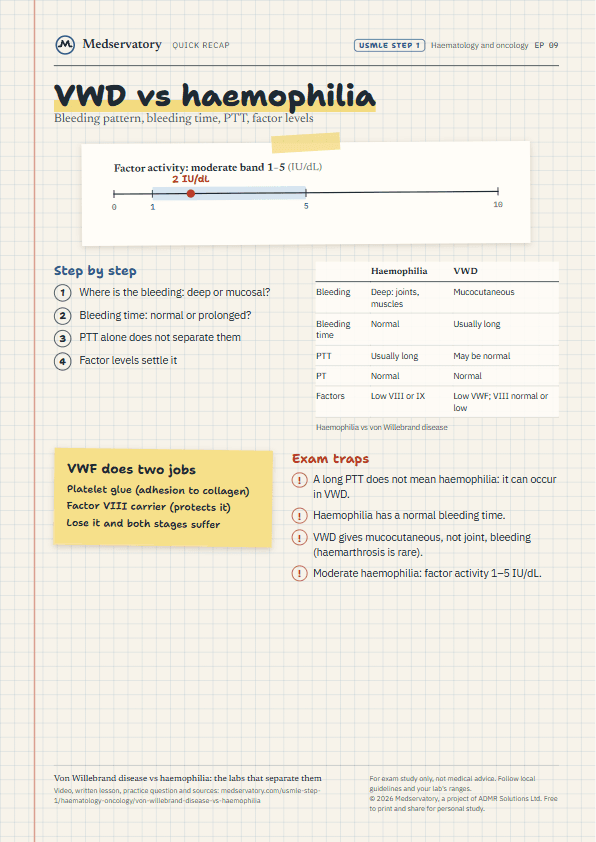
EP 09
Von Willebrand disease vs haemophilia: the labs that separate them
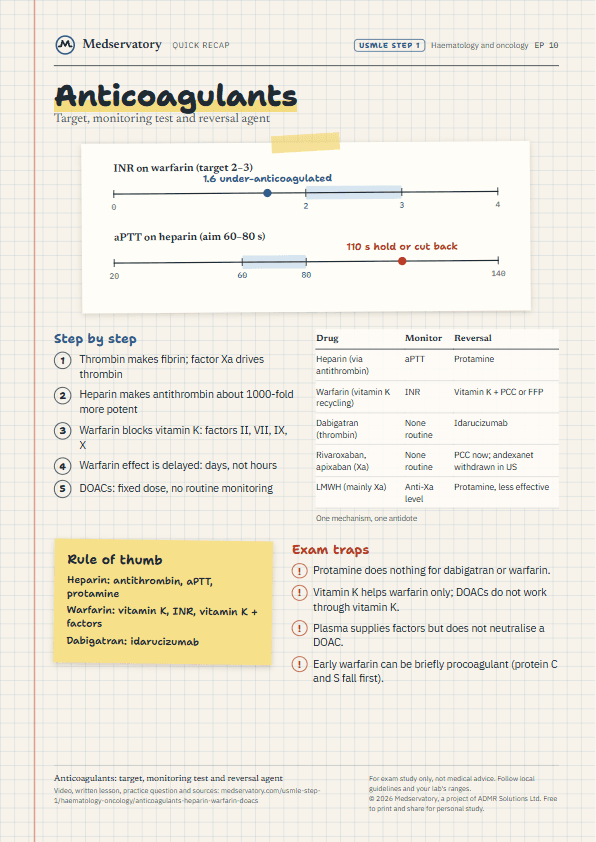
EP 10
Anticoagulants: target, monitoring test and reversal agent
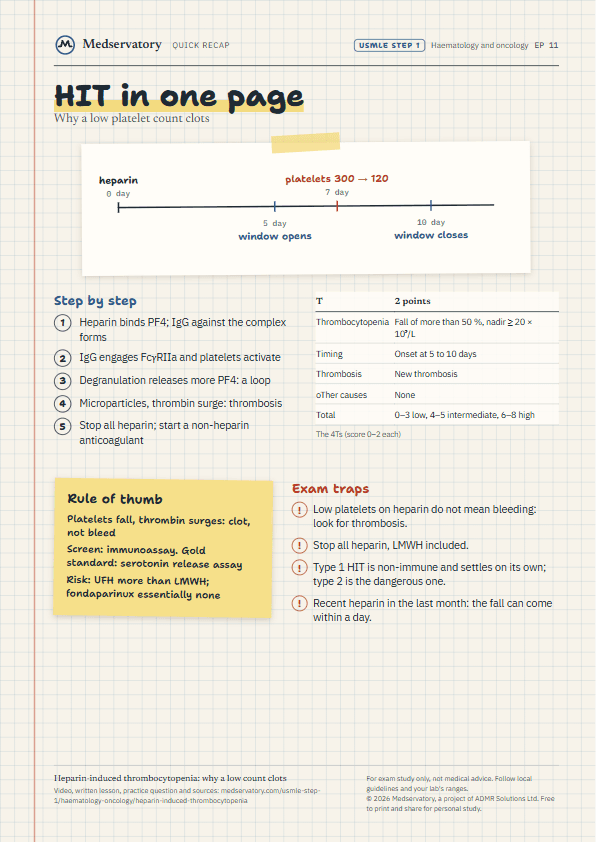
EP 11
Heparin-induced thrombocytopenia: why a low count clots
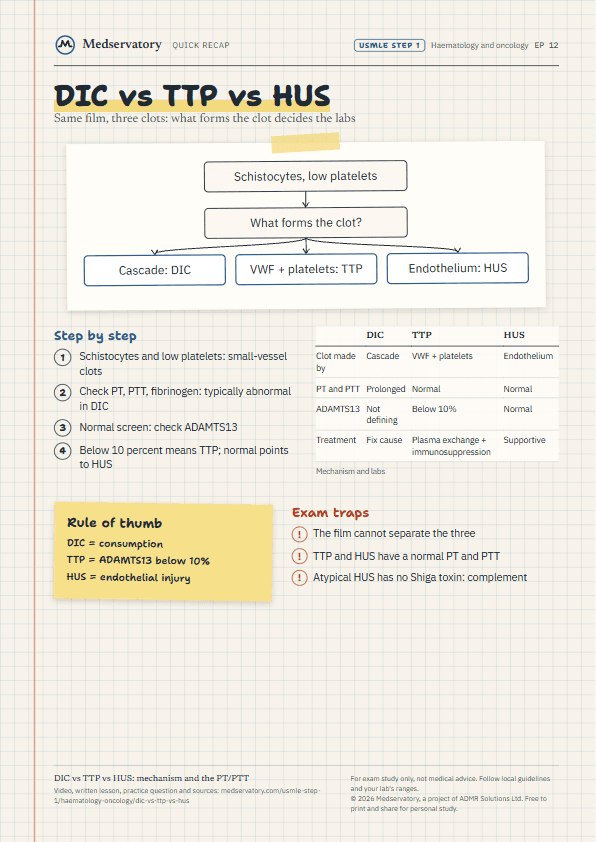
EP 12
DIC vs TTP vs HUS: mechanism and the PT/PTT
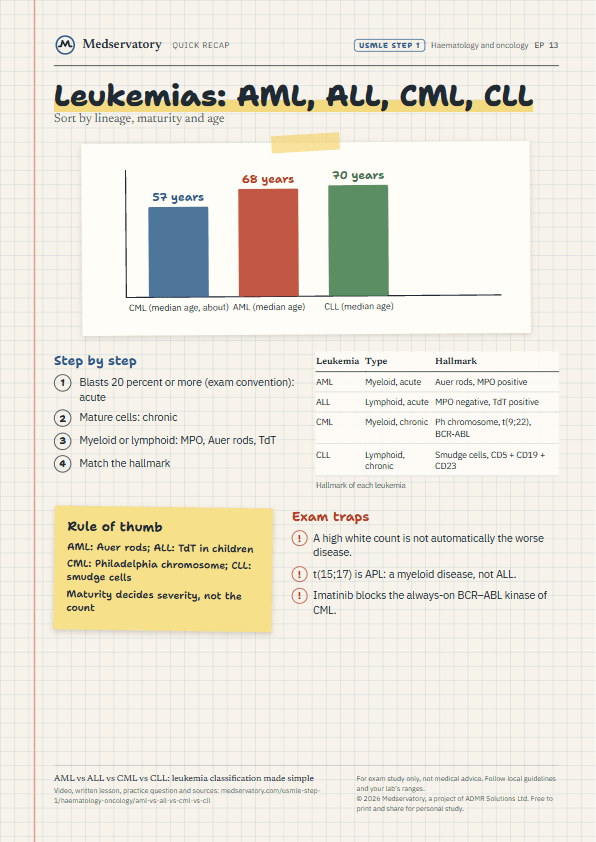
EP 13
AML vs ALL vs CML vs CLL: leukemia classification made simple
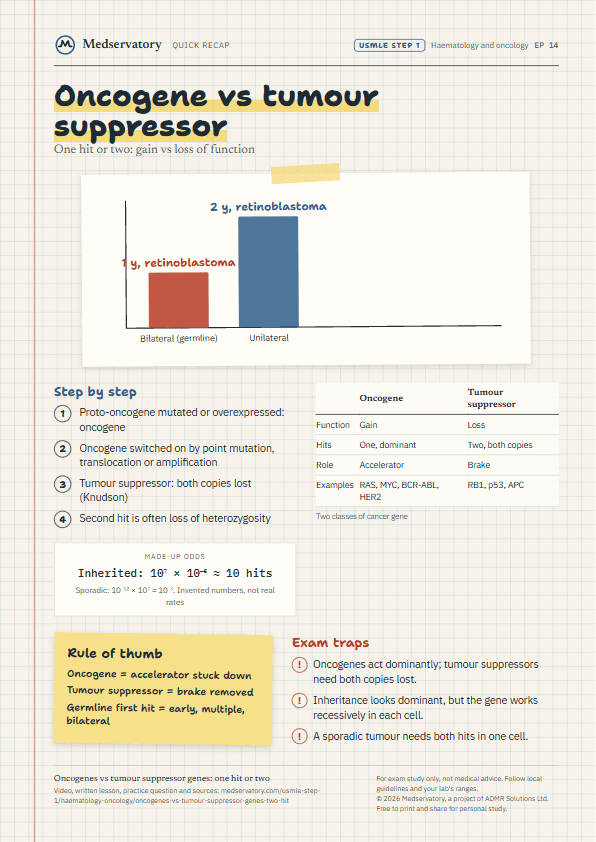
EP 14
Oncogenes vs tumour suppressor genes: one hit or two
USMLE Step 1
Microbiology
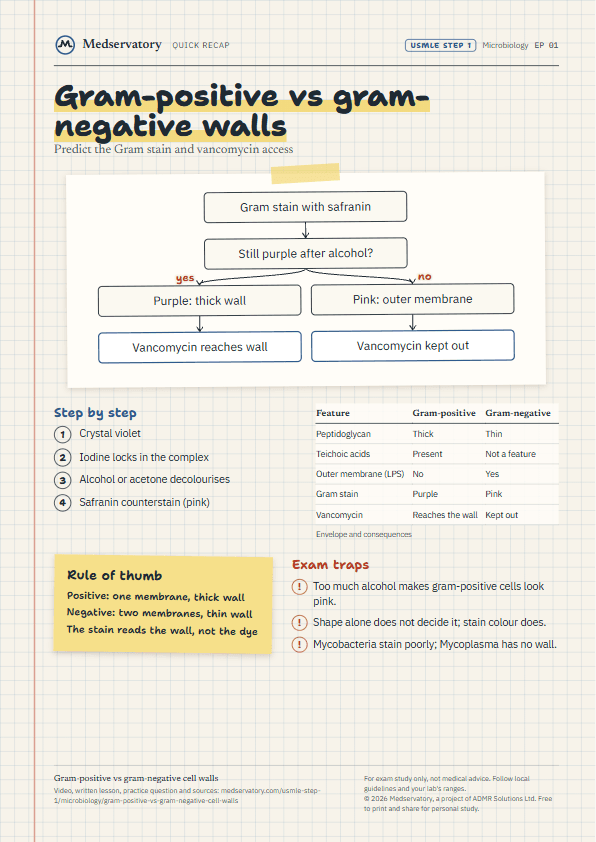
EP 01
Gram-positive vs gram-negative cell walls
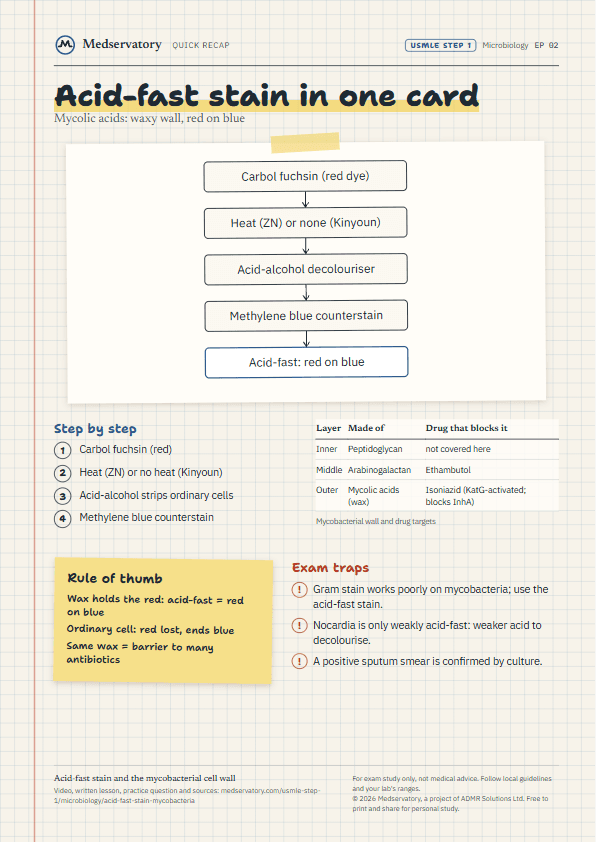
EP 02
Acid-fast stain and the mycobacterial cell wall
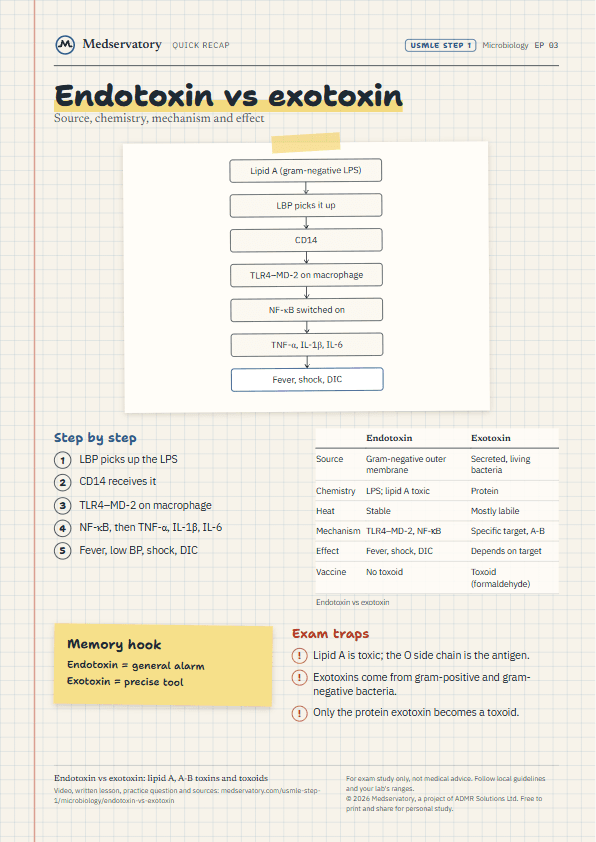
EP 03
Endotoxin vs exotoxin: lipid A, A-B toxins and toxoids
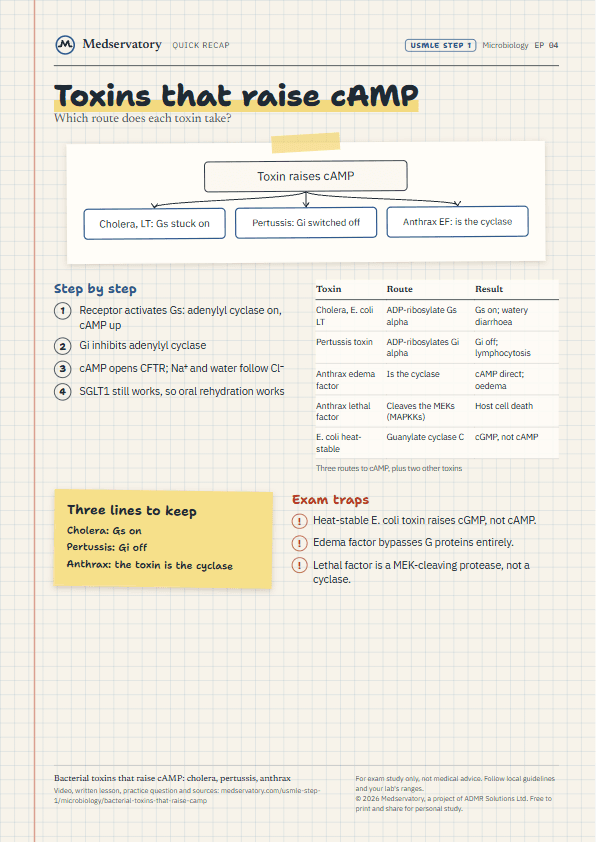
EP 04
Bacterial toxins that raise cAMP: cholera, pertussis, anthrax
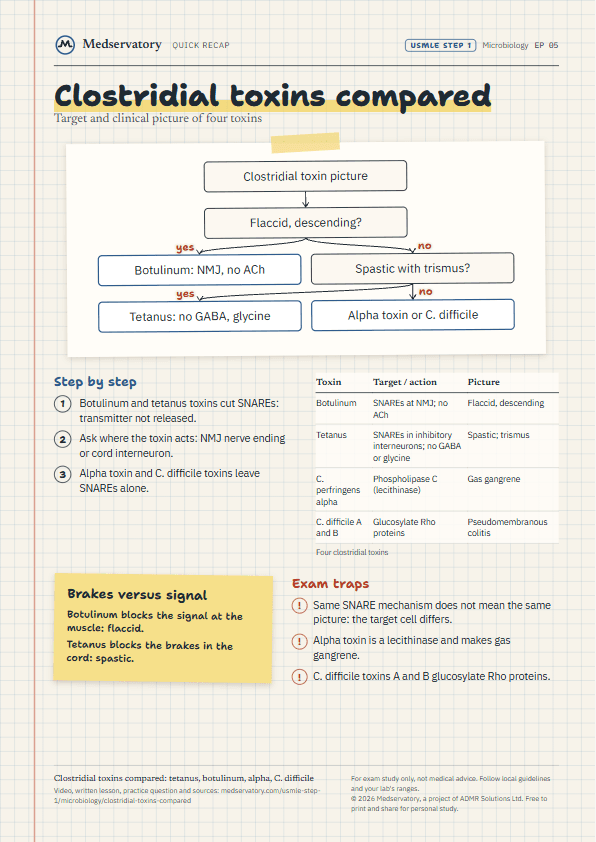
EP 05
Clostridial toxins compared: tetanus, botulinum, alpha, C. difficile
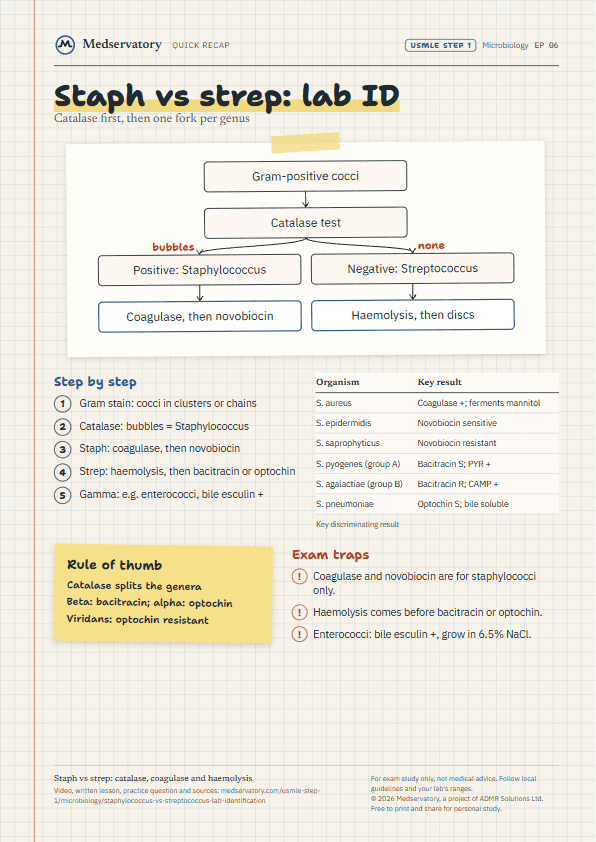
EP 06
Staph vs strep: catalase, coagulase and haemolysis
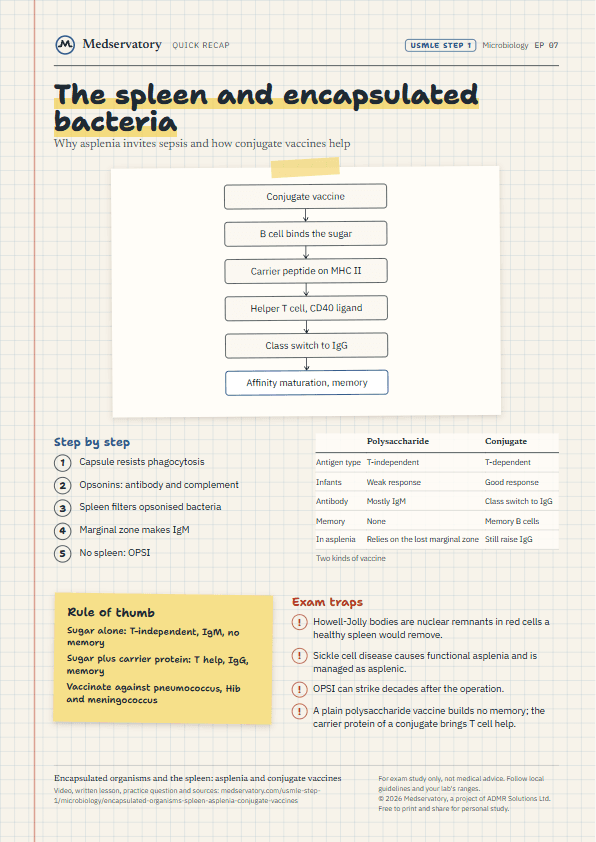
EP 07
Encapsulated organisms and the spleen: asplenia and conjugate vaccines
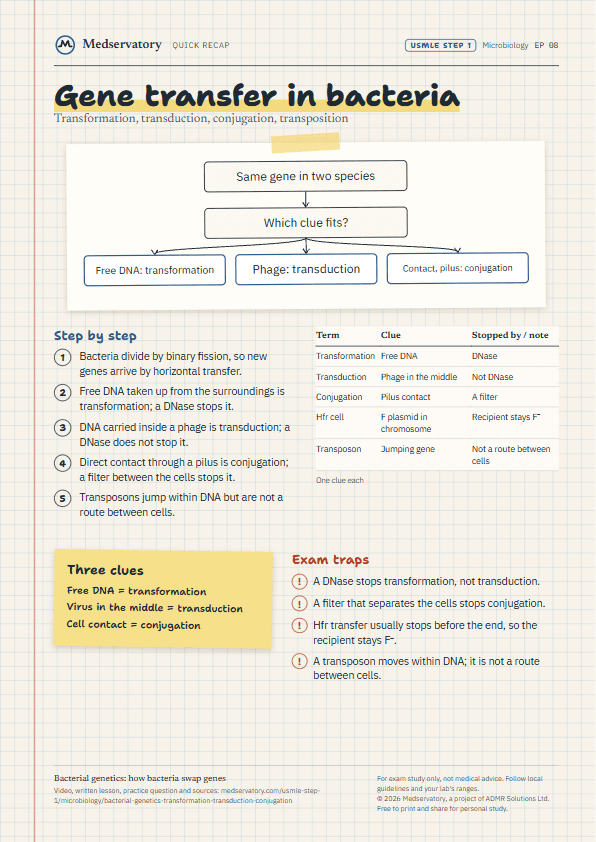
EP 08
Bacterial genetics: how bacteria swap genes
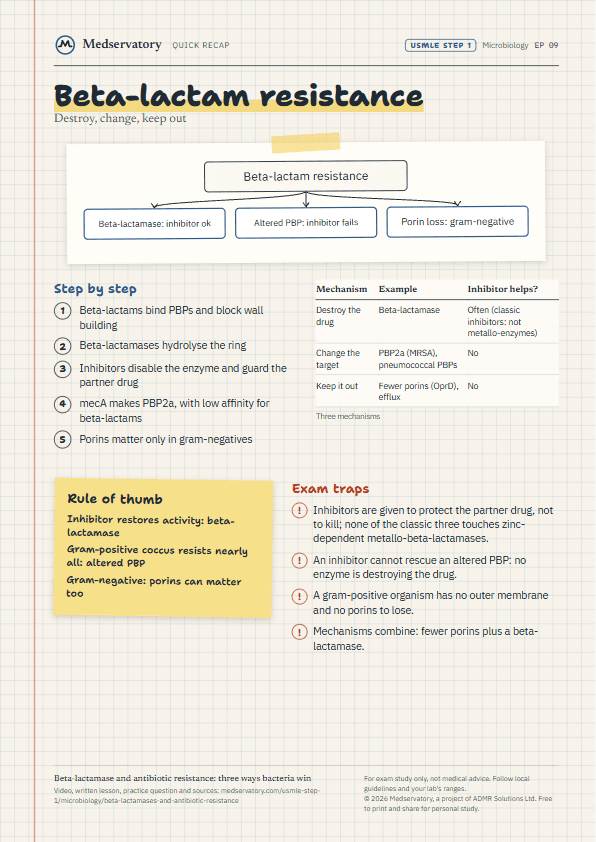
EP 09
Beta-lactamase and antibiotic resistance: three ways bacteria win
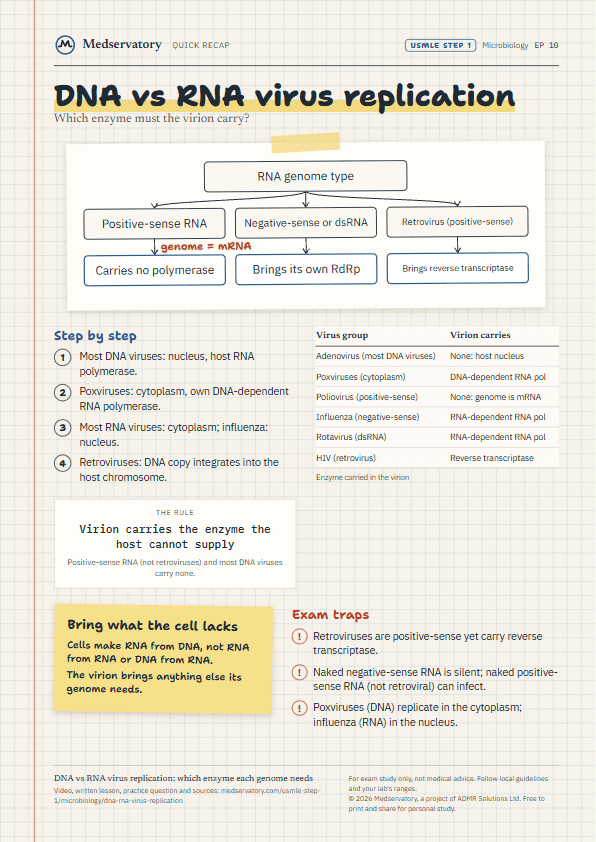
EP 10
DNA vs RNA virus replication: which enzyme each genome needs
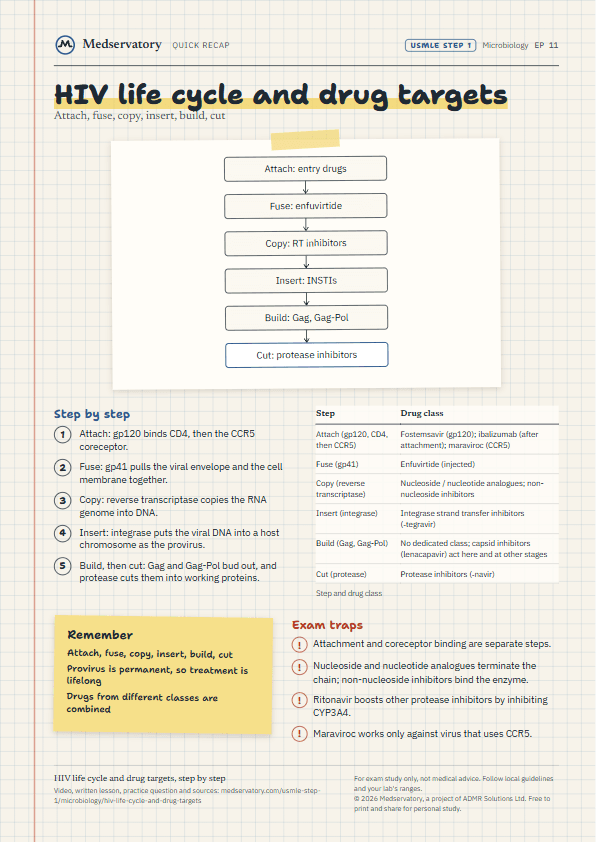
EP 11
HIV life cycle and drug targets, step by step
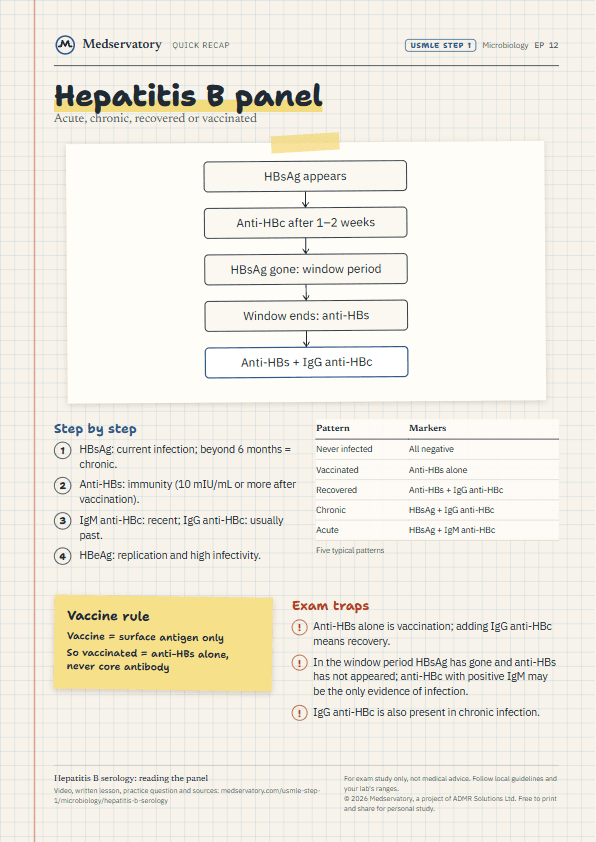
EP 12
Hepatitis B serology: reading the panel
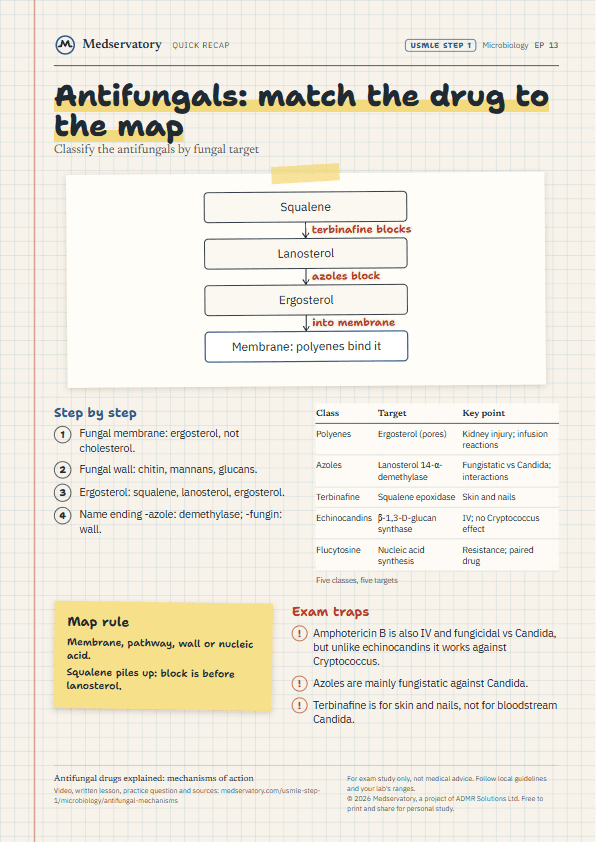
EP 13
Antifungal drugs explained: mechanisms of action
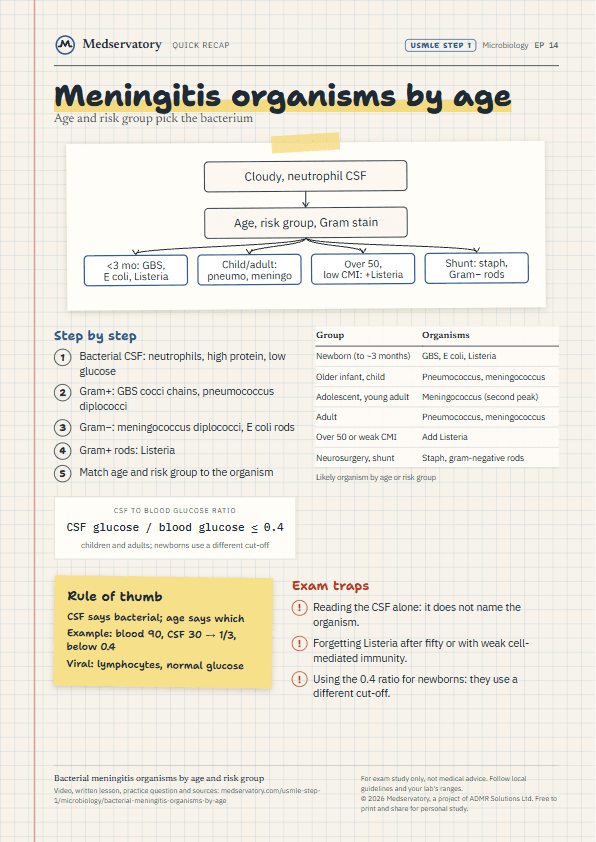
EP 14
Bacterial meningitis organisms by age and risk group
USMLE Step 1
GI physiology and pathology
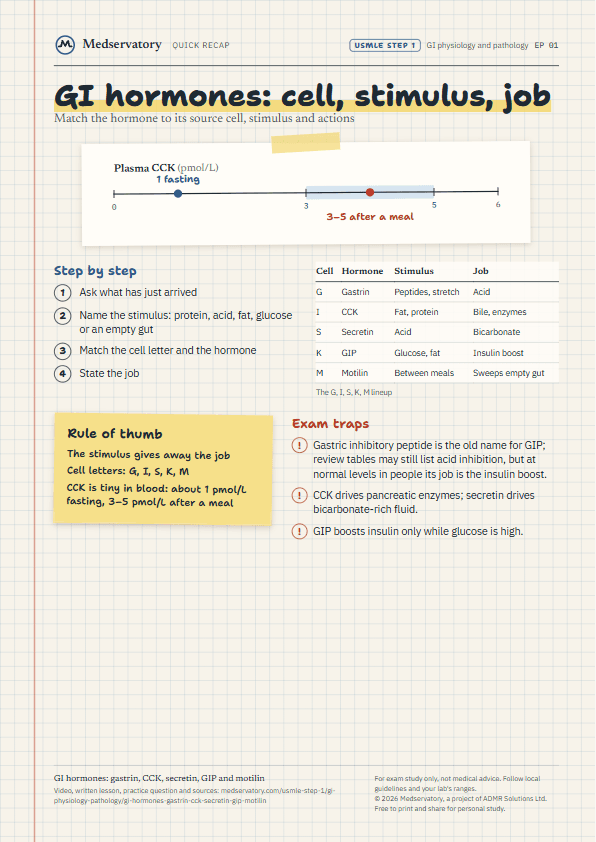
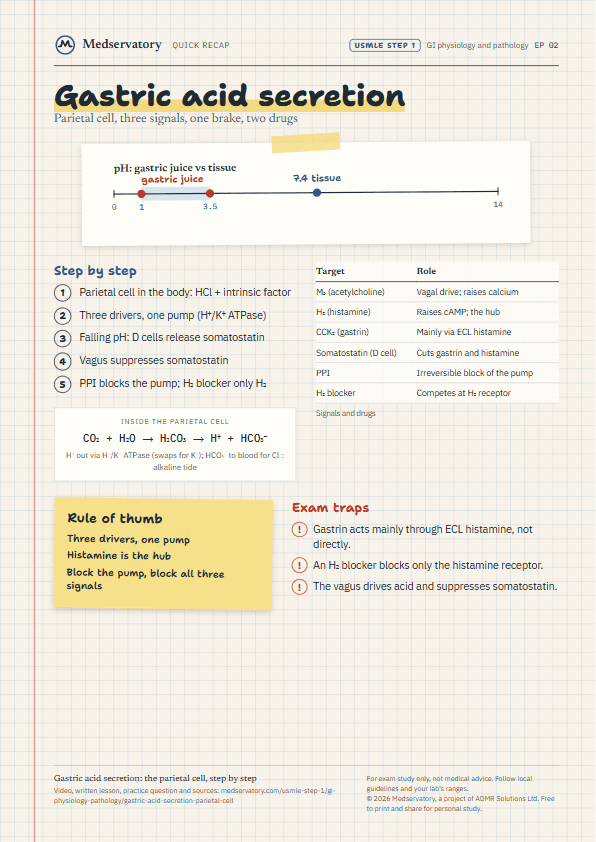
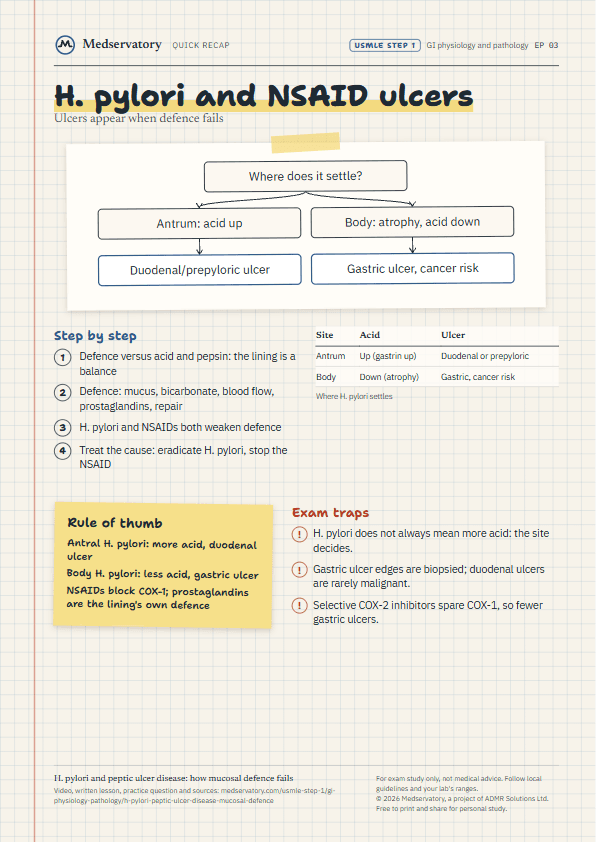
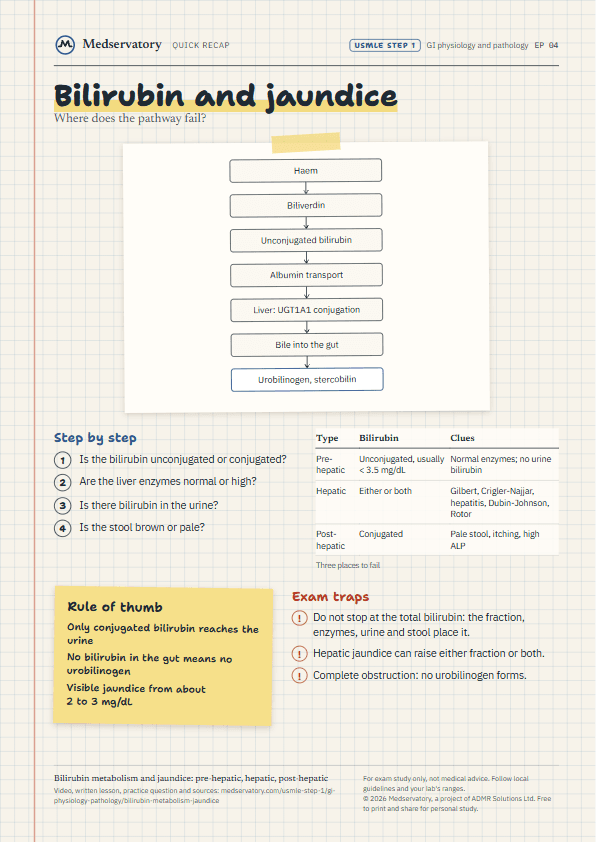
USMLE Step 2 CK
Emergency medicine
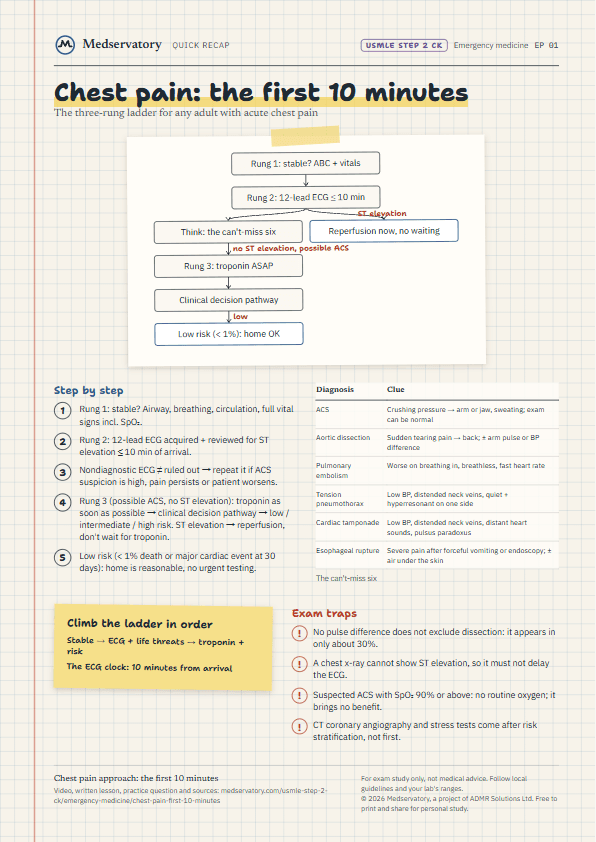
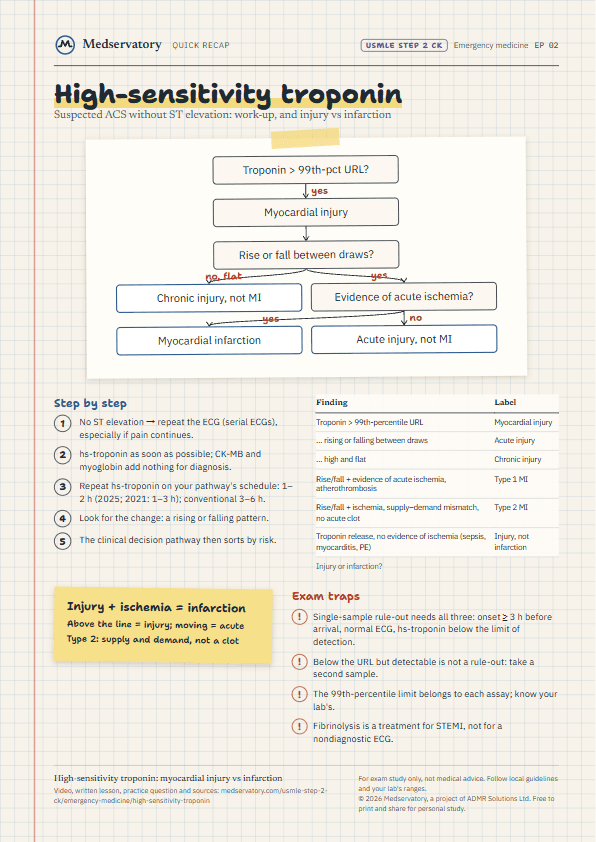
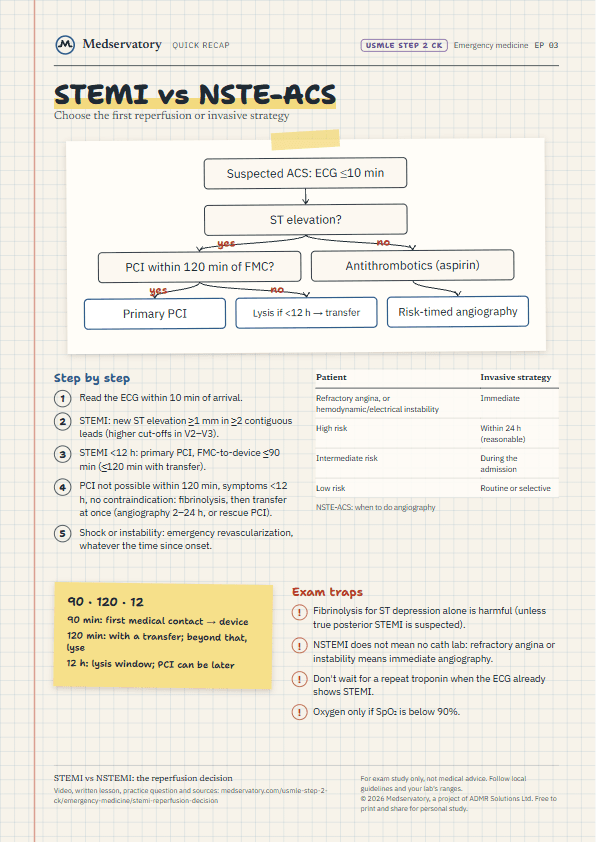
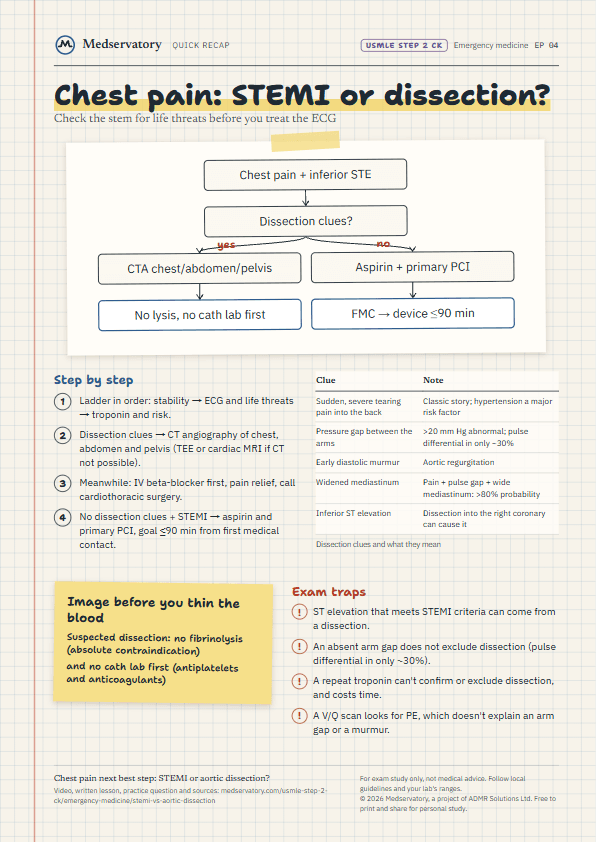
A-level Biology
3.1 Biological molecules
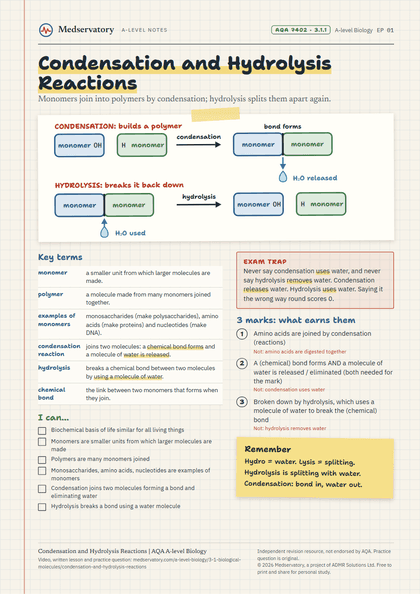
EP 01
Condensation and Hydrolysis Reactions
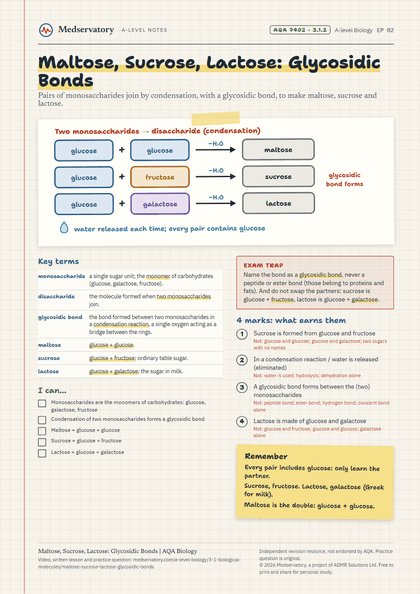
EP 02
Maltose, Sucrose, Lactose: Glycosidic Bonds
EP 03
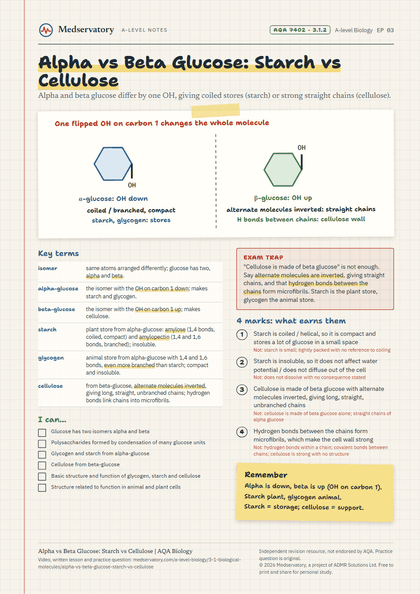
Alpha vs Beta Glucose: Starch vs Cellulose
EP 04
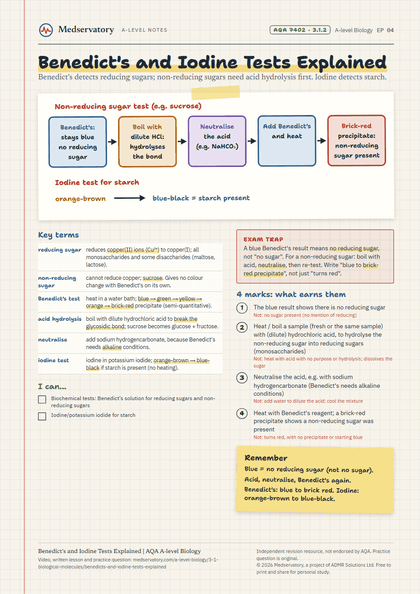
Benedict's and Iodine Tests Explained
EP 05
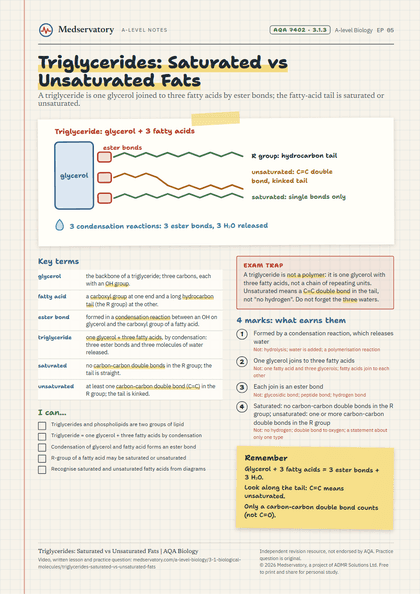
Triglycerides: Saturated vs Unsaturated Fats
EP 06
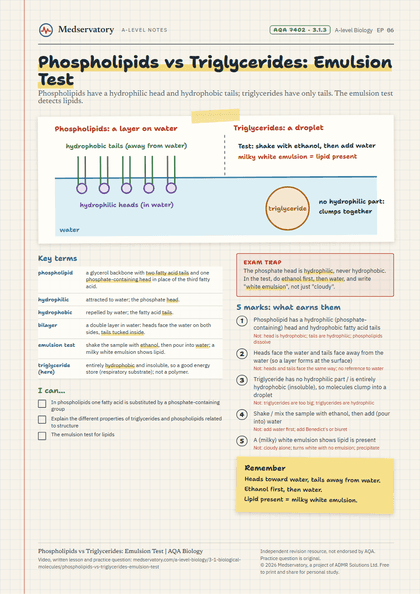
Phospholipids vs Triglycerides: Emulsion Test
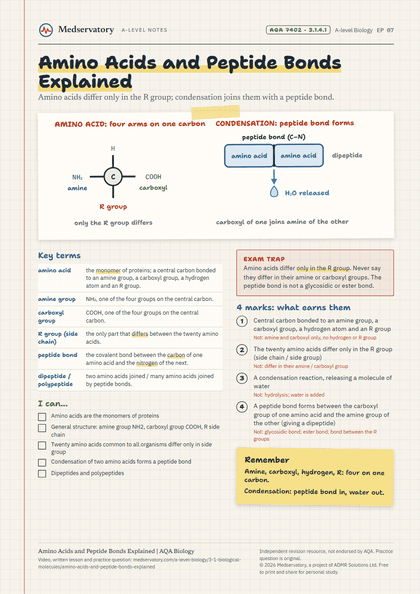
EP 07
Amino Acids and Peptide Bonds Explained
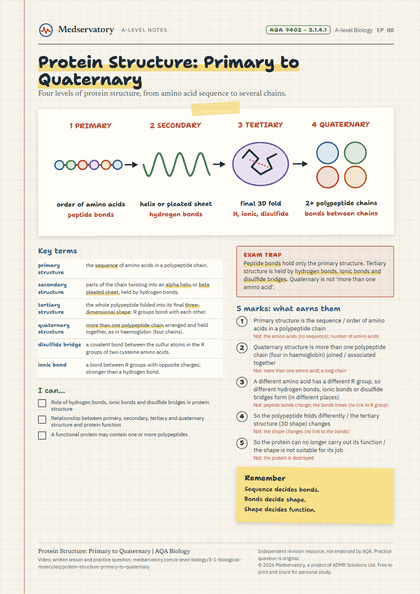
EP 08
Protein Structure: Primary to Quaternary
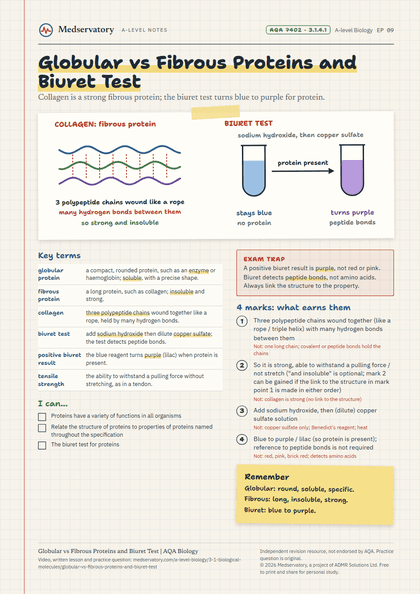
EP 09
Globular vs Fibrous Proteins and Biuret Test
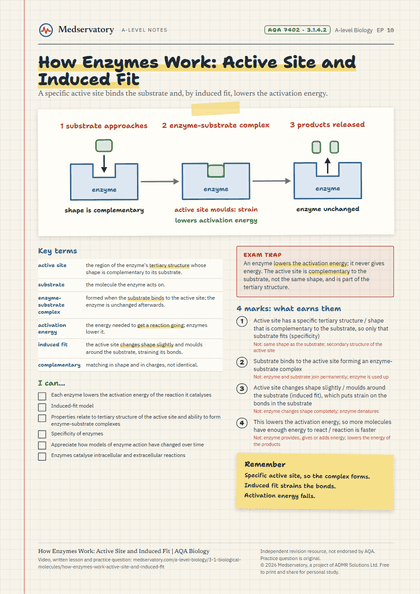
EP 10
How Enzymes Work: Active Site and Induced Fit
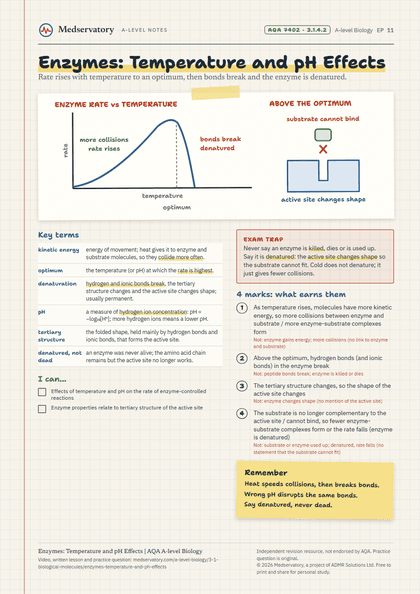
EP 11
Enzymes: Temperature and pH Effects
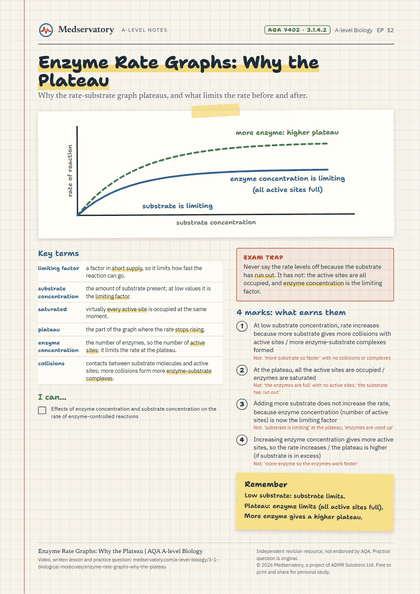
EP 12
Enzyme Rate Graphs: Why the Plateau
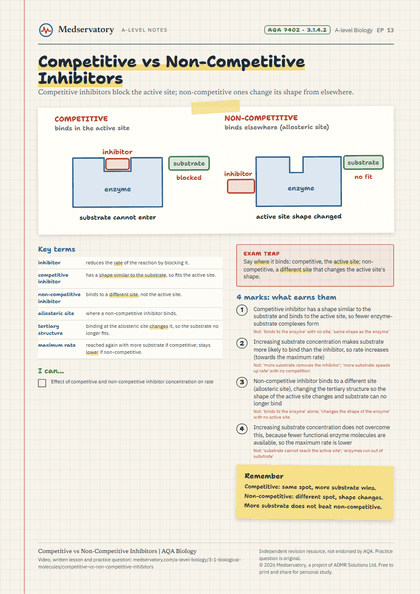
EP 13
Competitive vs Non-Competitive Inhibitors
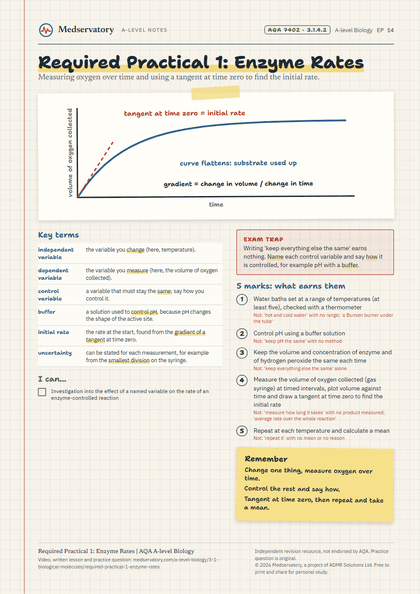
EP 14
Required Practical 1: Enzyme Rates
EP 15
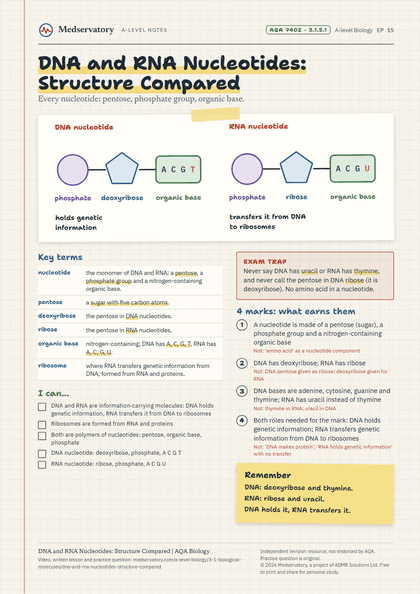
DNA and RNA Nucleotides: Structure Compared
EP 16
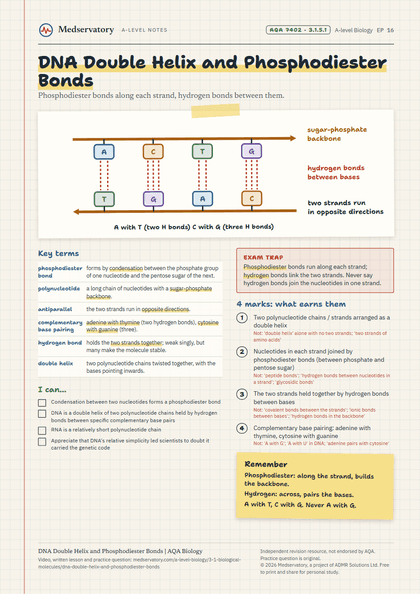
DNA Double Helix and Phosphodiester Bonds
EP 17
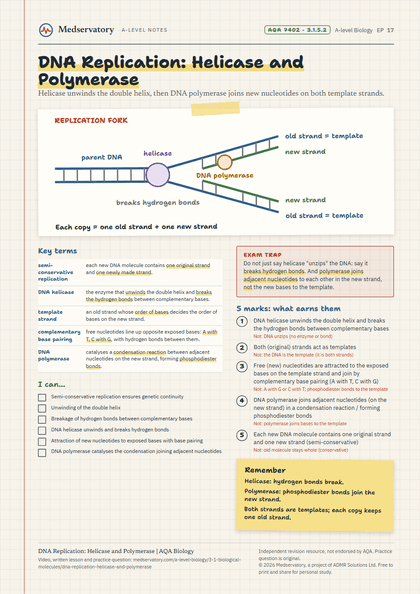
DNA Replication: Helicase and Polymerase
EP 18
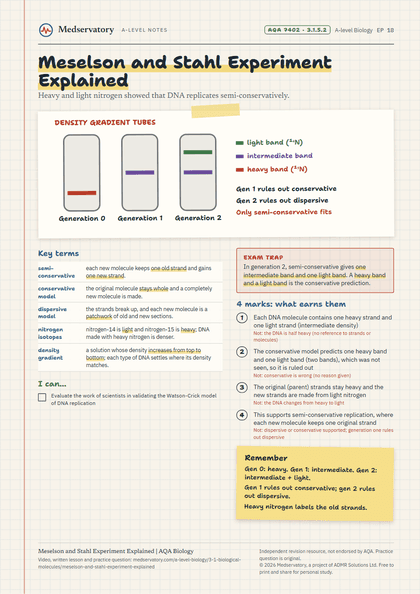
Meselson and Stahl Experiment Explained
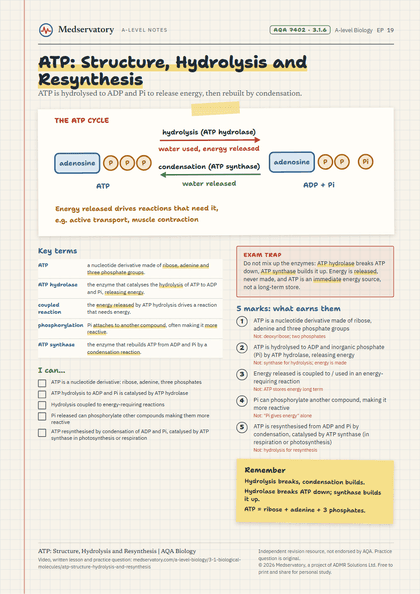
EP 19
ATP: Structure, Hydrolysis and Resynthesis
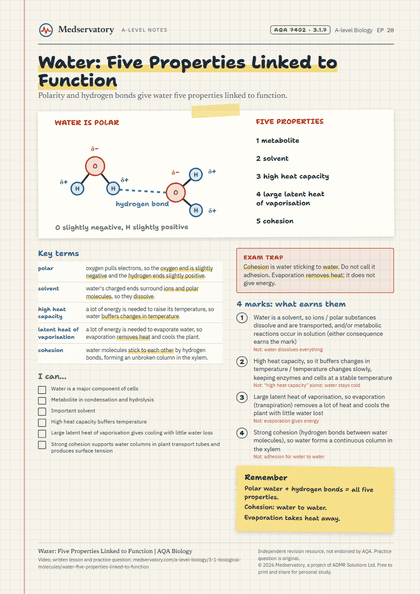
EP 20
Water: Five Properties Linked to Function
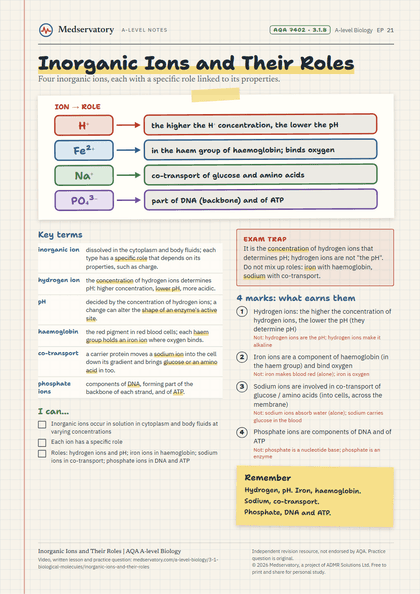
EP 21
Inorganic Ions and Their Roles
A-level Biology
3.2 Cells
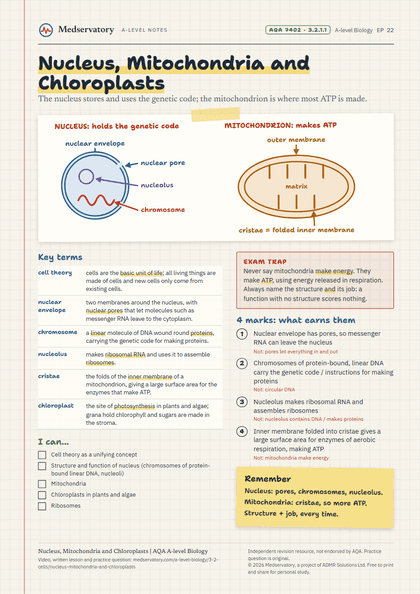
EP 22
Nucleus, Mitochondria and Chloroplasts
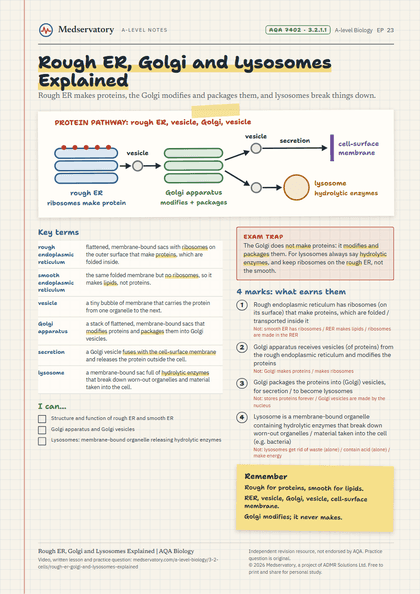
EP 23
Rough ER, Golgi and Lysosomes Explained
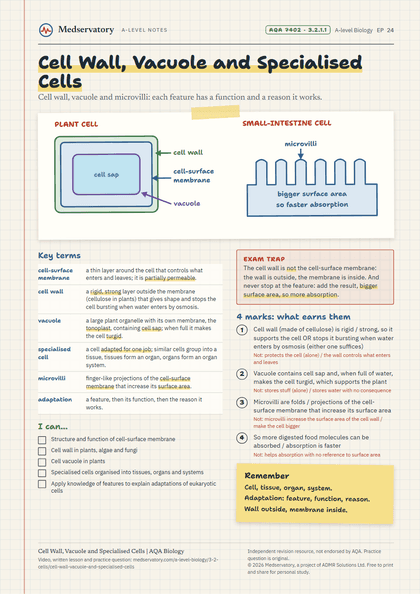
EP 24
Cell Wall, Vacuole and Specialised Cells
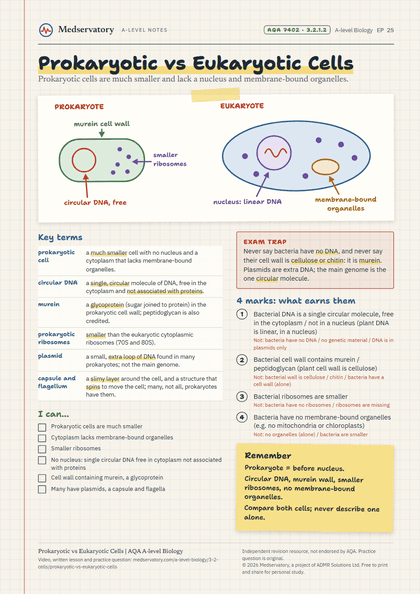
EP 25
Prokaryotic vs Eukaryotic Cells
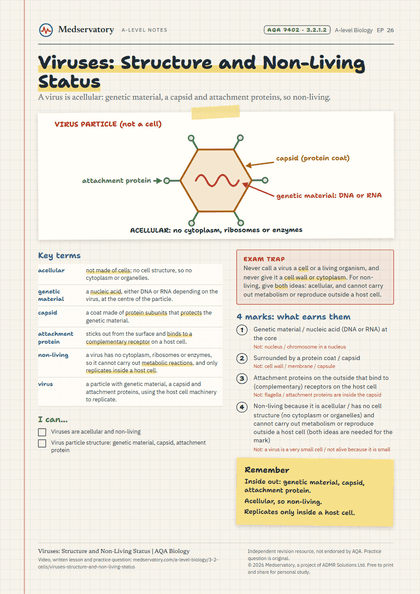
EP 26
Viruses: Structure and Non-Living Status
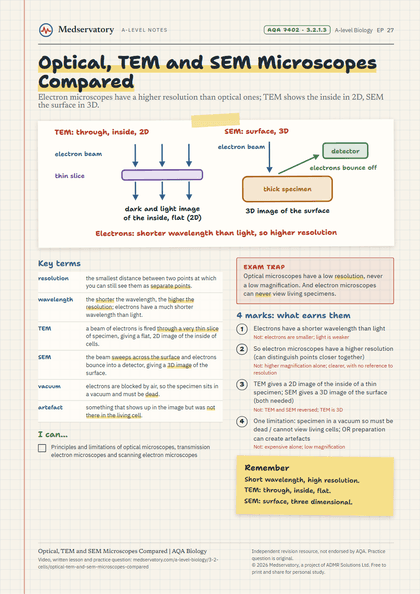
EP 27
Optical, TEM and SEM Microscopes Compared
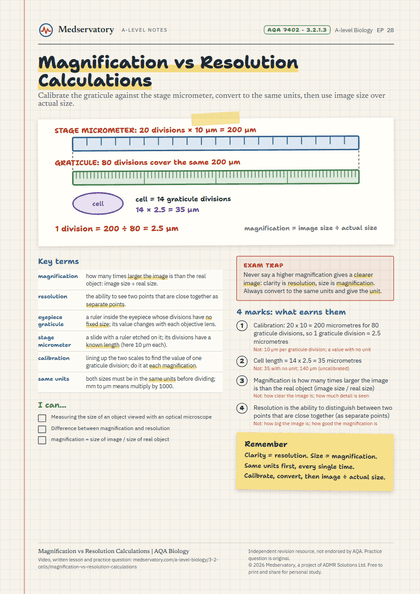
EP 28
Magnification vs Resolution Calculations
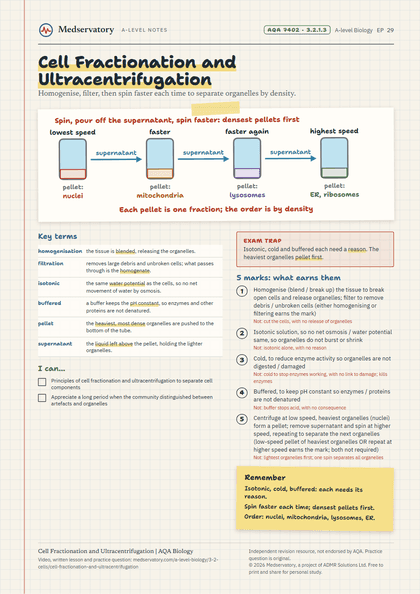
EP 29
Cell Fractionation and Ultracentrifugation
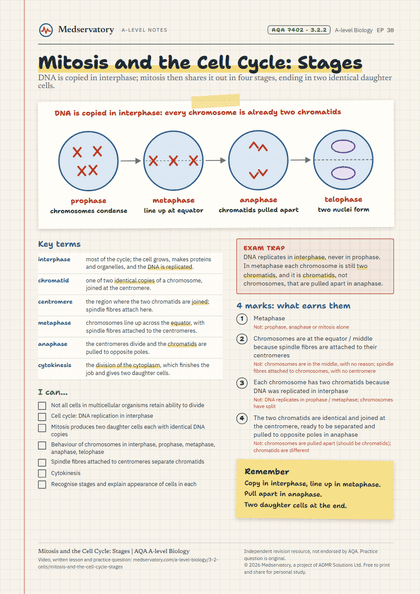
EP 30
Mitosis and the Cell Cycle: Stages
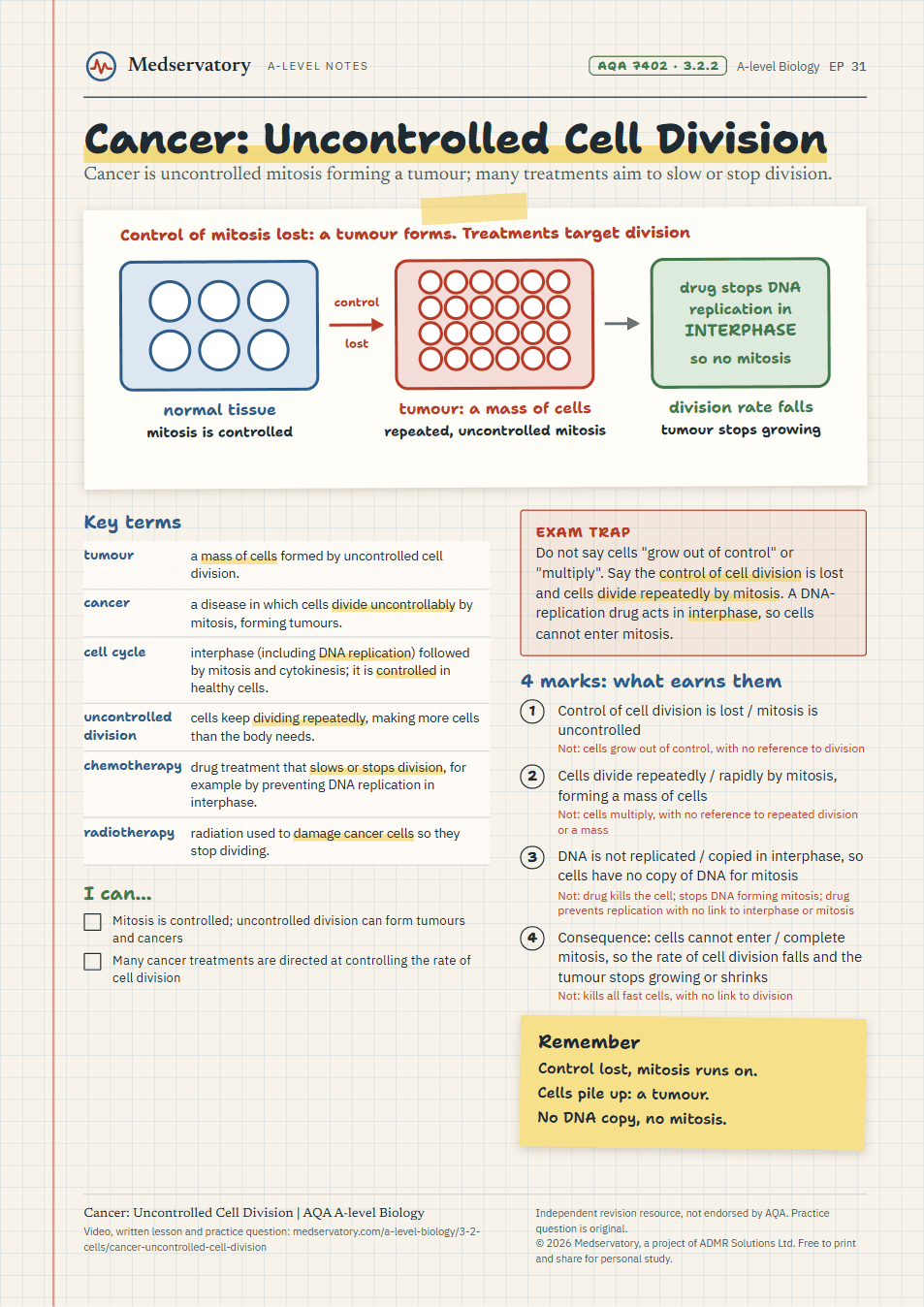
EP 31
Cancer: Uncontrolled Cell Division
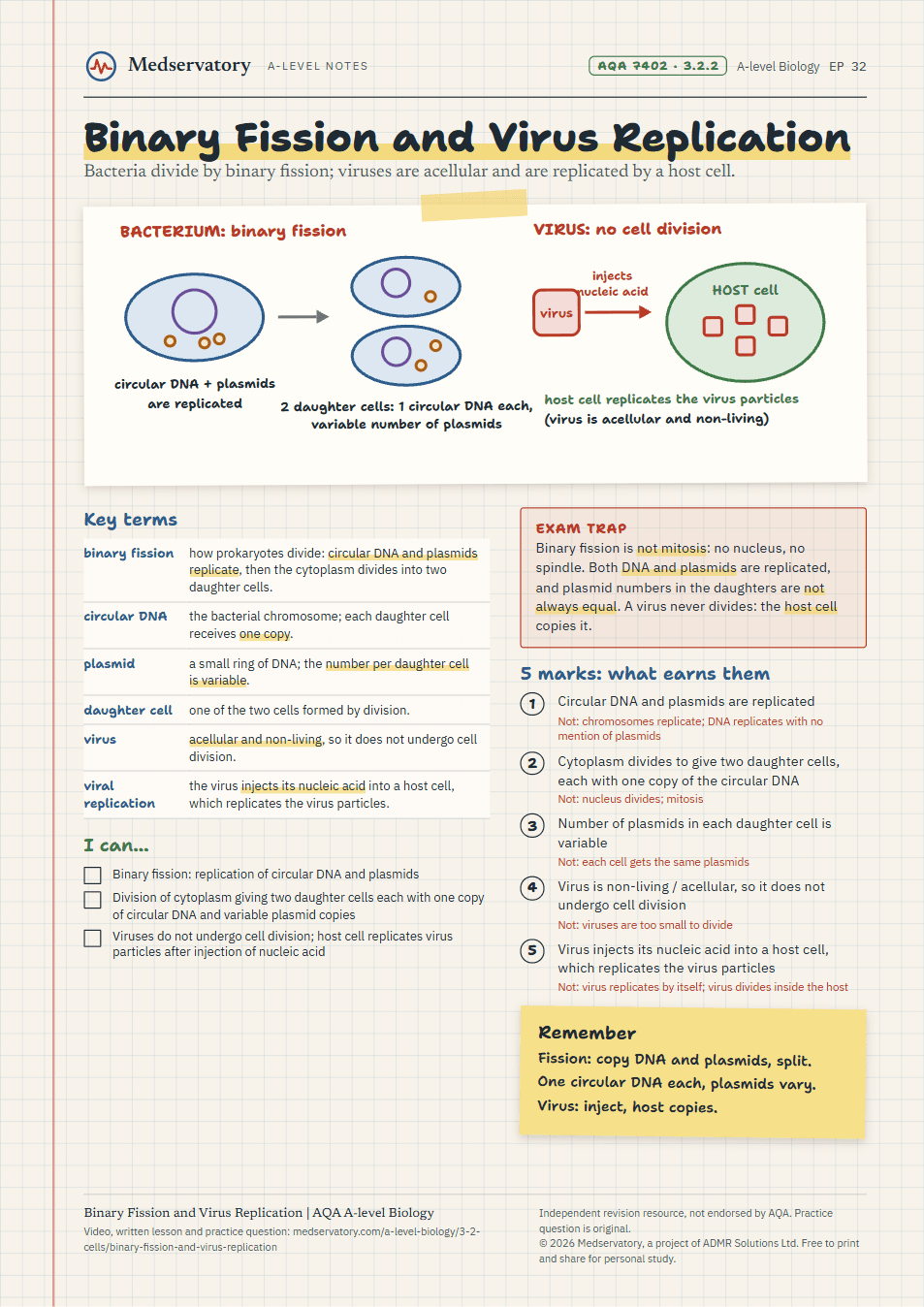
EP 32
Binary Fission and Virus Replication
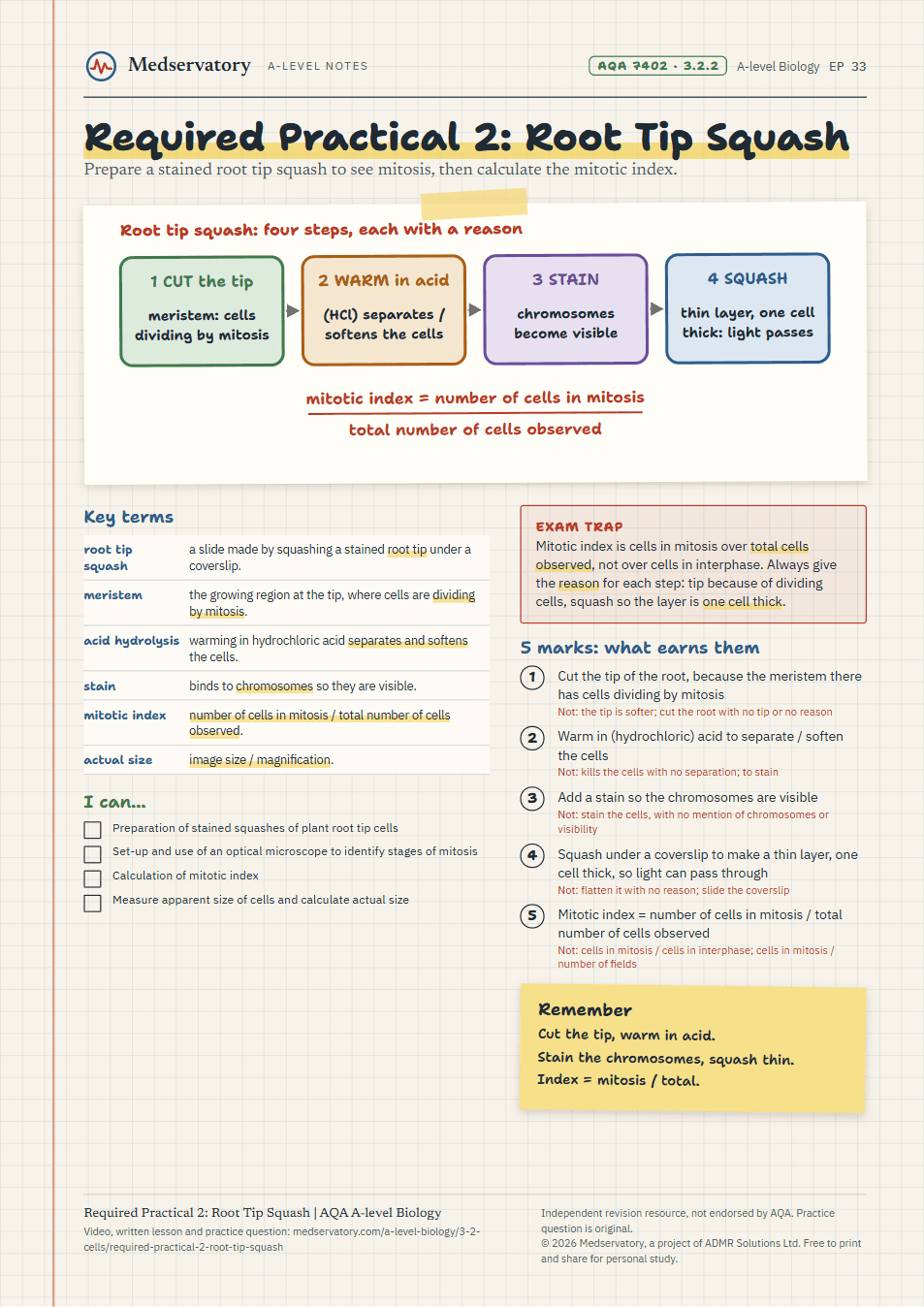
EP 33
Required Practical 2: Root Tip Squash
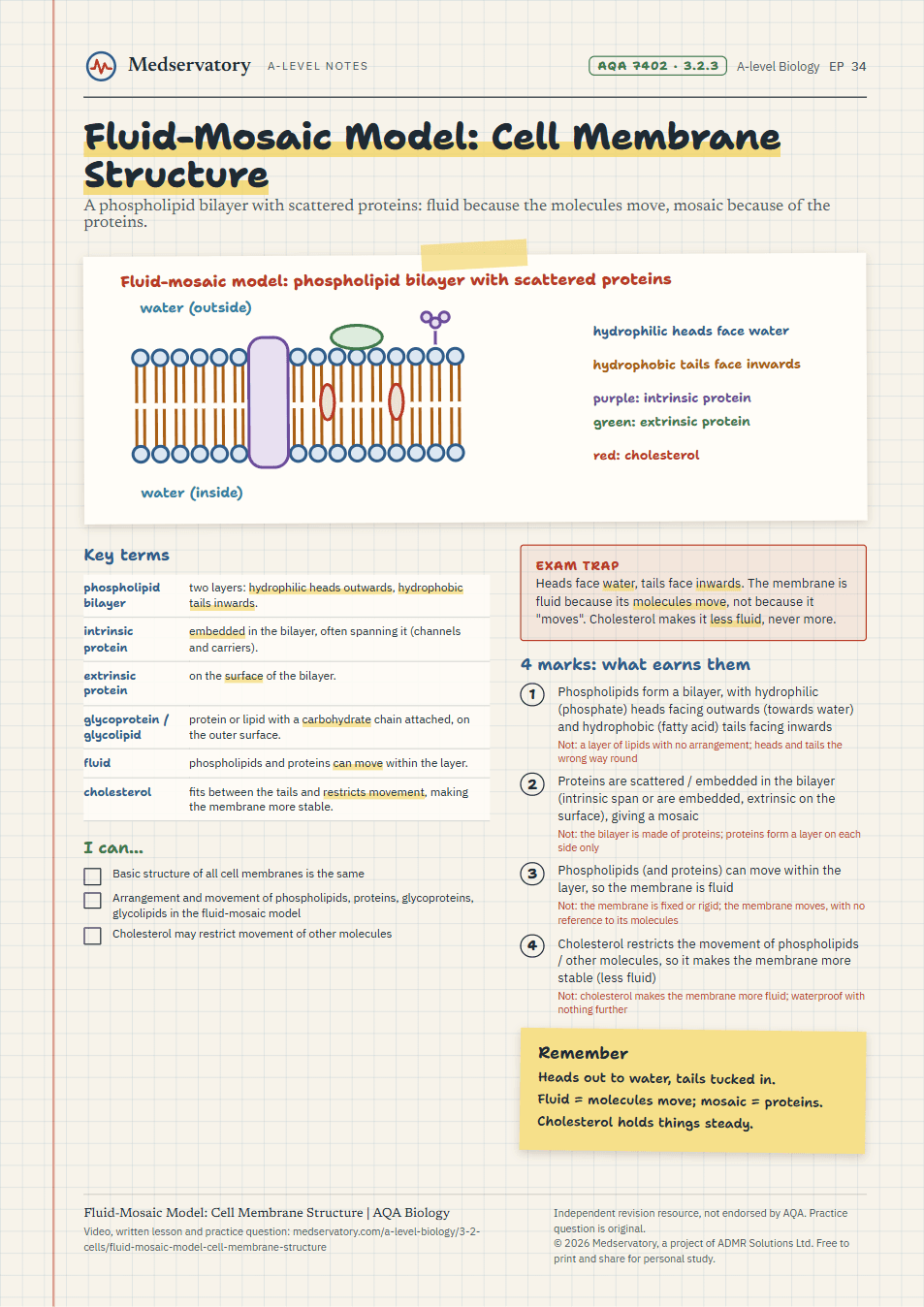
EP 34
Fluid-Mosaic Model: Cell Membrane Structure
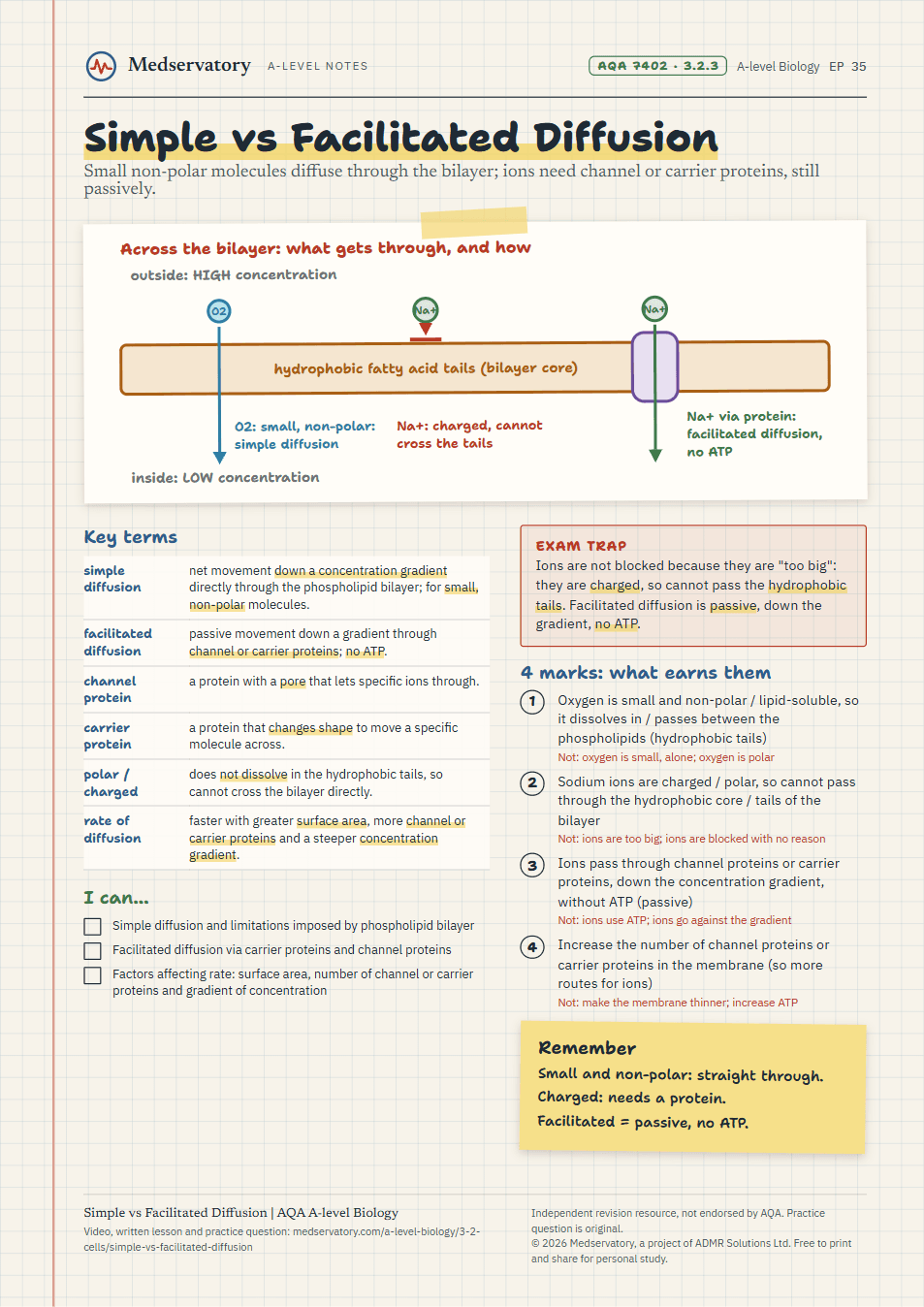
EP 35
Simple vs Facilitated Diffusion
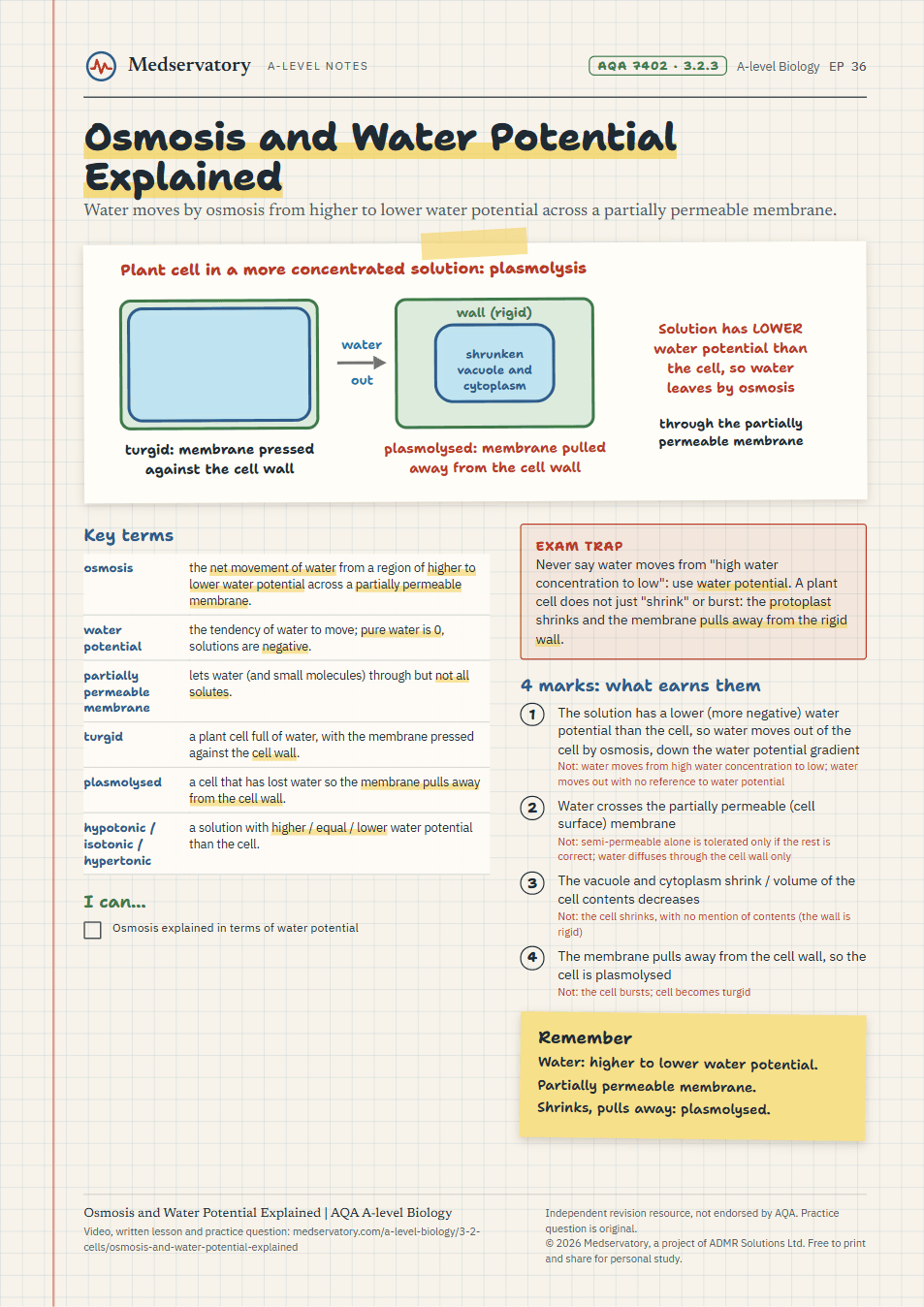
EP 36
Osmosis and Water Potential Explained
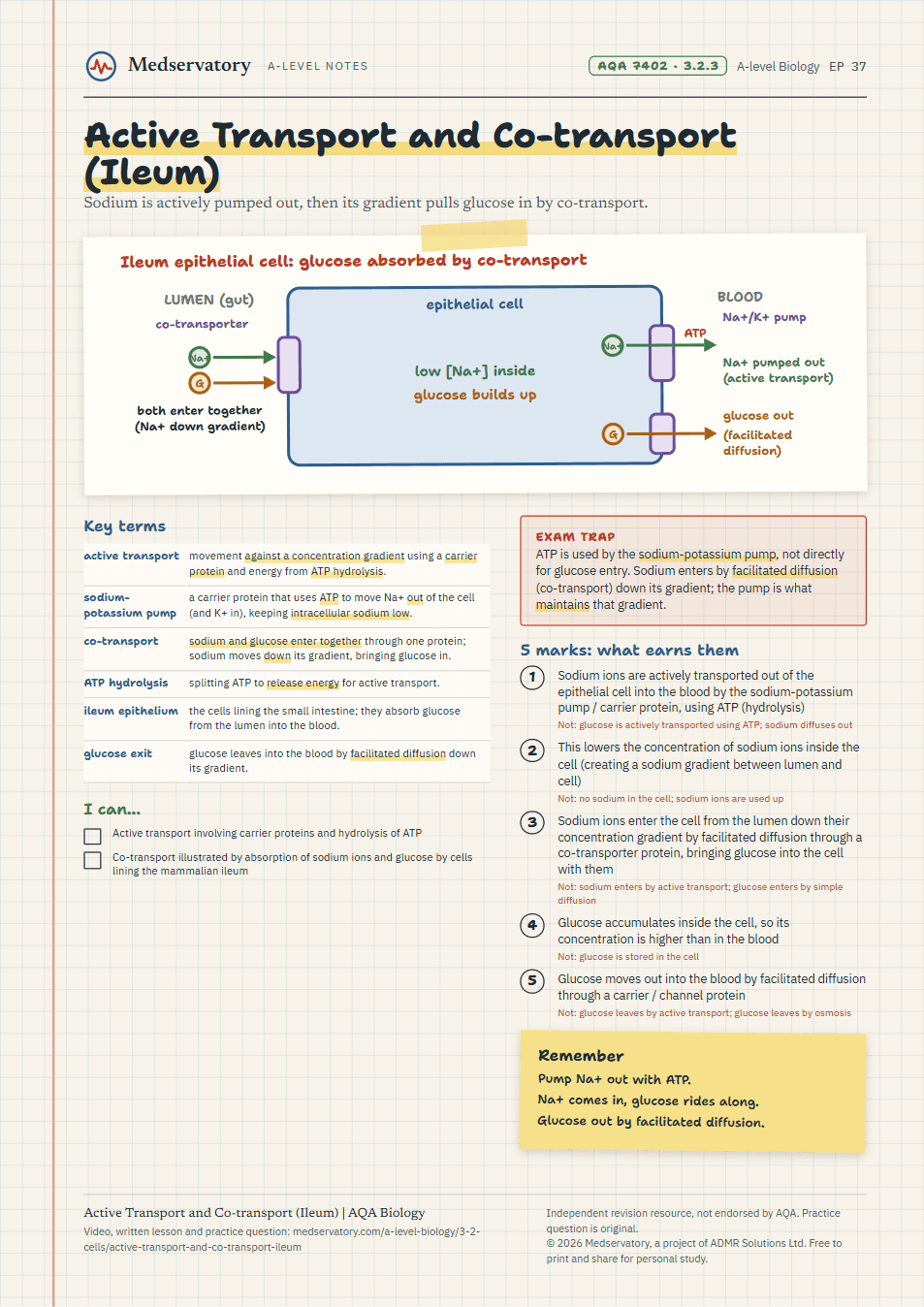
EP 37
Active Transport and Co-transport (Ileum)
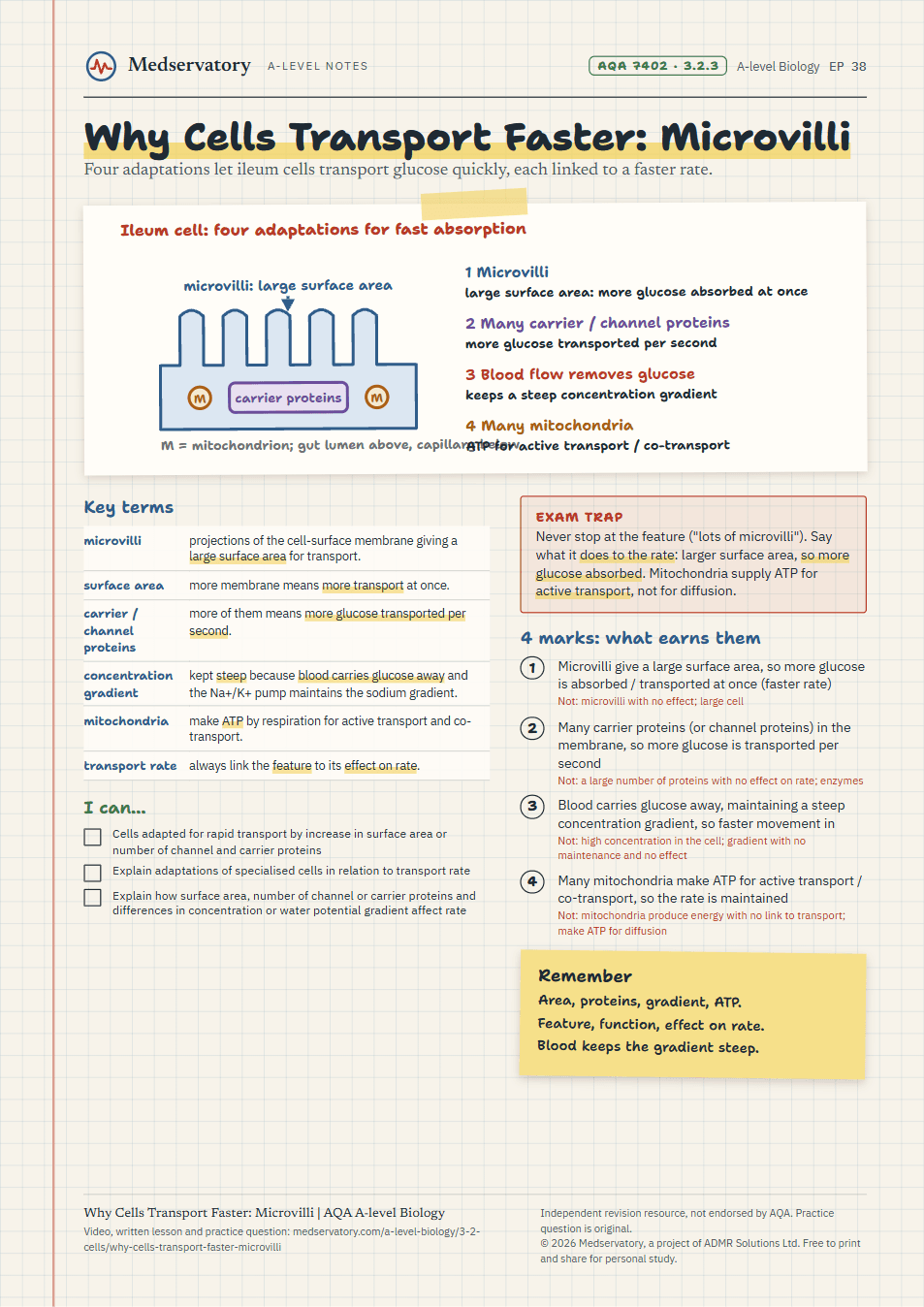
EP 38
Why Cells Transport Faster: Microvilli
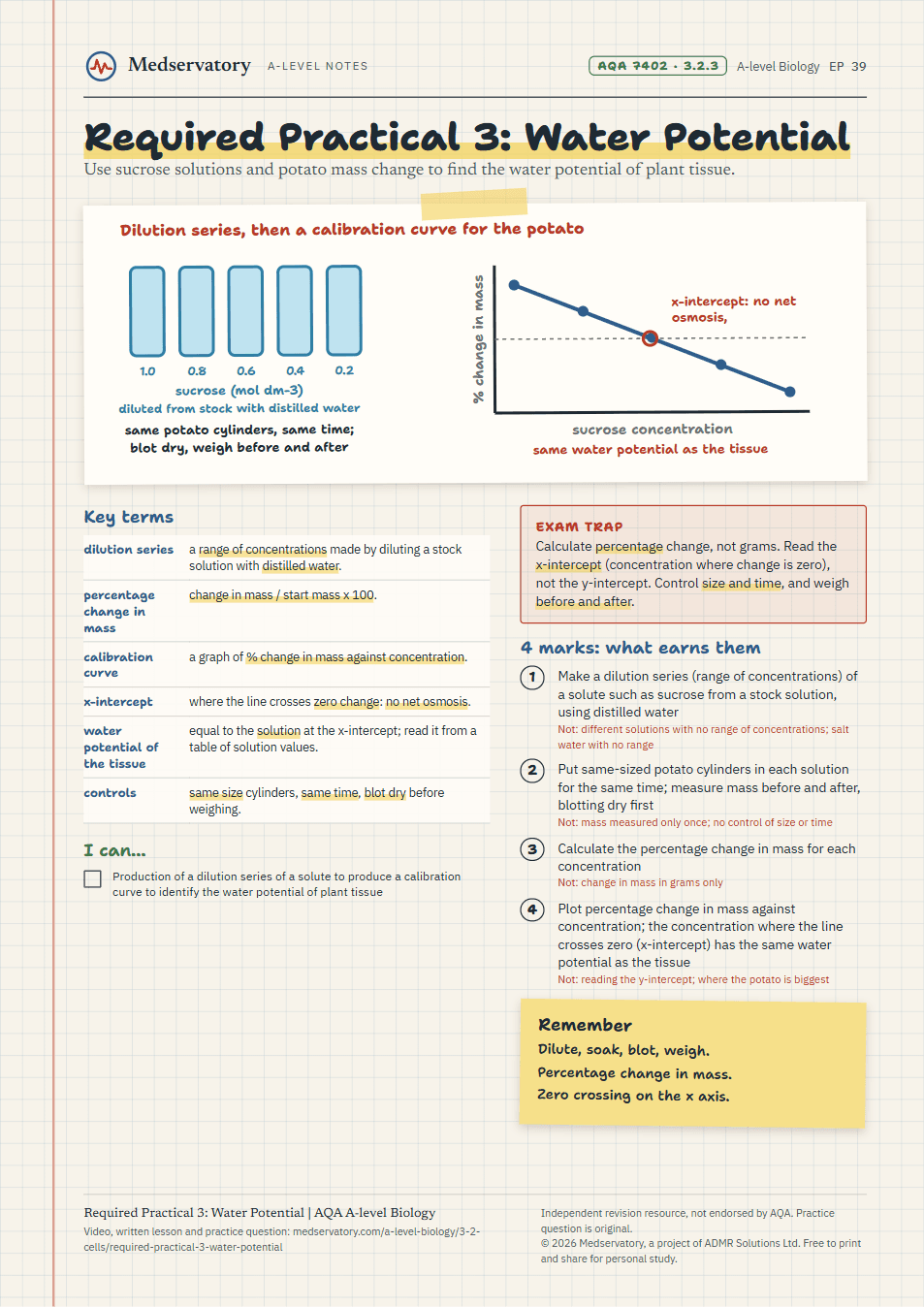
EP 39
Required Practical 3: Water Potential
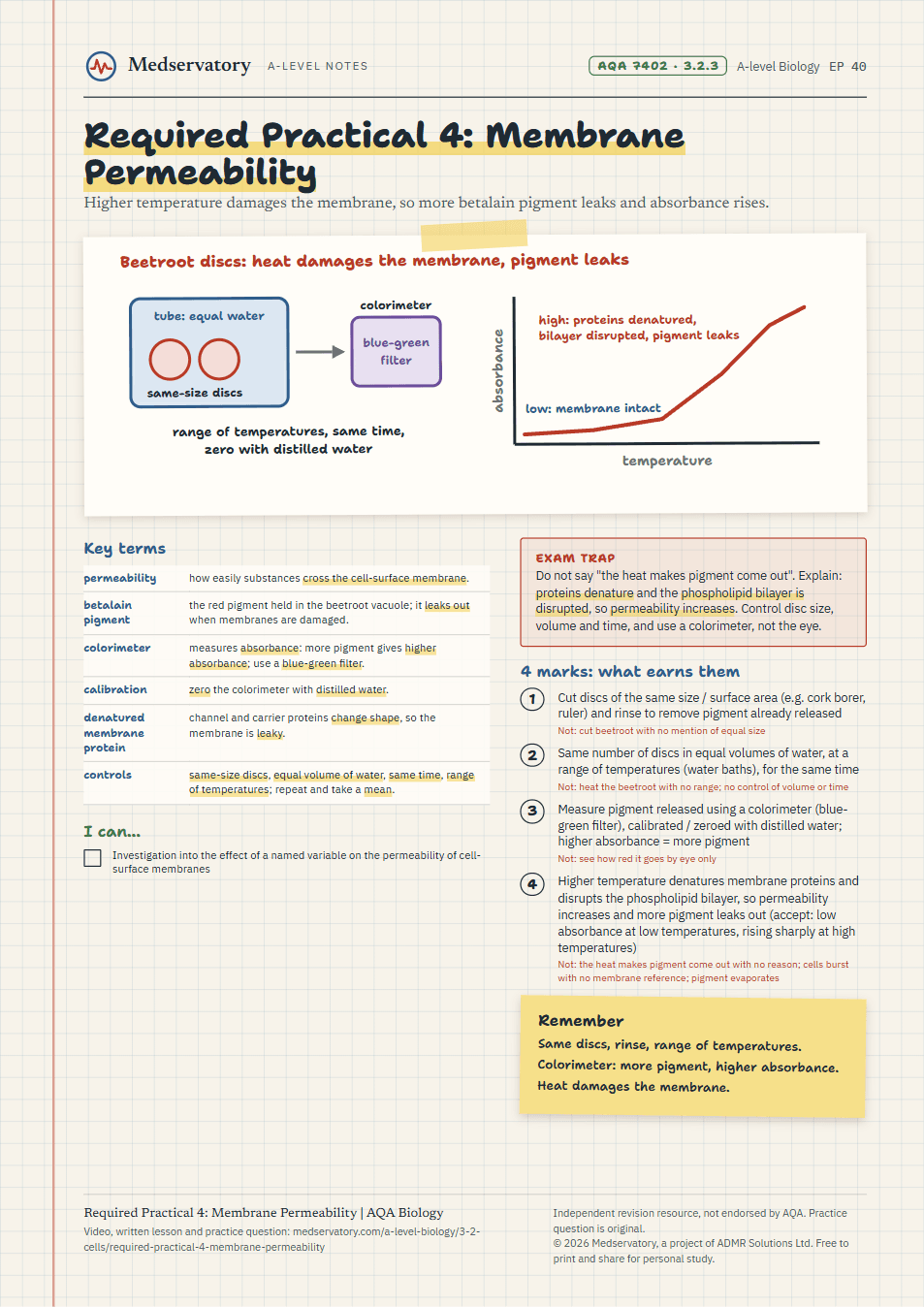
EP 40
Required Practical 4: Membrane Permeability
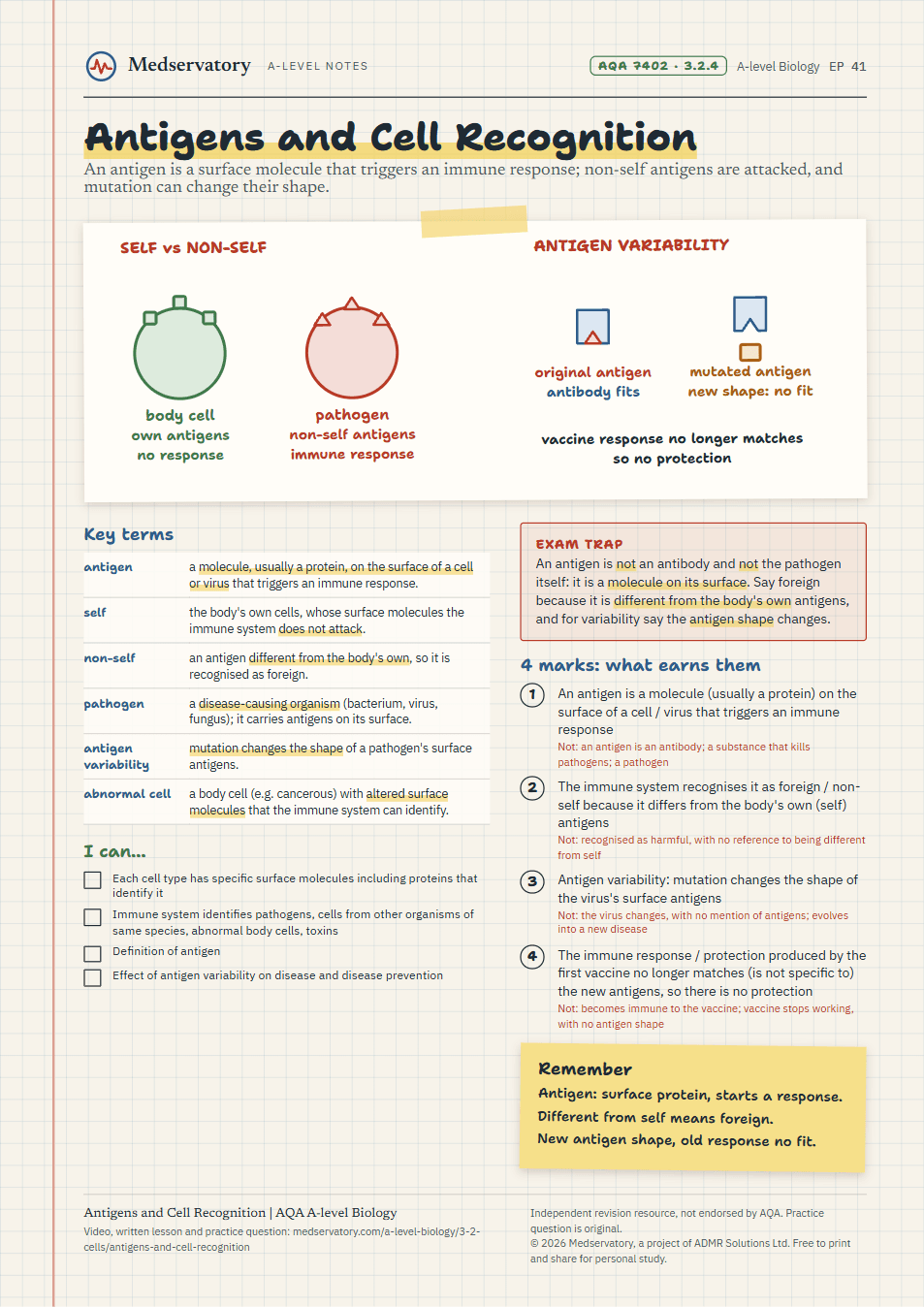
EP 41
Antigens and Cell Recognition
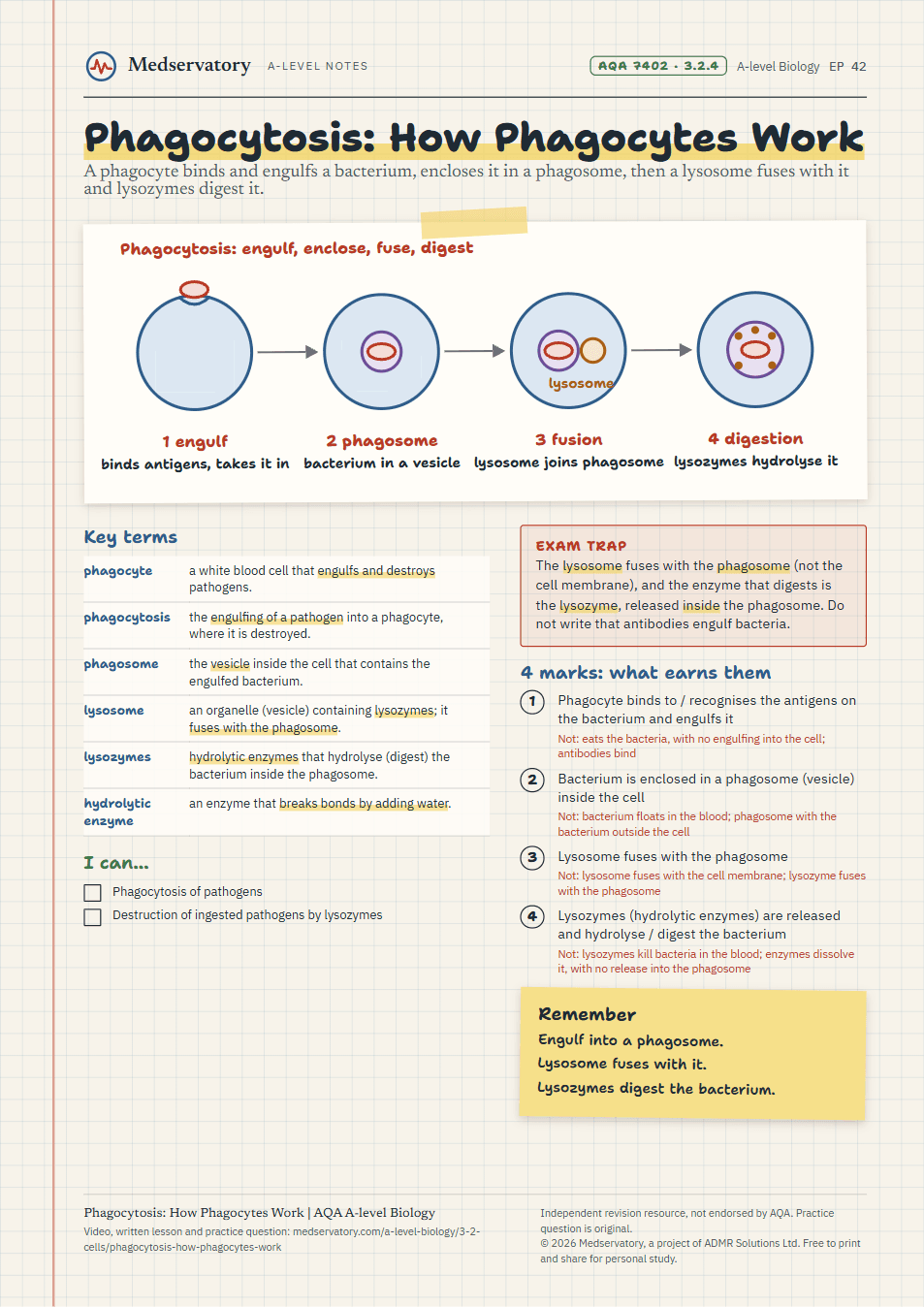
EP 42
Phagocytosis: How Phagocytes Work
EP 43
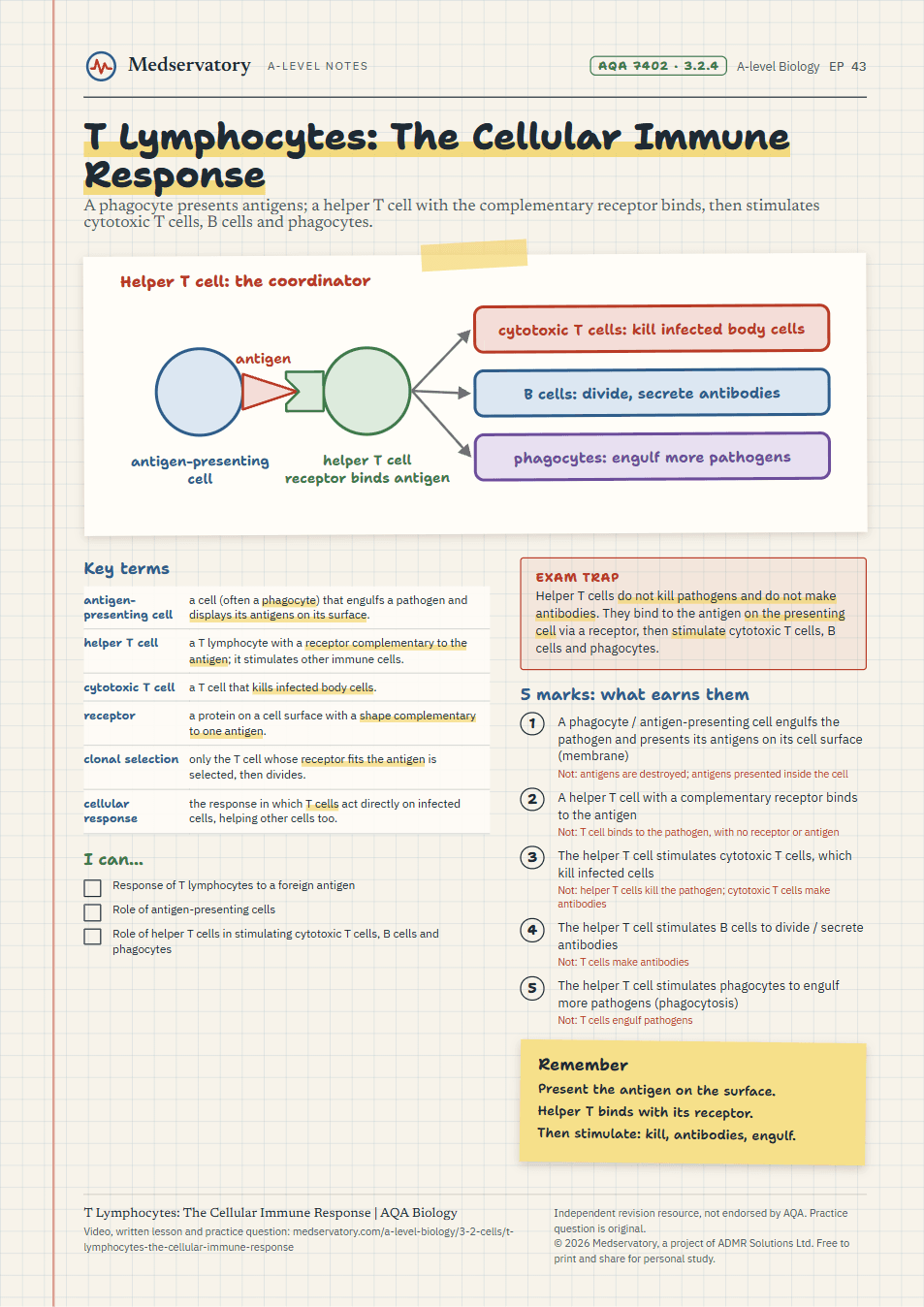
T Lymphocytes: The Cellular Immune Response
EP 44
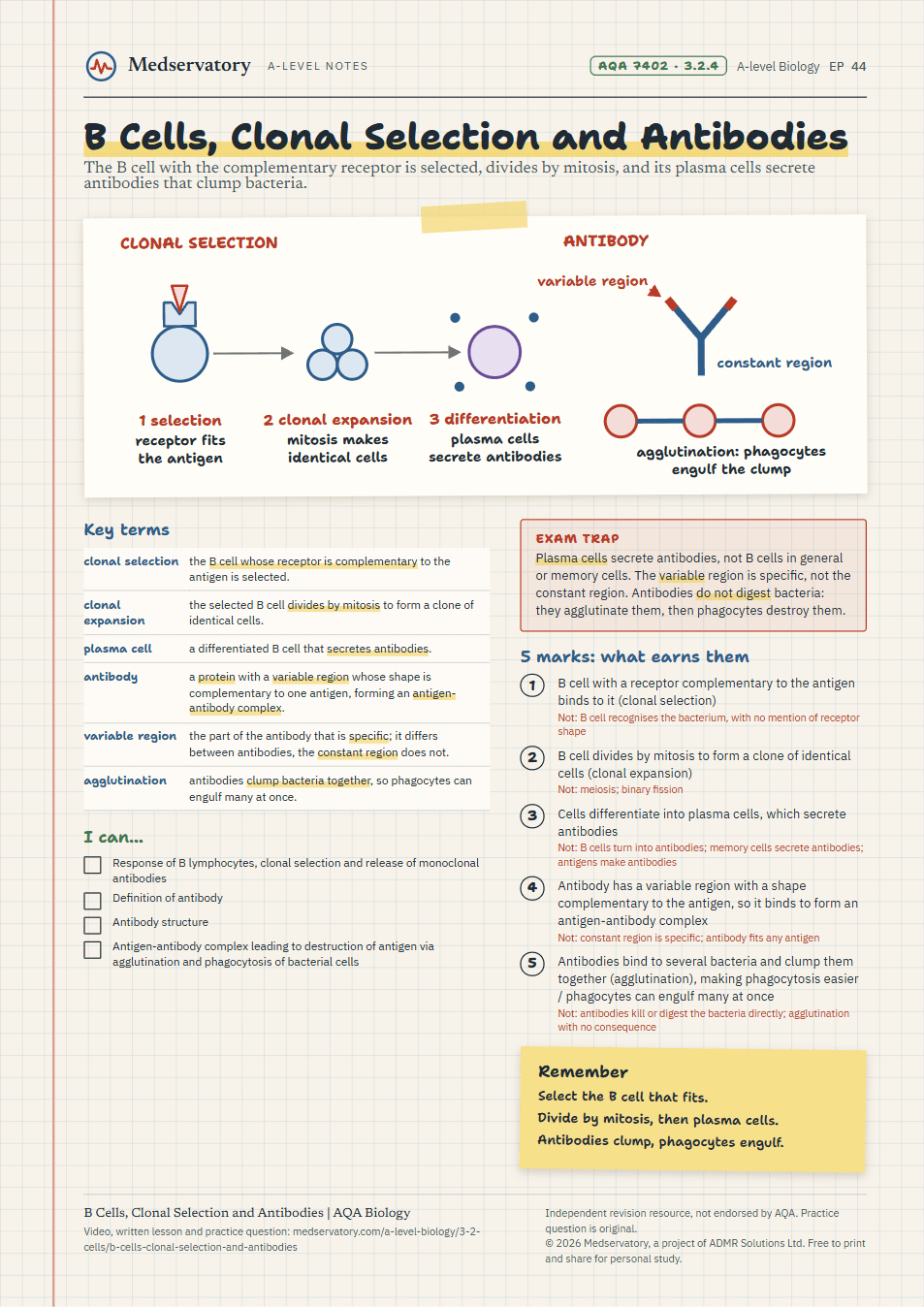
B Cells, Clonal Selection and Antibodies
EP 45
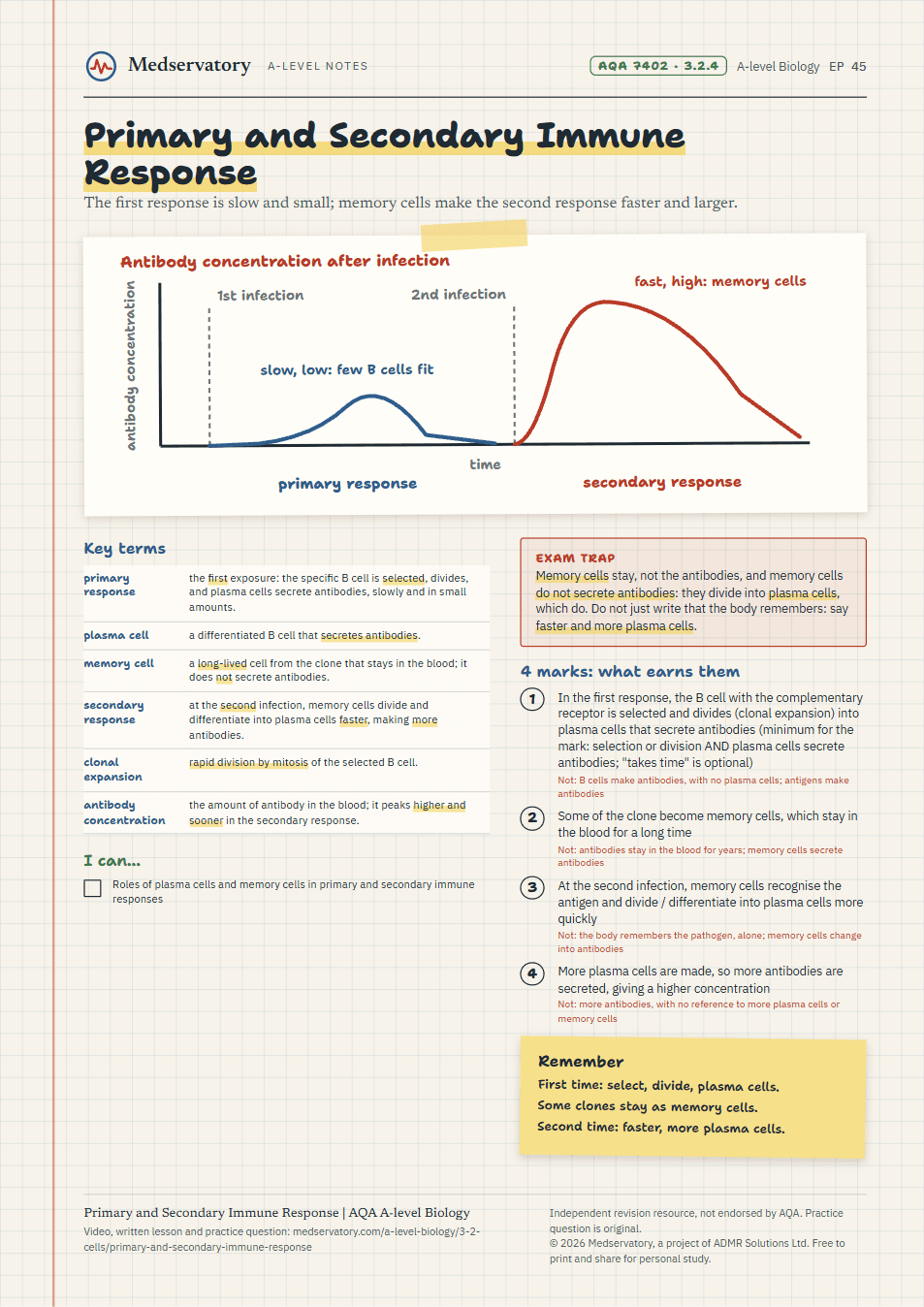
Primary and Secondary Immune Response
EP 46
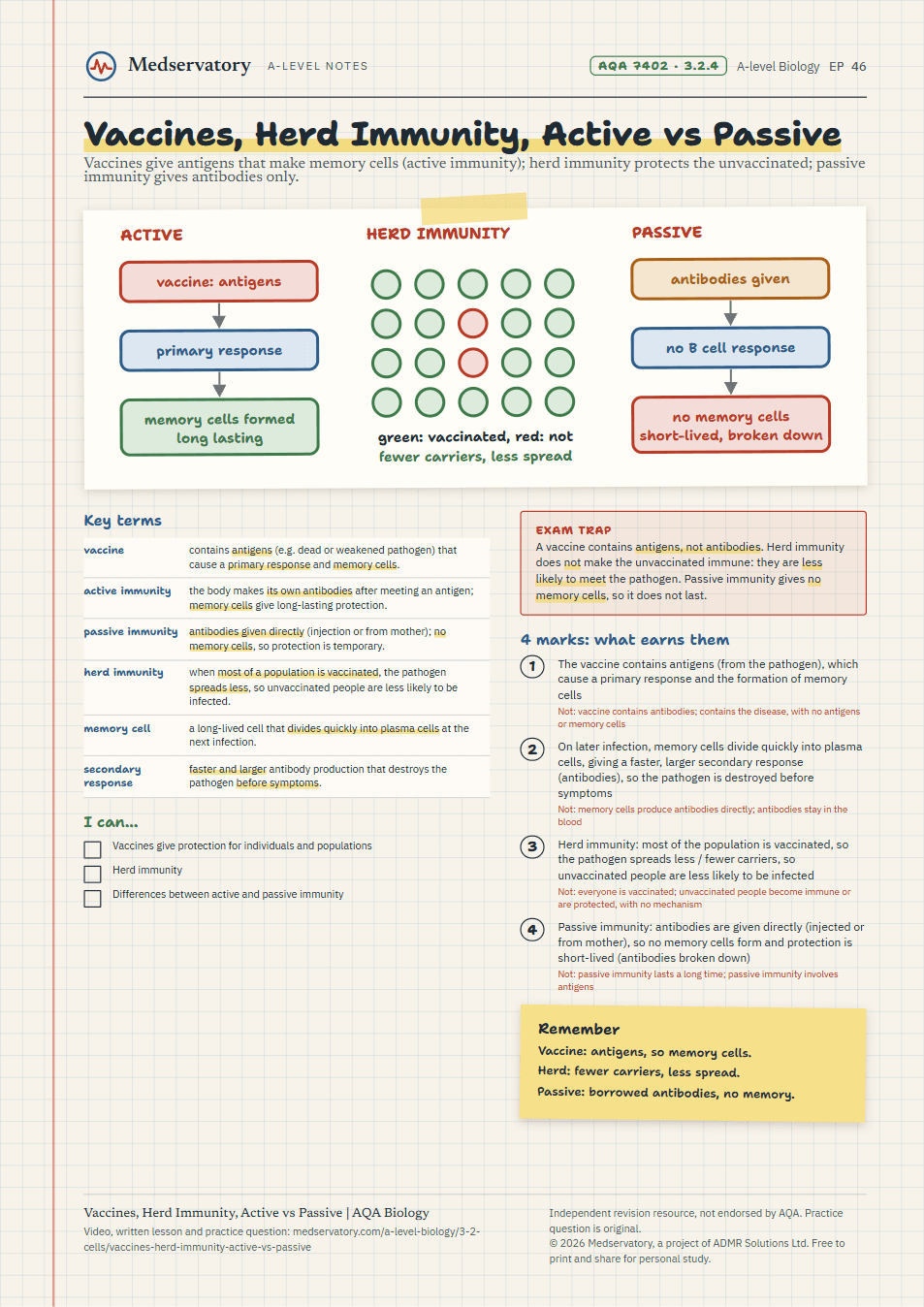
Vaccines, Herd Immunity, Active vs Passive
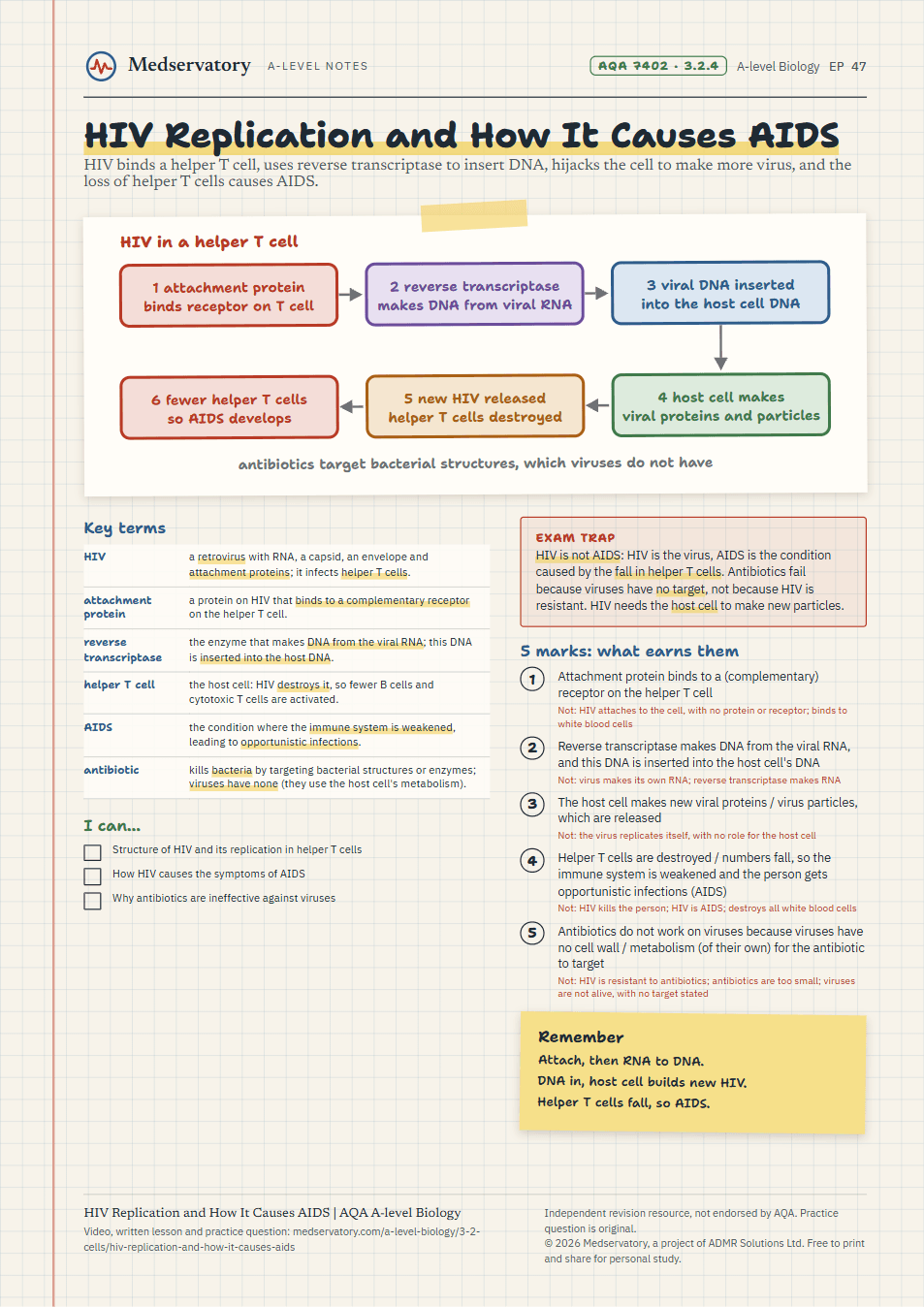
EP 47
HIV Replication and How It Causes AIDS
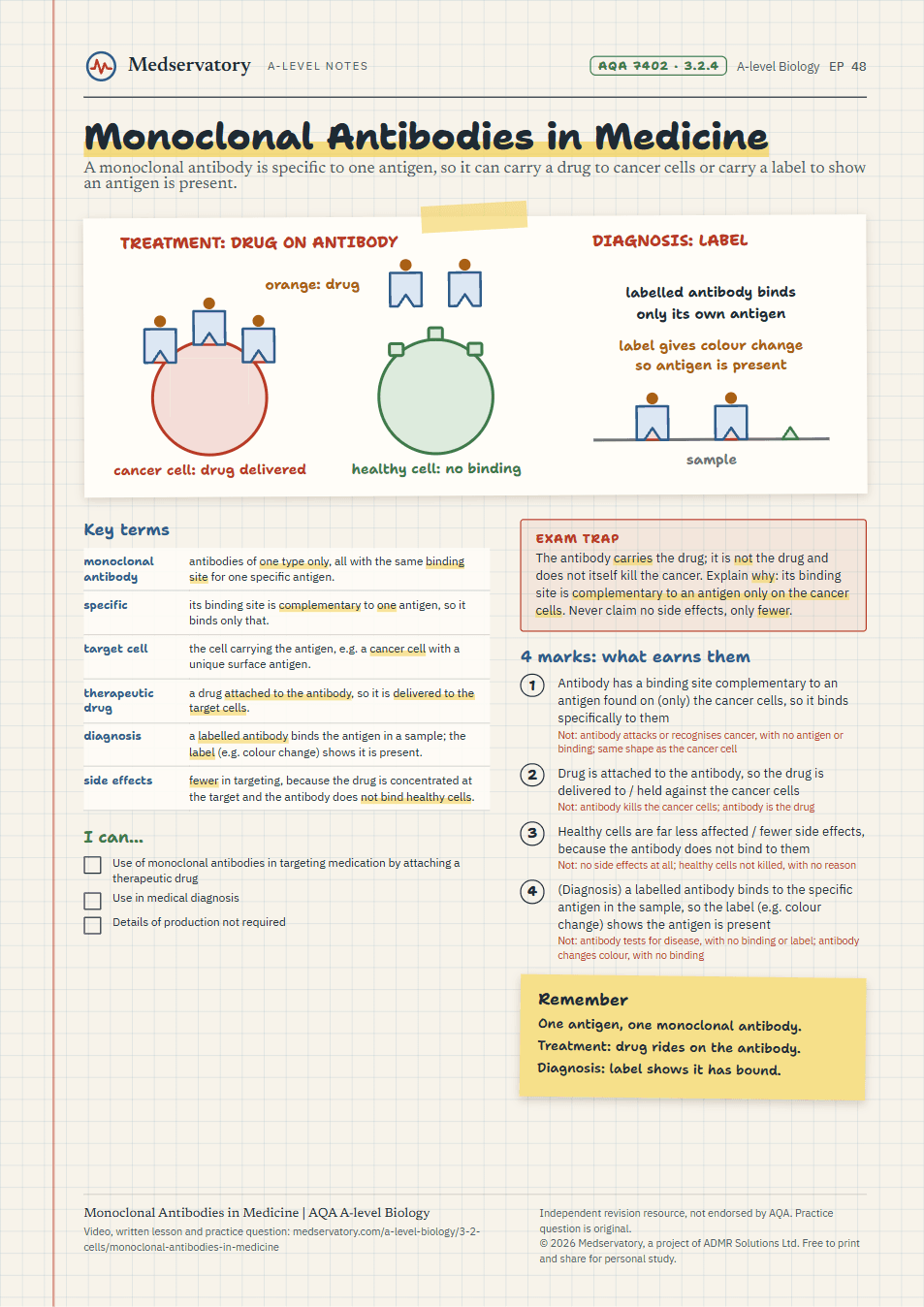
EP 48
Monoclonal Antibodies in Medicine
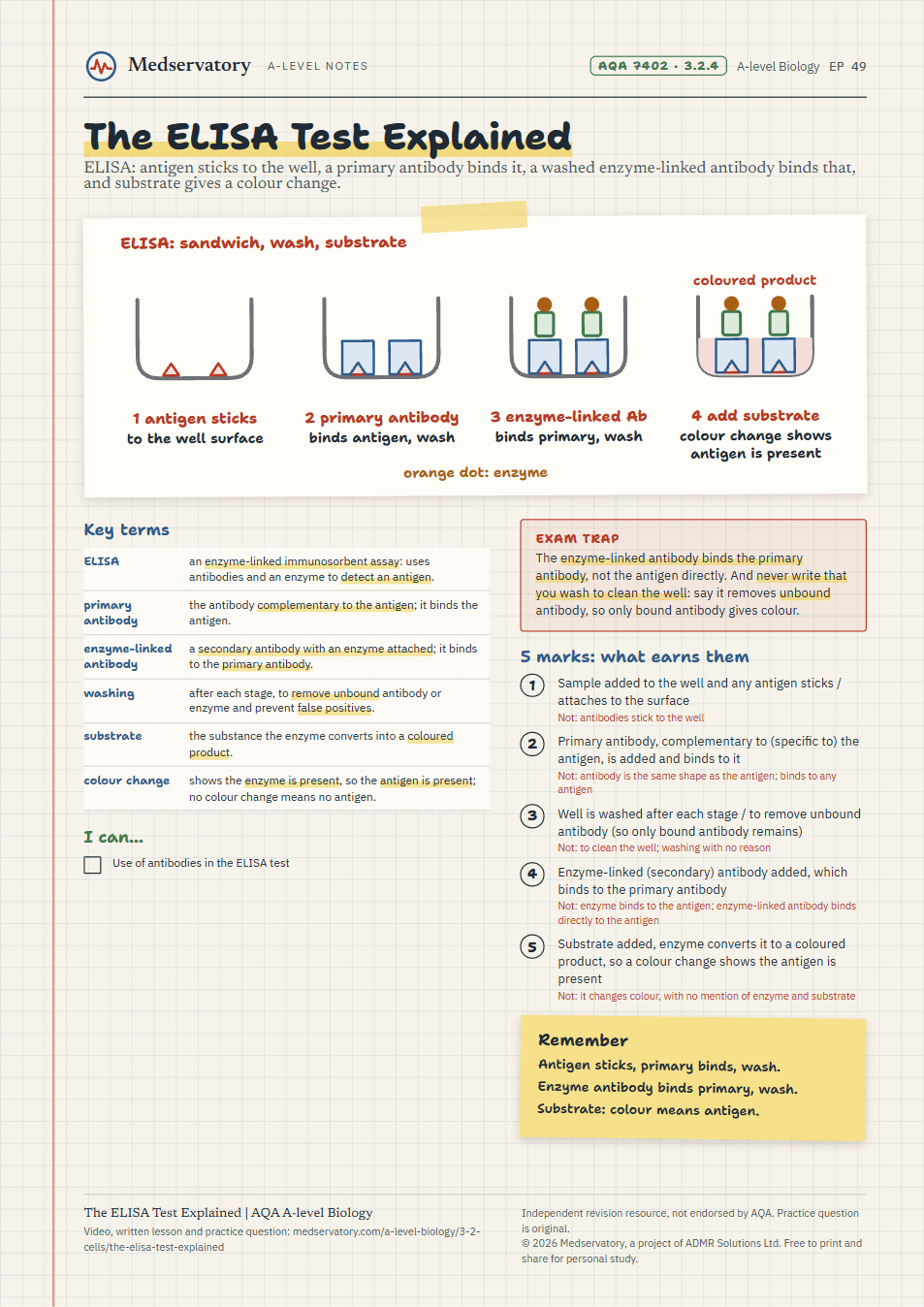
EP 49
The ELISA Test Explained
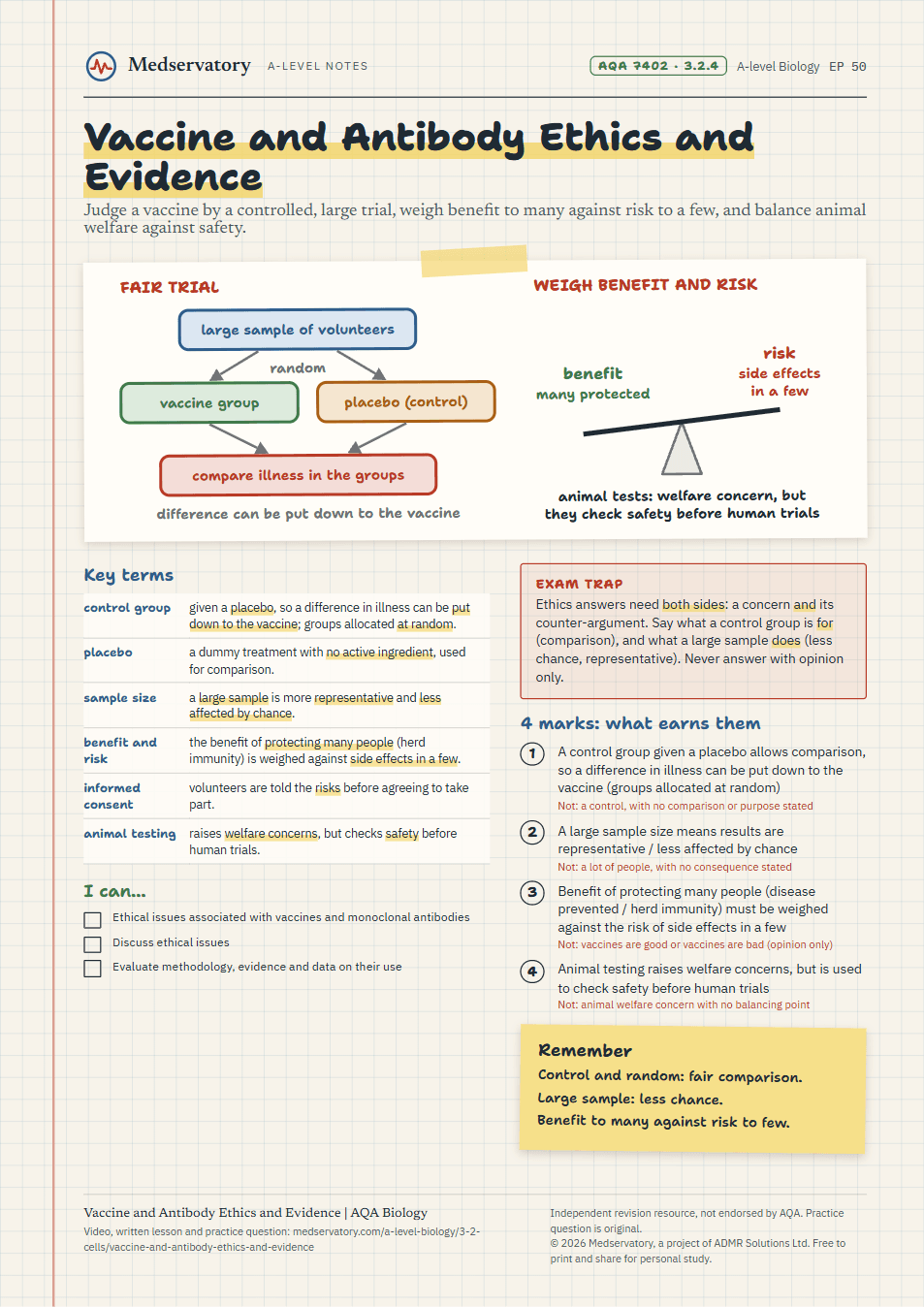
EP 50
Vaccine and Antibody Ethics and Evidence
A-level Biology
3.3 Exchange with the environment
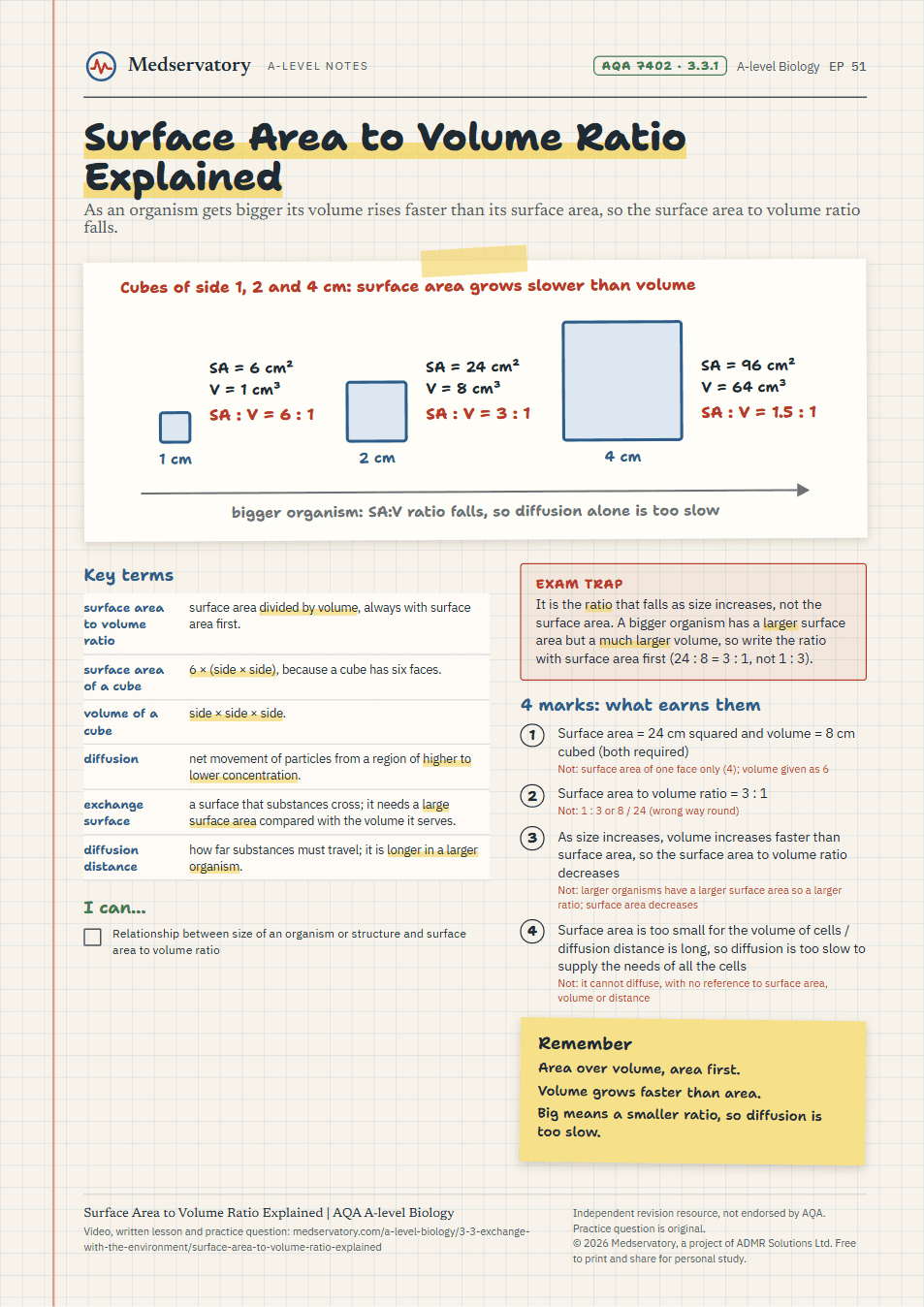
EP 51
Surface Area to Volume Ratio Explained
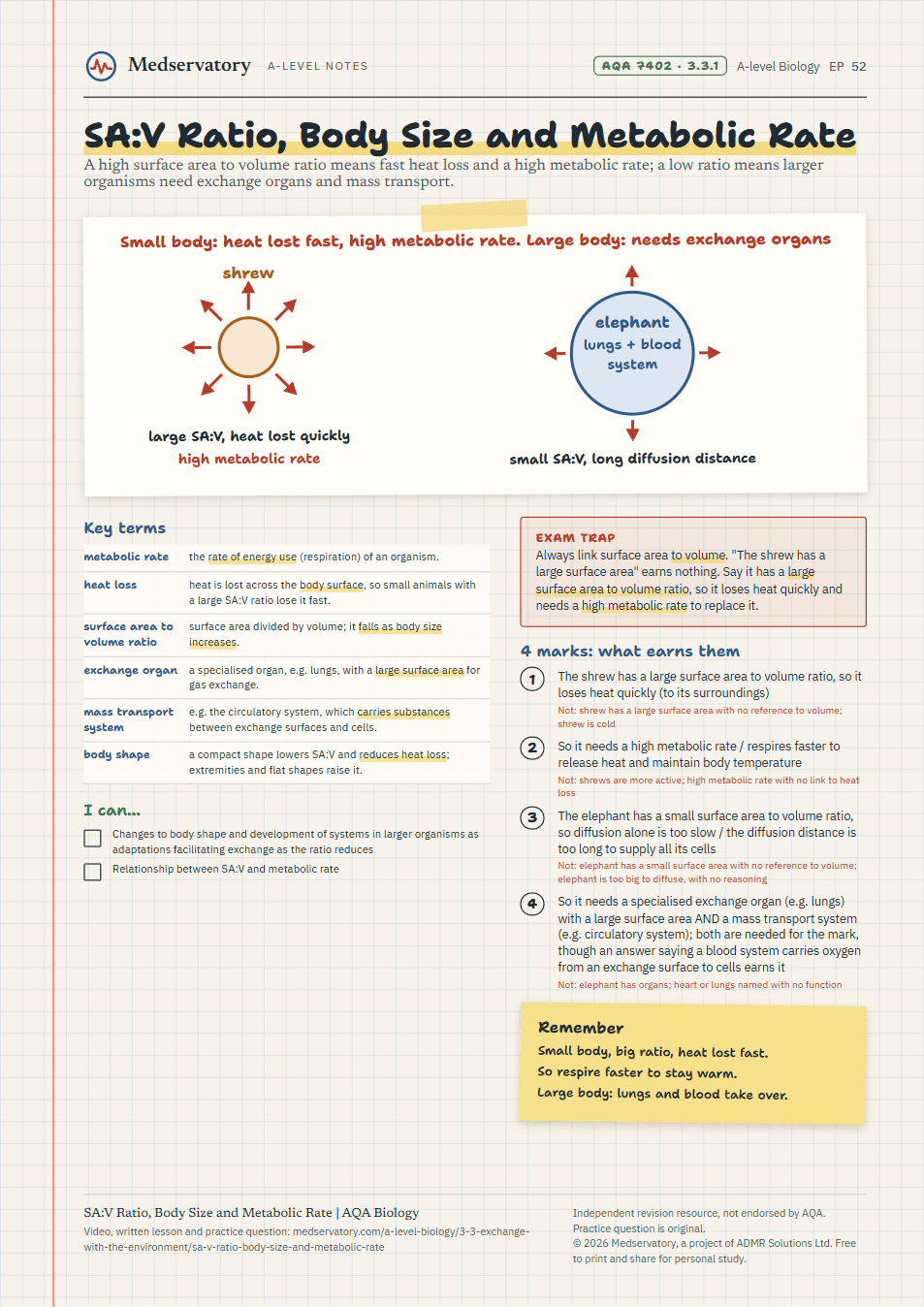
EP 52
SA:V Ratio, Body Size and Metabolic Rate
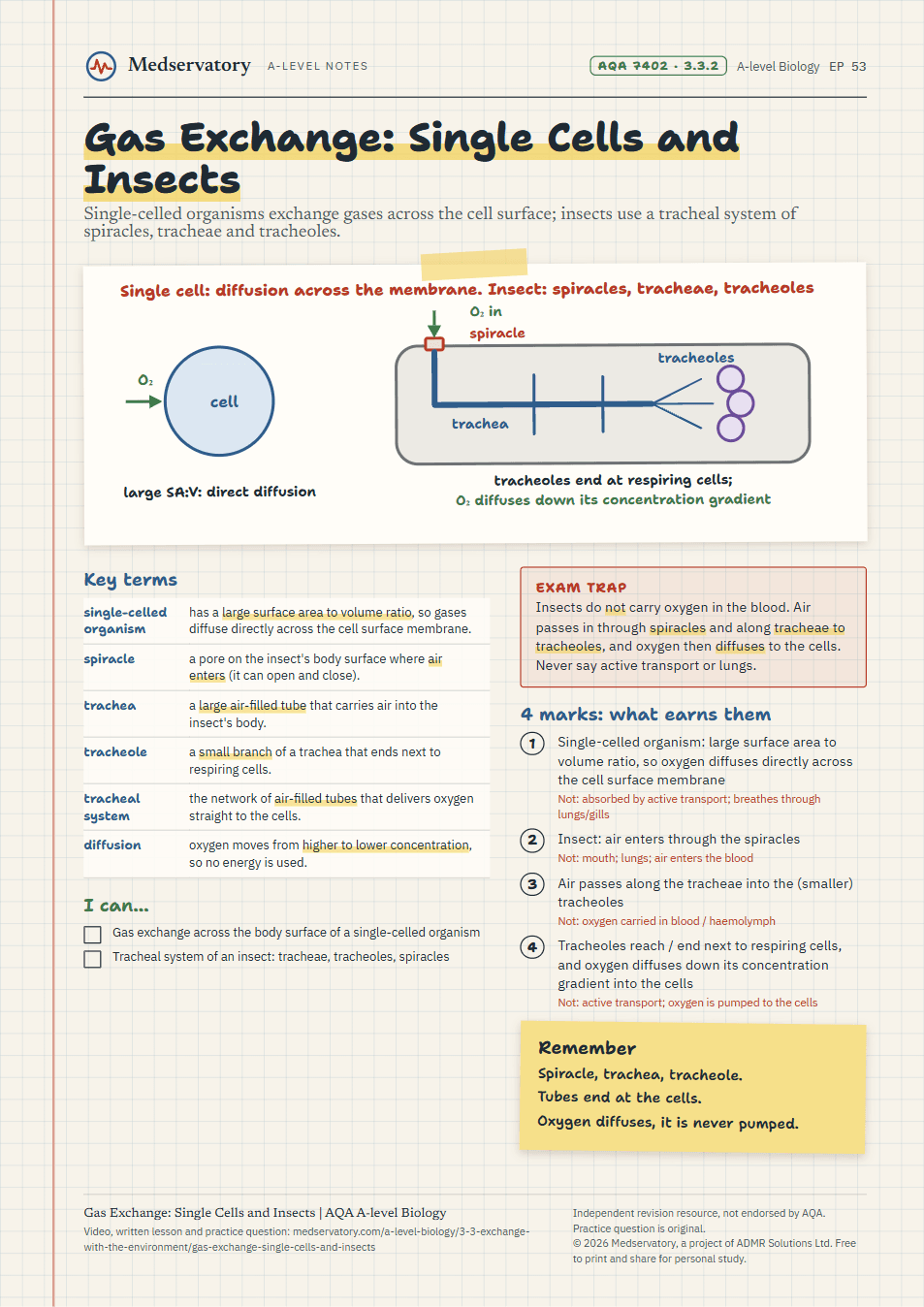
EP 53
Gas Exchange: Single Cells and Insects
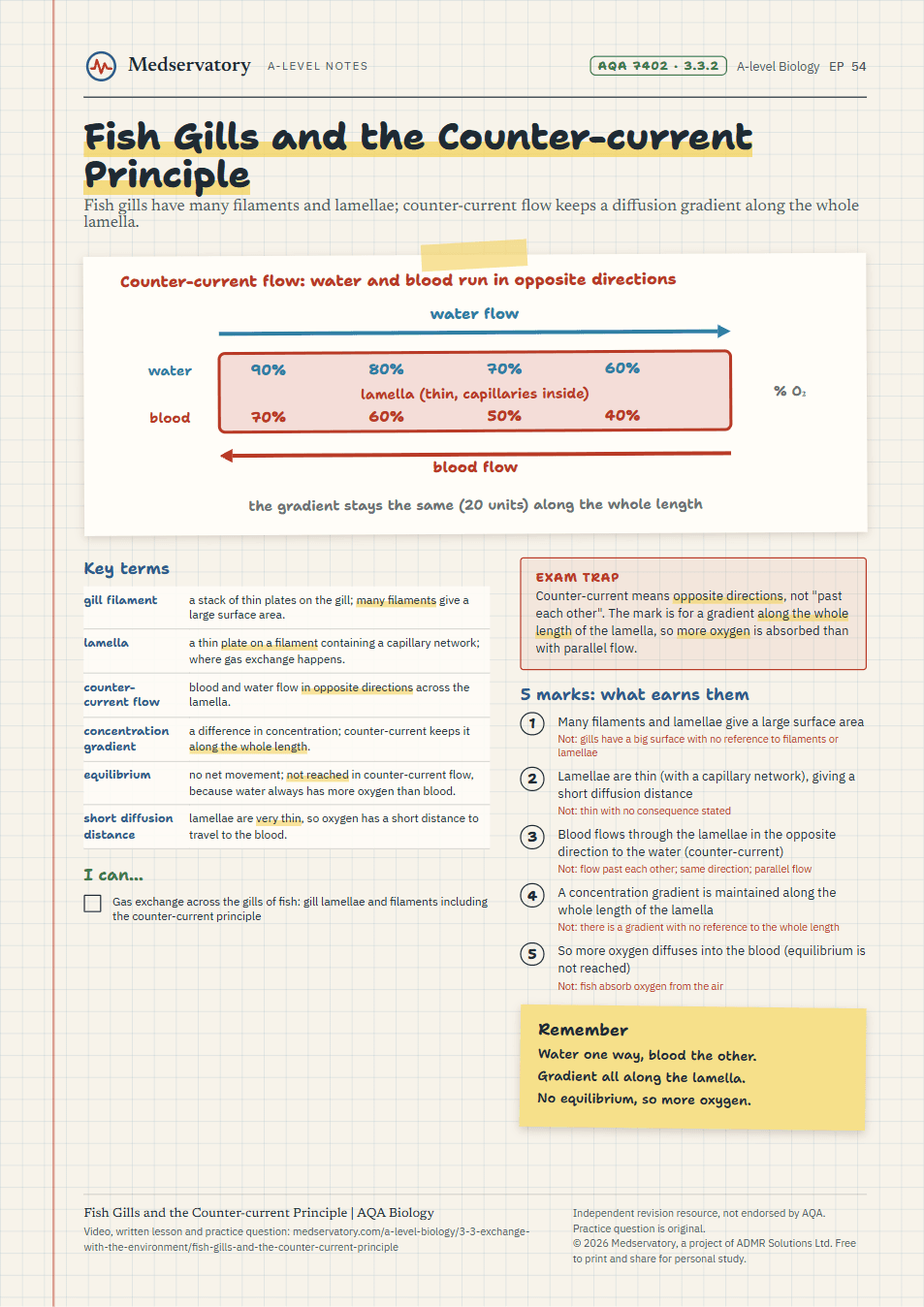
EP 54
Fish Gills and the Counter-current Principle
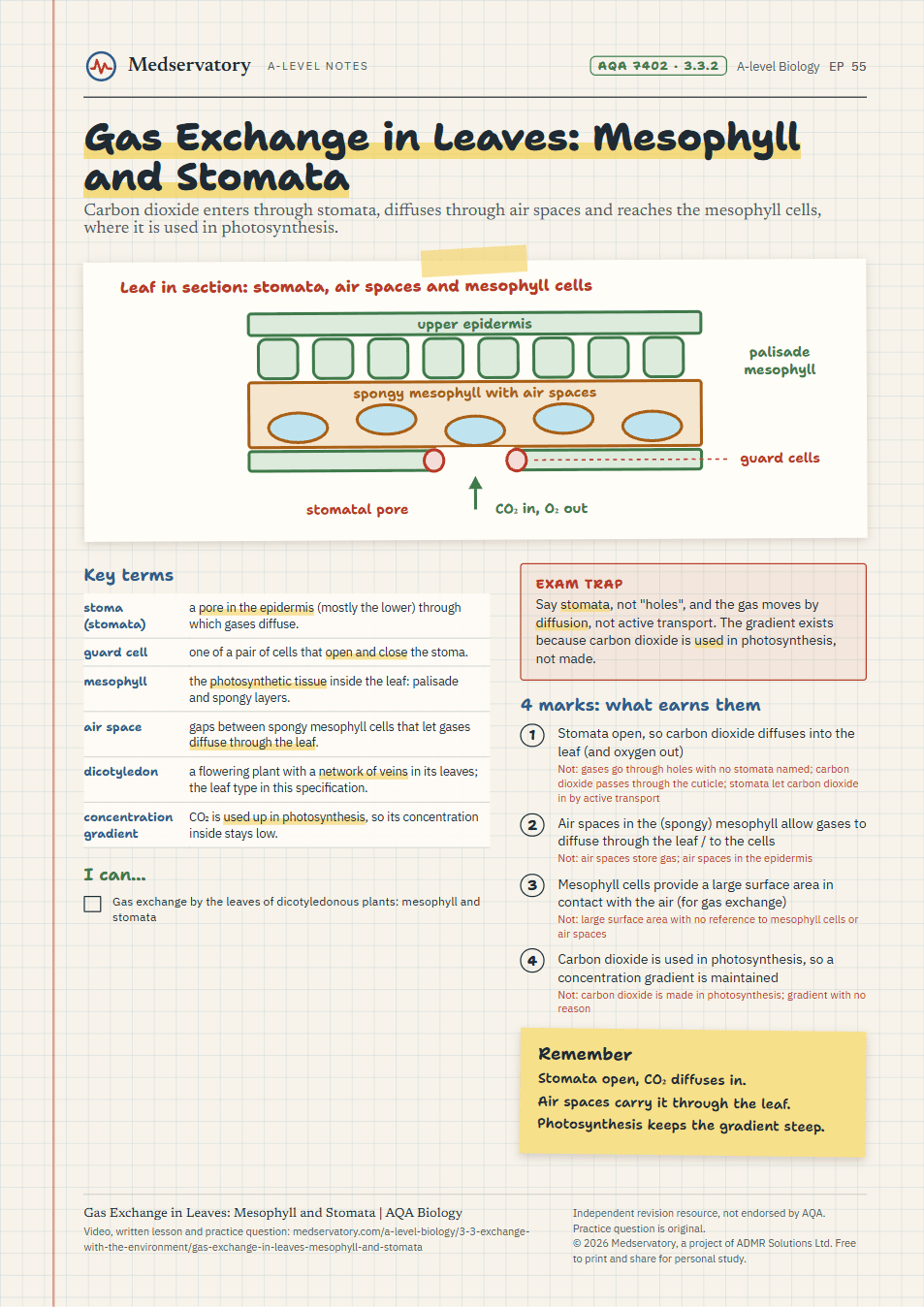
EP 55
Gas Exchange in Leaves: Mesophyll and Stomata
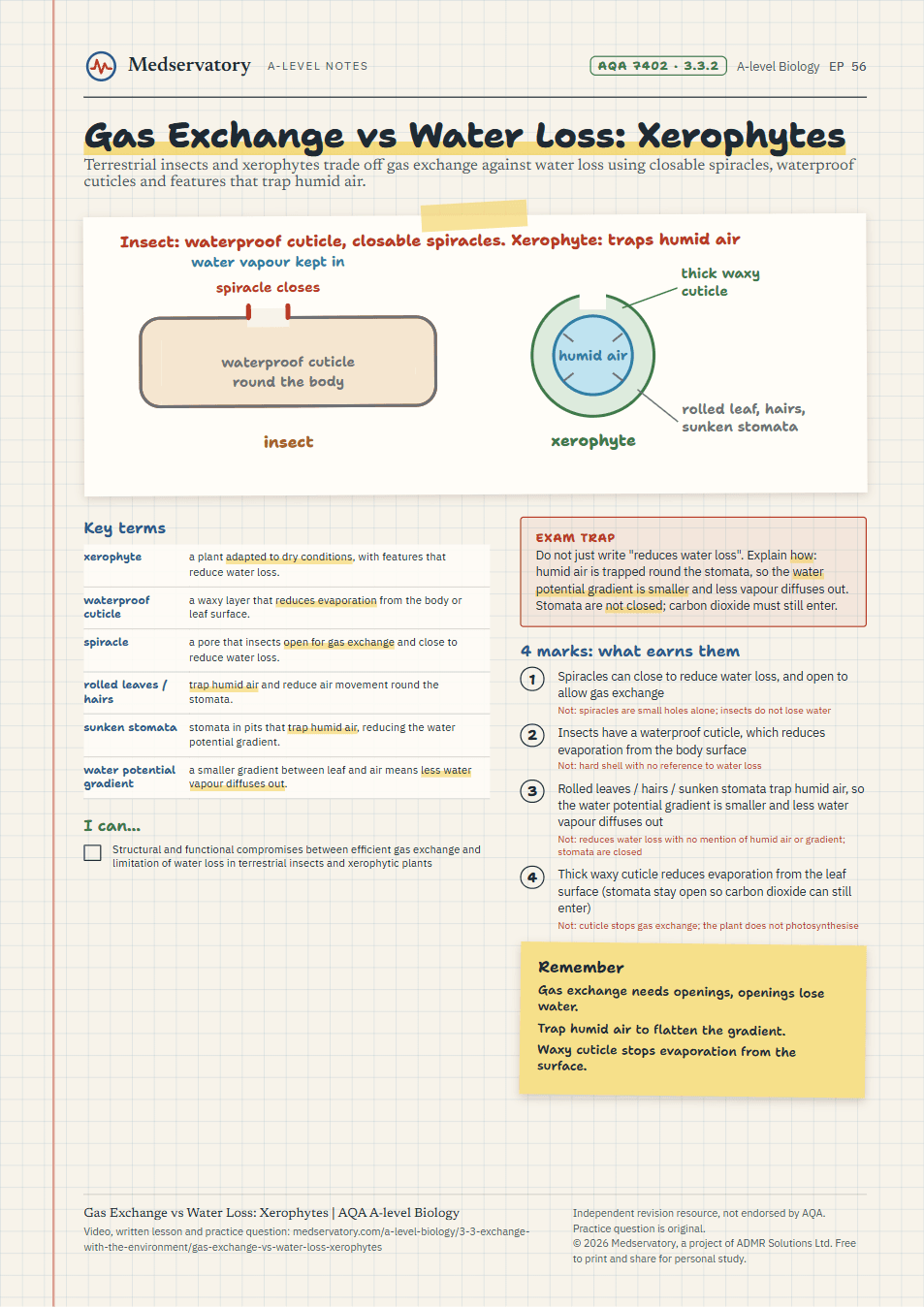
EP 56
Gas Exchange vs Water Loss: Xerophytes
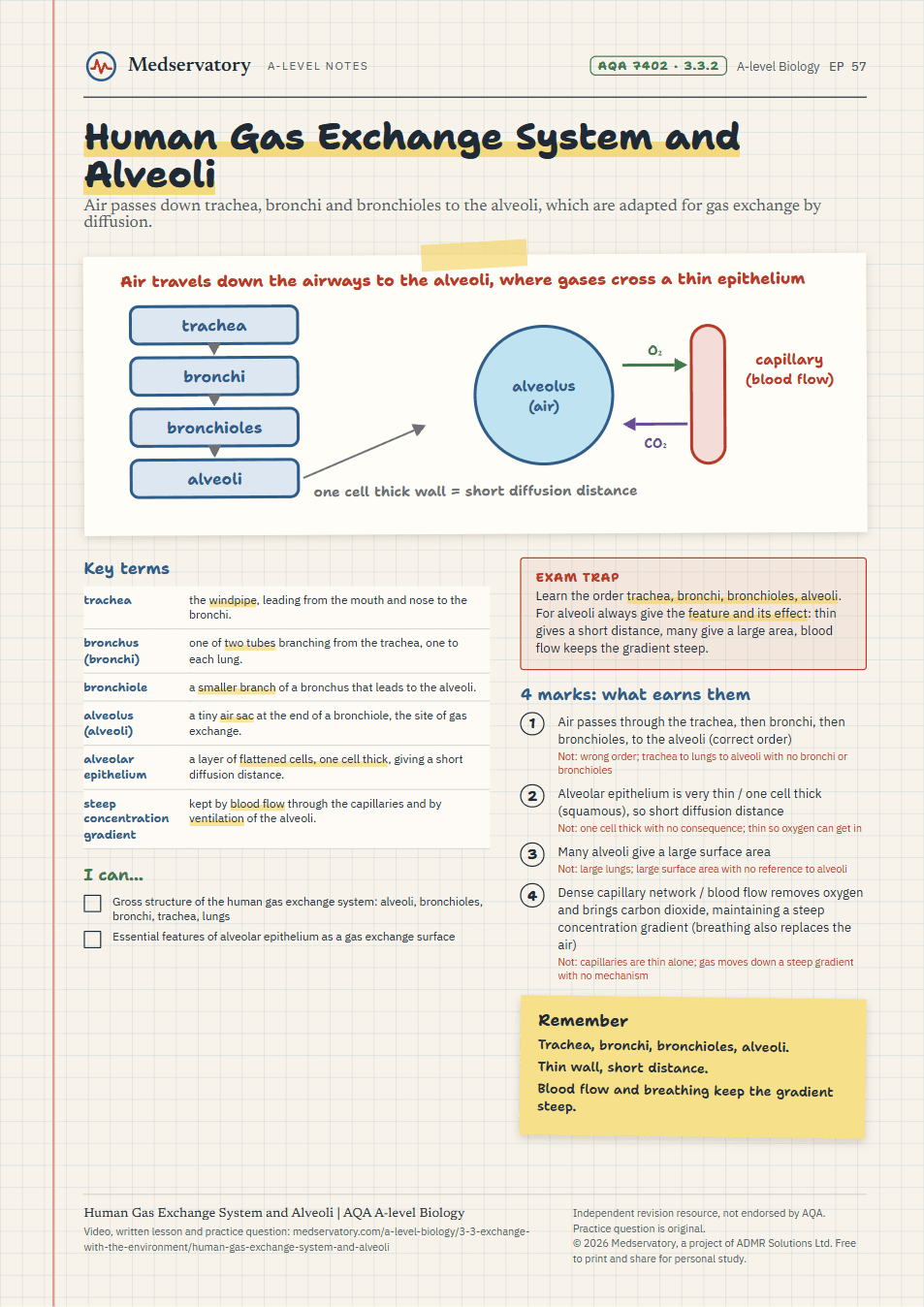
EP 57
Human Gas Exchange System and Alveoli
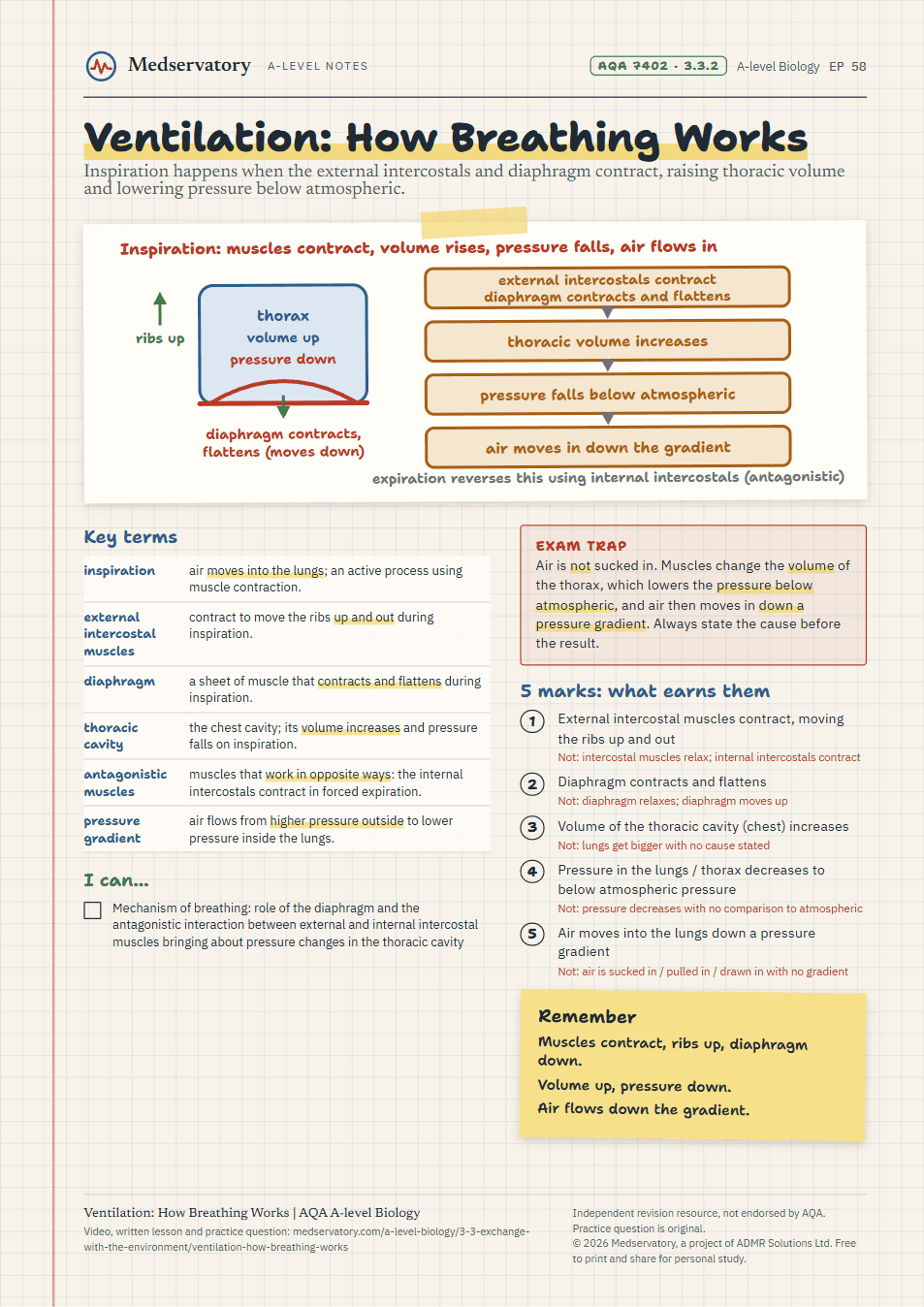
EP 58
Ventilation: How Breathing Works
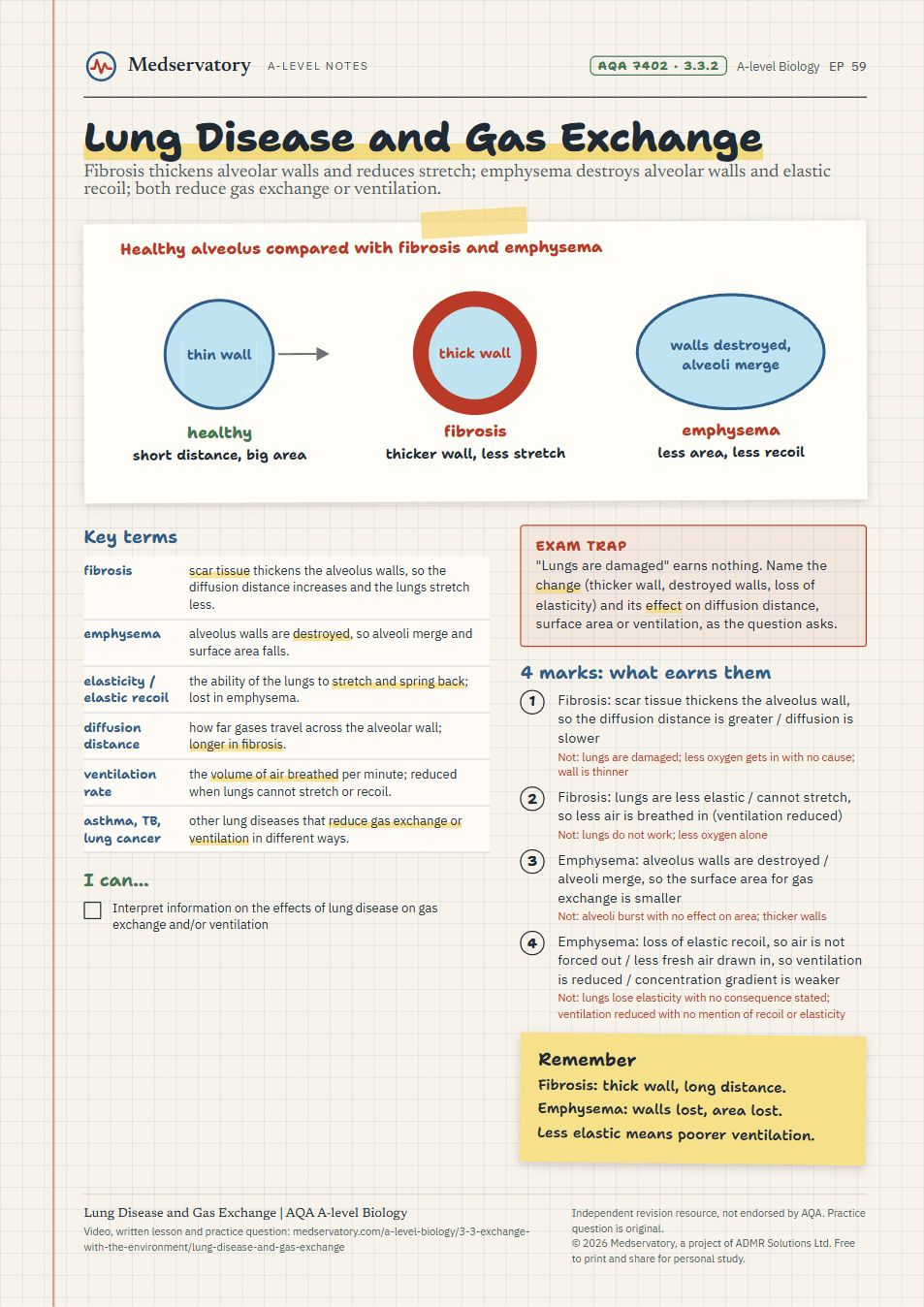
EP 59
Lung Disease and Gas Exchange
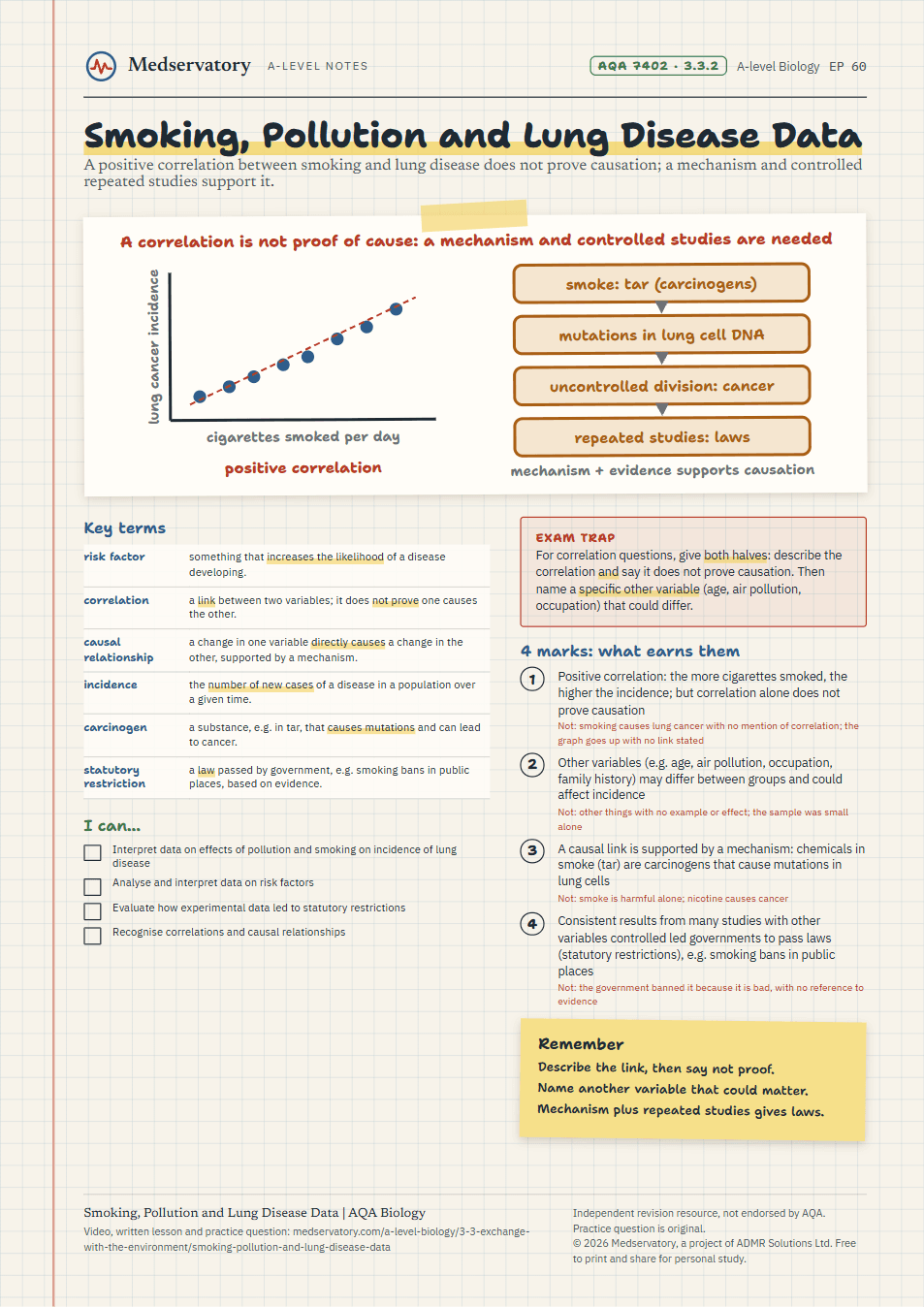
EP 60
Smoking, Pollution and Lung Disease Data